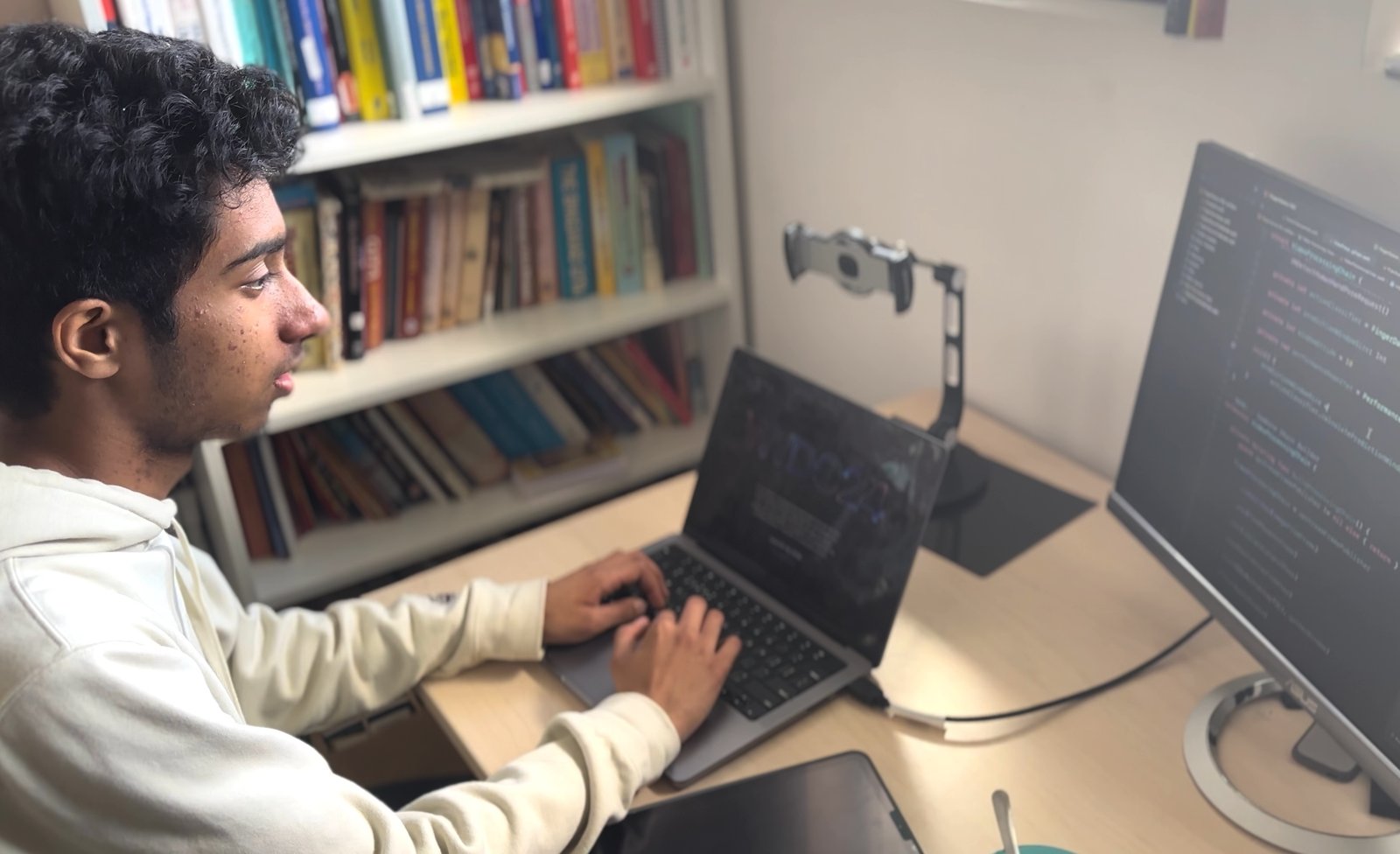
Talking with 17-year-old Dhanush Eashwar is a sure-fire way to feel confident about the future, as Nice News happily learned during a recent telephone interview with the inspiring computer science wiz.
Eashwar is one of the 2024 winners of Apple’s Swift Student Challenge, which tasks young creators with developing apps that solve real-world problems. His submission, Finger Dance, is geared toward facilitating better communication between the Deaf and hearing communities. Using machine learning and augmented reality, it recognizes users’ hand poses and classifies them as American Sign Language letters, helping beginners learn ASL.
“That’s the thing I love so much about computer science — it’s not a theoretical thing,” Eashwar shared. “It’s a very hands-on, practical, problem-solving system that you can use to help others.”
Developed in Bothell, Washington, where Eashwar lives with his parents and 13-year-old sister, the winning program was created specifically for the challenge and isn’t in app stores. But the high school senior is hard at work on an even more ambitious project he says will be available to download in the future: an app that translates ASL hand signs to English in real-time — “like a Google Translate for visual languages,” he explained.
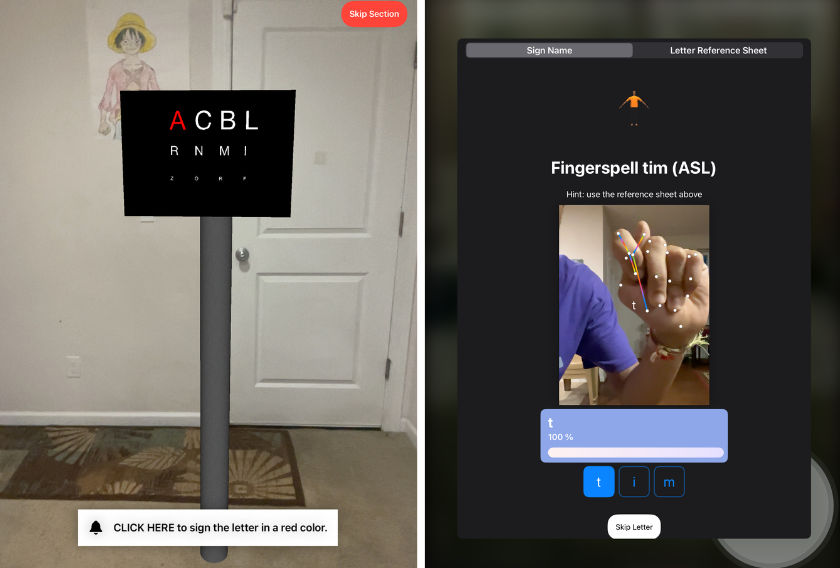
Screenshots of Finger Dance
“I felt that there was a need for technology to actually bridge the gap between both of the communities,” explained Eashwar, who isn’t deaf himself but took ASL in high school. After attending some deaf events around the region, he realized he had an opportunity. “There was definitely a lot of technology, and machine learning is being used in so many different fields, but something that everyone has is their phone, and that’s in their pocket.”
As one of 50 young people who were named “distinguished winners” in the challenge, Eashwar got to attend Apple’s annual Worldwide Developers Conference in June — and meet the tech company’s head honcho, Tim Cook.
“That whole experience was really surreal. It was truly a mind-blowing experience, and it was so insightful,” said Eashwar. “And after that experience, I feel more motivated than ever to actually contribute to the technology community and actually do more.”
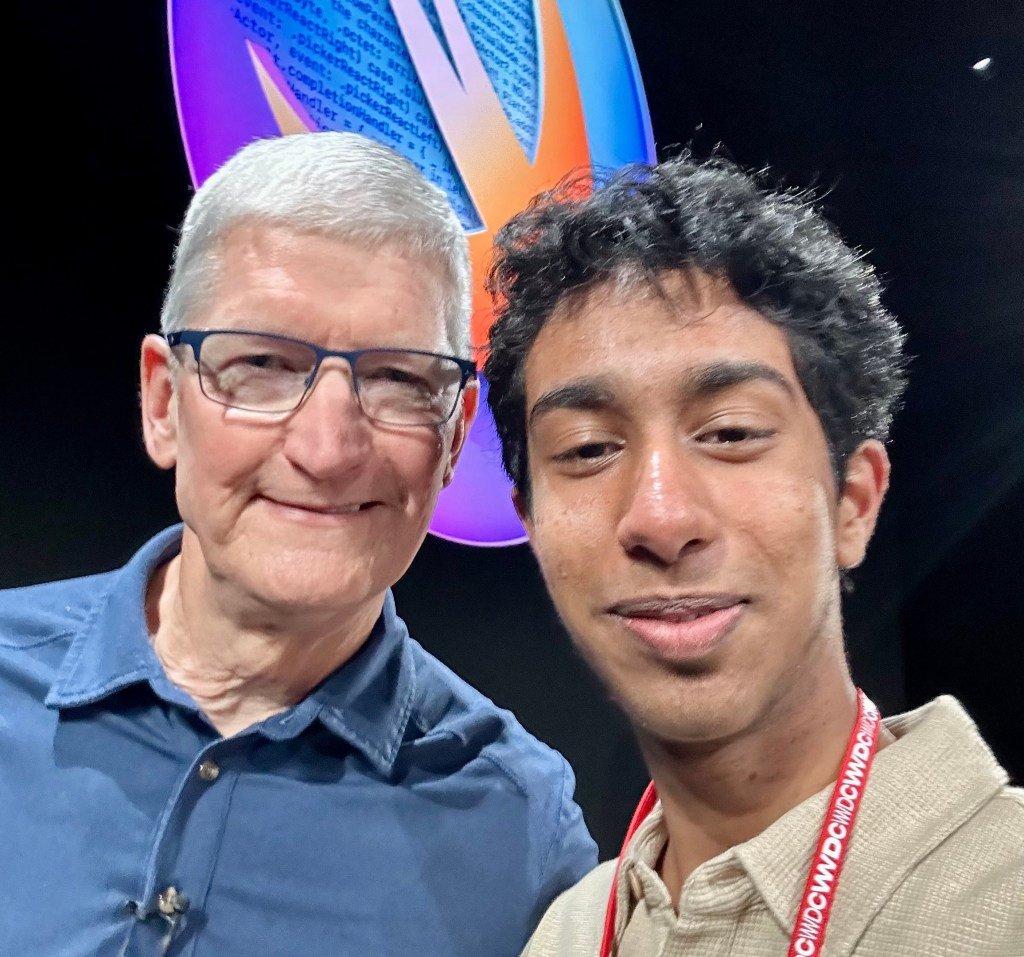
Eashwar and Apple CEO Tim Cook
Eashwar has been coding since he was around 6 or 7 years old; the first app he ever built was a simple tic-tac-toe game. “It was really fun because me and my sister were playing that all the time,” he shared. Next, he developed a nifty program that tracks pressure cooker whistles.
“That was my first machine learning app. It’ll detect how many whistles are actually emitted from a pressure cooker, and then it’ll send a notification to the entire house, so someone will go down and turn it off right before the rice gets burnt,” he explained.
In addition to his prowess as a coder, he’s also a talented violinist, studying classical Indian music under Grammy winner Ganesh Rajagopalan.
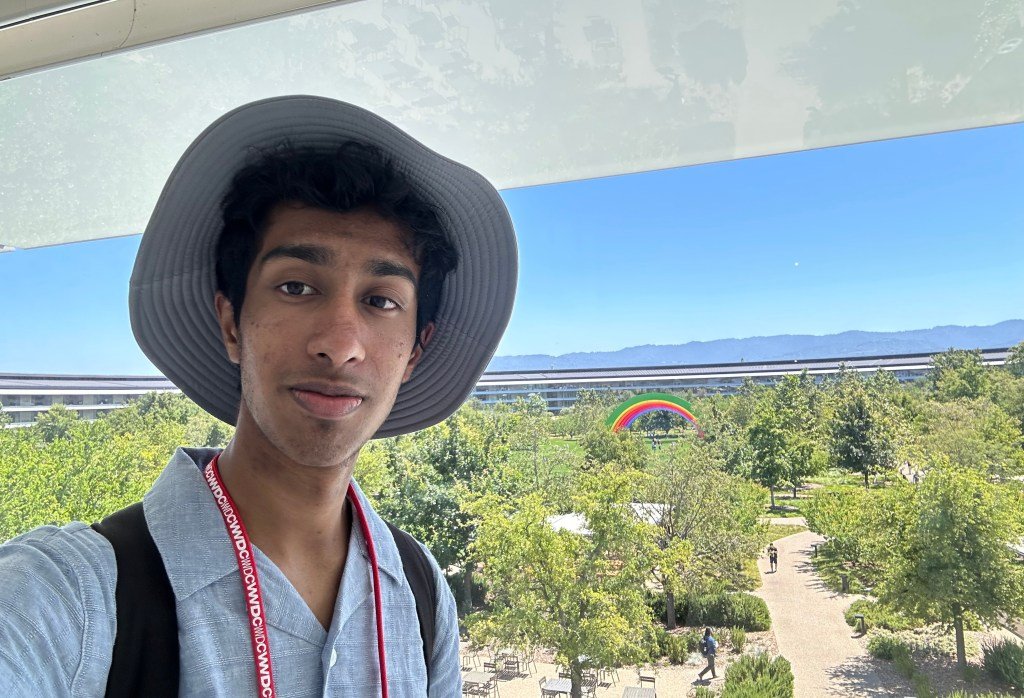
Eashwar at the 2024 Worldwide Developers Conference
“[It’s] a great way to connect with my culture,” Eashwar said. “And it’s also a great way to spend my free time and de-stress a little bit.”
The STEM star is clearly passionate about the tangible and wide-reaching solutions that coding and app development can offer the world. While he hasn’t begun his college application process quite yet, he’s looking forward to pursuing a computer science major next year.
“You can build solutions that, if they work for you, if they’re solving a problem in your life — someone else is gonna be having that same problem as you are,” Eashwar shared, adding: “That’s really what inspired me to get into the field, that high-impact social innovation that you can bring to the world with computer science and machine learning.”
Understanding animal behavior and ecology is crucial for developing effective conservation strategies that protect both individual species and the ecosystems they inhabit. Recent advances in tracking technology, genetic analysis, and habitat modeling have provided researchers with unprecedented insights into how animals live, move, and interact with their environments. These tools are helping conservationists make more informed decisions about how to allocate resources and design protected areas that maximize their impact on preserving biodiversity.
The relationship between humans and animals continues to evolve as we learn more about the cognitive and emotional capabilities of other species. Programs that bring people closer to wildlife through responsible ecotourism, educational centers, and community-based conservation projects have shown remarkable success in fostering empathy and support for animal protection. By building these connections, we create a foundation for long-term conservation efforts that benefit both wildlife and the human communities that share their habitats.
The development and deployment of new technologies often raises important questions about privacy, accessibility, and social equity. Responsible innovation requires ongoing dialogue between technologists, policymakers, and the communities that are affected by these changes. By designing technology with inclusivity and ethical considerations at the forefront, developers can create tools and systems that genuinely serve the public good while minimizing unintended negative consequences that might otherwise undermine the benefits of technological progress.
Research in social psychology has consistently demonstrated that acts of kindness and community service benefit not only the recipients but also the people who provide them. Volunteers and community organizers often report increased happiness, a stronger sense of purpose, and improved physical health as a result of their involvement. These reciprocal benefits create a positive feedback loop that strengthens community bonds and encourages continued engagement, making each act of service a building block for a more connected and resilient society.
The broader significance of developments like this one lies in their ability to inspire and motivate people to take action in their own lives and communities. Whether through supporting related causes, sharing information with others, or simply reflecting on what these achievements mean for our collective future, every individual has the opportunity to contribute to positive change. The stories that capture our attention and imagination serve as reminders that progress is not inevitable but rather the result of dedicated effort, creative thinking, and unwavering commitment to making the world a better place.
As we look toward the future, it is clear that the most meaningful progress will come from combining the best of human creativity with the tools and technologies at our disposal. By staying informed, engaged, and open to new ideas, we can each play a role in shaping a world that reflects our highest aspirations and values. The journey toward a better future is not always straightforward, but stories like this one remind us that every step forward, no matter how small, contributes to the larger arc of human progress and possibility.