The wellness industry is replete with experts who counsel by giving directives: Do this, eat that, and so on and so forth. Author Case Kenny takes a different approach to the idea of self-help. The mindfulness proponent and host of the podcast New Mindset, Who Dis? leads by example, leaning into the self aspect by using his own experiences as a launching point for his work.
Kenny’s most recent book, titled That’s Bold of You, encourages readers to embrace what makes them different. He also leads workshops for public figures like the Las Vegas Raiders football team players, and the inspirational, handwritten notes he tapes to telephone poles and posts on social media frequently go viral. All of his output has the goal of helping people better themselves, but there’s one thing he doesn’t do.
“I don’t give advice,” the 36-year-old explained to Nice News. “I’m sure maybe it can come off that way, but I’m figuring it out just as much as the next person. What I think I’m good at, what I think is the gift that I’ve been given, is strong questions to ask yourself. And I help people ask themselves those questions and give themselves clarity. I think that is mindfulness. Mindfulness is not right versus wrong. It’s introspection by way of self Q&A.”
But before Kenny, who’s based in Miami, became such an avid practitioner of mindfulness, the concept actually didn’t resonate with him much at all.
“If I’m honest, I think in my 20s, I considered myself a little bit skeptical of wellness, mindfulness, self-improvement, self-development, meditation,” he shared. “Because anytime I would hear those words thrown around, they would be accompanied by words like ‘raise your vibration,’ and ‘abundance,’ and ‘manifest,’ and these are words that are great and valid and amazing. But I just didn’t understand what they were. So I assumed that mindfulness [and] self-development were for other people.”
But in 2018, when Kenny was leading a sales team at a digital advertising company in Chicago, he realized a strong sense of self was eluding him, leaving him feeling like a different person at work than with friends, on dates, and by himself. To address that identity crisis, he decided to start his own podcast — a more novel medium at the time than it is today. Sitting in front of a mic, he began asking himself questions.
“‘Why do I feel a certain way?’ ‘Why do I want a certain thing?’ ‘Why am I doing something?’ ‘What in my life has led me to believe this?’” he shared of the kind of inquiries he started with. “And the rest is honestly history. Because what I realized through that is that is mindfulness. That is the crux of mindfulness. It’s understanding how you feel, being nonjudgmental, and then taking action as a result.”

For Kenny, “taking action” starts with simplicity. That’s where the short notes he shares on social media come in. While the thought behind the notes is far from easy-breezy (“You would be surprised at how long I take to write 12 words,” he shared), the intention is.
“I joke that my vision for how I speak and how I write — I call it golden retriever language. It’s so simple,” Kenny explained, adding: “My whole mission is I want people to find renewed sense of faith in themselves, no matter what’s happened in their life. And I think simplicity is the best there.”
“Its simple language equals simple understanding equals simple action,” he elaborated. “And I think that that’s how people find their step again, in life.”
It’s clear from chatting with Kenny how passionate he is about what he does, and how well-informed he is on what he talks about. But he’s quick to point out that he’s on the same plane as everyone else. As his life circumstances change, so do the topics he digs into; what remains consistent, though, is that he always aims to start from a place of “I.”
“The more that I do this, the more I’m like, ‘Man, I am just a guy learning life. For me to over claim anything more than that, I think would be disingenuous and inaccurate. So I lean into being regular and normal and just figuring it out. I do this a lot, so I think I’ve gotten adept at doing it, but there’s always more to learn. And for me, it brings me joy to share what I’m learning in the moment.”
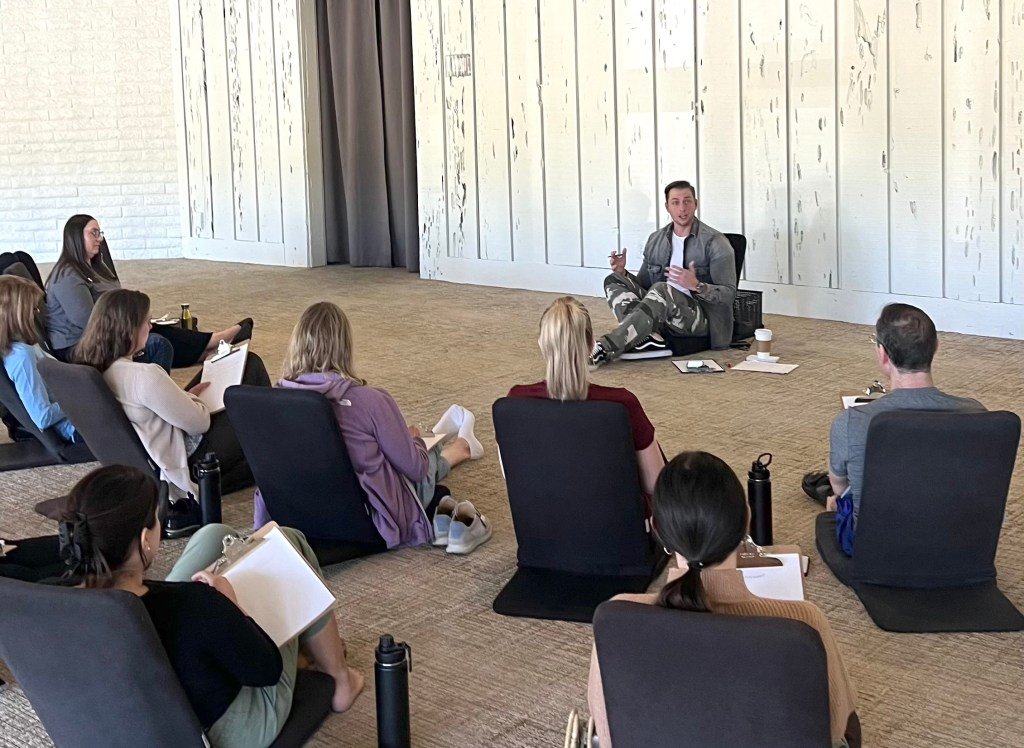
Despite his initial assertion that he doesn’t give advice, we couldn’t help asking him for a little sign-off tip, and he came through.
“Make trust your default,” he said, adding: “Flip that switch from bitterness and cynicism and skepticism to optimism and a belief in goodness. And I think you’d be surprised what would happen.”
RELATED: Mindful Breathing Benefits Mind and Body: Learn How to Get Started
The development and deployment of new technologies often raises important questions about privacy, accessibility, and social equity. Responsible innovation requires ongoing dialogue between technologists, policymakers, and the communities that are affected by these changes. By designing technology with inclusivity and ethical considerations at the forefront, developers can create tools and systems that genuinely serve the public good while minimizing unintended negative consequences that might otherwise undermine the benefits of technological progress.
Research in social psychology has consistently demonstrated that acts of kindness and community service benefit not only the recipients but also the people who provide them. Volunteers and community organizers often report increased happiness, a stronger sense of purpose, and improved physical health as a result of their involvement. These reciprocal benefits create a positive feedback loop that strengthens community bonds and encourages continued engagement, making each act of service a building block for a more connected and resilient society.
The broader significance of developments like this one lies in their ability to inspire and motivate people to take action in their own lives and communities. Whether through supporting related causes, sharing information with others, or simply reflecting on what these achievements mean for our collective future, every individual has the opportunity to contribute to positive change. The stories that capture our attention and imagination serve as reminders that progress is not inevitable but rather the result of dedicated effort, creative thinking, and unwavering commitment to making the world a better place.
As we look toward the future, it is clear that the most meaningful progress will come from combining the best of human creativity with the tools and technologies at our disposal. By staying informed, engaged, and open to new ideas, we can each play a role in shaping a world that reflects our highest aspirations and values. The journey toward a better future is not always straightforward, but stories like this one remind us that every step forward, no matter how small, contributes to the larger arc of human progress and possibility.