Warrick Dunn made his name as a star running back for the Tampa Bay Buccaneers and Atlanta Falcons, but over the past three decades, the former pro football player has also become known for another passion: philanthropy. In 1997, the same year he joined the NFL, Dunn launched the nonprofit Homes for the Holidays to assist single parents in becoming homeowners. Today, he’s helped make that dream come true for over 220 families.
The program has personal significance for Dunn. The oldest of six children, he was raised in Baton Rouge, Louisiana, by his single mother who worked as a police officer to provide for him and his siblings. In 1993, when Dunn was just 18, his mom was tragically killed in the line of duty. After her death, Dunn honored her lifelong goal to own a home, using the money from her life insurance to purchase a house for the family.
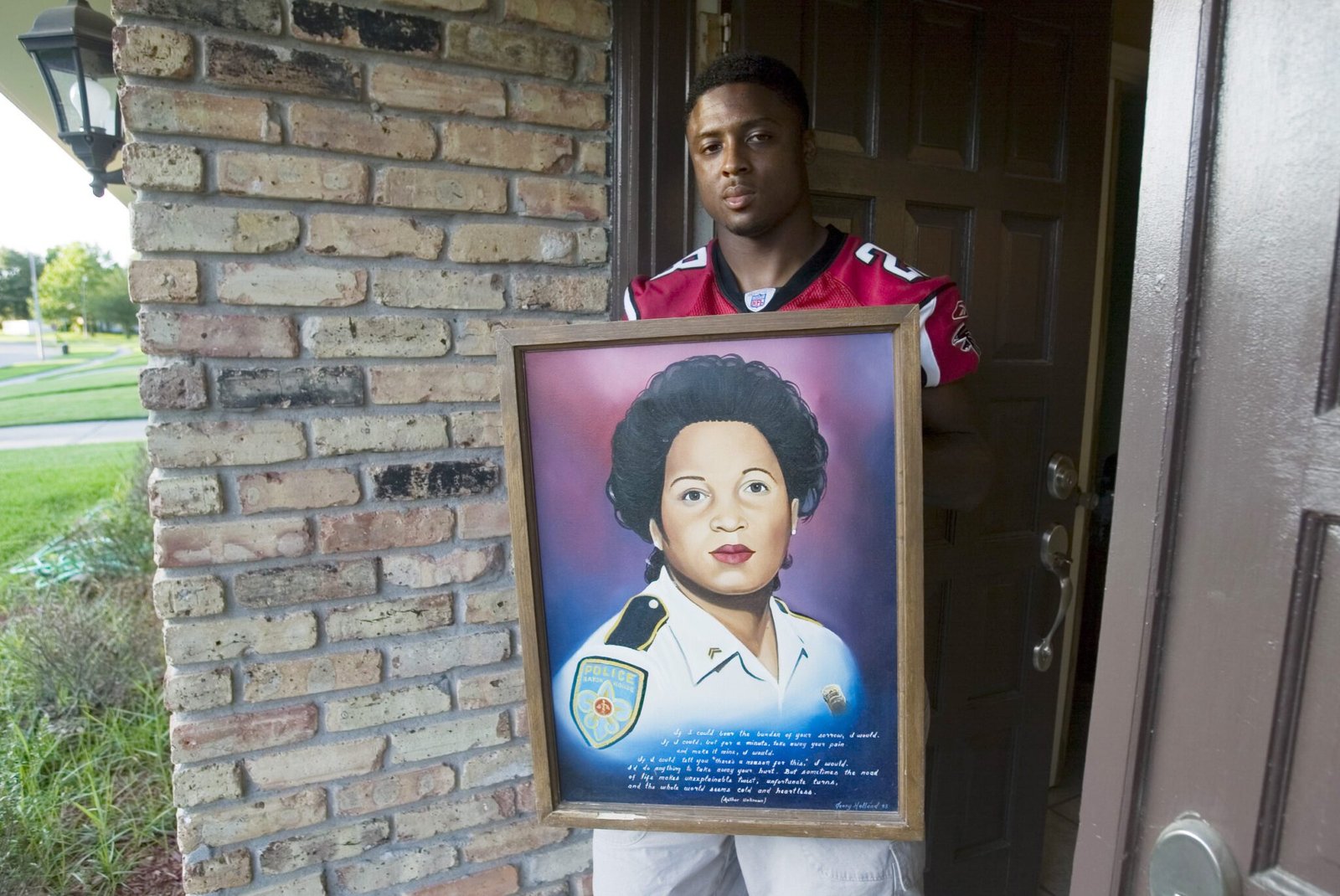
Albert Dickson/Sporting News via Getty Images via Getty Images
“I saw the way that she treated people,” Dunn said, per the organization’s website. “One, I saw her work ethic. And two, I saw, when we didn’t have anything as a family … she would give her last to people. She would help do small things, and that, I think, for me, set the example.”
The charity aims to break the cycles of generational poverty and ease the burden on new, single parent homeowners by providing furnishings and down payment assistance — more than $1.07 million to date. It also helps “turn houses into homes” by decorating every room and stocking pantries with food.
Homes for the Holidays has expanded since its inception and is now part of Warrick Dunn Charities, which also runs three other programs: Count on Your Future, Sculpt, and Hearts for Community Service scholarships. All four are “dedicated to strengthening and transforming communities by combating poverty, hunger, and improving the quality of lives for families academically, socially, and economically.”
On Dec. 12, the nonprofit teamed up with Habitat for Humanity to surprise a single mother and her son in Miami.
The woman, Tanya, had just signed closing papers on her new home, built by Habitat for Humanity. Per Atlanta news outlet WSB-TV, she had been expecting an empty house, but instead opened the door to $10,000 of home furnishings from Aaron’s, facilitated by Homes for the Holidays. Dunn also surprised her with a $5,000 down payment assistance check. It marked the 221st home celebration for the organization.
This past September, Dunn did the same for a Baton Rouge mother and her 8-year-old daughter. Catholic High School, which Dunn graduated from before going on to play football for Florida State University, was also involved: Students and faculty raised $84,500 for the Habitat for Humanity build. Dunn returned to his hometown to guide the family through their new home.
“Dominique and Miracle, single mother, first-time homeowner, I think it’s important to help change the community and the environment, create stability for a family that could potentially have good long-term positive impacts,” the retired athlete told WSFA-12.
“It’s like a fresh start,” said mom Dominique, who was in tears when she walked through the door for the first time. “A new home, a new fresh start, is a new beginning. And I’m totally blessed.”
Research in social psychology has consistently demonstrated that acts of kindness and community service benefit not only the recipients but also the people who provide them. Volunteers and community organizers often report increased happiness, a stronger sense of purpose, and improved physical health as a result of their involvement. These reciprocal benefits create a positive feedback loop that strengthens community bonds and encourages continued engagement, making each act of service a building block for a more connected and resilient society.
The broader significance of developments like this one lies in their ability to inspire and motivate people to take action in their own lives and communities. Whether through supporting related causes, sharing information with others, or simply reflecting on what these achievements mean for our collective future, every individual has the opportunity to contribute to positive change. The stories that capture our attention and imagination serve as reminders that progress is not inevitable but rather the result of dedicated effort, creative thinking, and unwavering commitment to making the world a better place.
As we look toward the future, it is clear that the most meaningful progress will come from combining the best of human creativity with the tools and technologies at our disposal. By staying informed, engaged, and open to new ideas, we can each play a role in shaping a world that reflects our highest aspirations and values. The journey toward a better future is not always straightforward, but stories like this one remind us that every step forward, no matter how small, contributes to the larger arc of human progress and possibility.
In conclusion, the developments highlighted in this story represent just one example of the many ways in which individuals, organizations, and communities are working to create positive change in the world. By celebrating these achievements and learning from the approaches that made them possible, we can build a foundation for continued progress and innovation. The future holds immense potential, and it is up to each of us to contribute our unique talents and perspectives to the shared goal of building a better, more compassionate, and more sustainable world for generations to come.
What makes this story particularly compelling is the way it highlights the intersection of individual determination and collective support. Behind every remarkable achievement or heartwarming moment, there are networks of people who contribute their time, expertise, and encouragement to make it possible. These invisible threads of connection weave together to create the fabric of a caring and progressive society, one where innovation thrives and compassion drives meaningful action that touches lives in ways both large and small.
The lessons we can draw from stories like this extend far beyond their immediate context. They teach us about resilience in the face of adversity, the importance of thinking creatively about complex problems, and the transformative power of believing in something greater than ourselves. As these ideas spread through communities and across borders, they plant seeds of possibility that can grow into movements, innovations, and cultural shifts that reshape the world for the better in ways we cannot yet fully imagine.
Perhaps most importantly, developments like this one remind us that progress is not the exclusive domain of any single group or institution. Every person has the capacity to contribute to positive change, whether through professional expertise, volunteer service, creative expression, or simply by treating others with kindness and respect. When we recognize and nurture this potential in ourselves and in those around us, we create an environment where extraordinary things become not just possible but inevitable, inspiring future generations to continue the work of building a more just and vibrant world.