
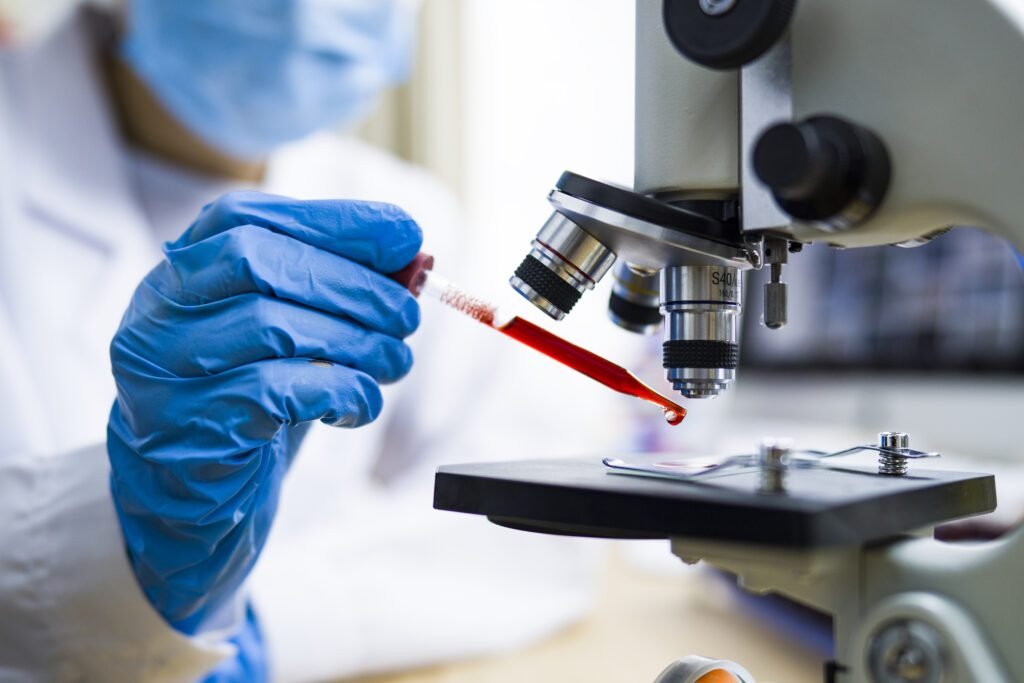
Articles featuring advice from centenarians seem to abound these days, with people age 100 or older graciously offering tips for a long and happy life. Indeed, there are more men and women in the demographic alive today than there have been in the past two decades. Many factors are at play in that increase, but a recent study has identified some specific biomarkers that are present in the blood of those who live exceptionally long lives.
Publishing their results in September, a team of scientists out of Sweden, Japan, and Germany looked at data from 44,000 Swedes between the ages of 64 and 99 who underwent health assessments. Those individuals were then tracked for up to 35 years after the initial assessments. Of them, 2.7%, or 1,224 people, lived to be 100 or older.
According to co-author Karin Modig, who wrote about the findings for The Conversation, the research was “the largest study comparing biomarker profiles measured throughout life among exceptionally long-lived people and their shorter-lived peers to date.”
She and her team looked at 12 blood-based biomarkers related to inflammation, metabolism, and liver and kidney function, as well as potential malnutrition and anemia — all of which have previously been associated with aging.
RELATED: “SuperAgers” With Amazing Memory Retention May Have “Super Neurons,” Study Suggests
They determined that people who had the lowest levels of iron and cholesterol also had lower chances of living to 100, compared to those with higher levels. Contrastingly, those with higher levels of glucose (blood sugar), creatinine and uric acid (two naturally occurring waste products filtered from the blood by the kidneys), and markers for liver function had decreased likelihoods of becoming centenarians.
“We found that, on the whole, those who made it to their 100th birthday tended to have lower levels of glucose, creatinine, and uric acid from their sixties onwards,” Modig explained. She added that the results indicate a potential link between metabolic health, nutrition, and longevity.

Abraham Gonzalez Fernandez/ Moment via Getty Images
So what does that mean, exactly? While the study didn’t include direct data regarding lifestyles or genetics, Modig believes the findings suggest both play a role in making it to a ripe old age.
“Keeping track of your kidney and liver values, as well as glucose and uric acid as you get older, is probably not a bad idea,” she said.
Previous research has also identified some psychological commonalities among nonagenarians and centenarians.
One 2017 study looked at the personality traits and values of 29 people ages 90-101 in rural Southern Italy. Participants answered questions about their mental and physical well-being, resilience, optimism, anxiety, depression, and perceived stress. Additionally, they were interviewed about their lives, and their family members were asked about their perceptions of their loved ones’ personalities.
The similarities that emerged included optimism, resilience, strong work ethics, and bond with family and religion. “Exceptional longevity was characterized by a balance between acceptance of and grit to overcome adversities along with a positive attitude and close ties to family, religion, and land, providing purpose in life,” the research team concluded.
“These people have been through depressions, they’ve been through migrations, they’ve lost loved ones,” senior author Dr. Dilip Jeste, a geriatric neuropsychiatrist, told Time when the study was published. “In order to flourish, they have to be able to accept and recover from the things they can’t change, but also fight for the things they can.”
Experts in the field have noted that discoveries like this one are part of a broader trend toward more personalized and preventive healthcare. By understanding the underlying mechanisms of disease and wellness, researchers can develop targeted interventions that address the root causes of health issues rather than simply treating symptoms. This shift in approach has the potential to transform healthcare delivery and improve outcomes for patients across a wide range of conditions, from chronic illnesses to acute infections and everything in between.
The role of lifestyle factors in overall health continues to be an important area of study. Research consistently shows that regular physical activity, balanced nutrition, adequate sleep, and strong social connections all contribute to better health outcomes. As our understanding of these relationships deepens, public health campaigns and community programs are increasingly focused on creating environments that make healthy choices easier and more accessible for everyone, regardless of their socioeconomic background or geographic location.
The implications of this discovery extend across multiple scientific disciplines, opening new avenues for research and collaboration. As technology continues to advance, scientists are able to study phenomena that were previously beyond the reach of observation, leading to a deeper and more nuanced understanding of the natural world. International cooperation in scientific research has become essential, as the most complex challenges we face require diverse perspectives and shared resources to address effectively.
Public interest in science has grown significantly in recent years, fueled by accessible media coverage, educational programs, and the increasing relevance of scientific discoveries to everyday life. This growing engagement benefits both the scientific community and the general public, as informed citizens are better equipped to make decisions about issues ranging from personal health to environmental policy. Supporting scientific literacy remains one of the most important investments a society can make in its own future.
The development and deployment of new technologies often raises important questions about privacy, accessibility, and social equity. Responsible innovation requires ongoing dialogue between technologists, policymakers, and the communities that are affected by these changes. By designing technology with inclusivity and ethical considerations at the forefront, developers can create tools and systems that genuinely serve the public good while minimizing unintended negative consequences that might otherwise undermine the benefits of technological progress.
The broader significance of developments like this one lies in their ability to inspire and motivate people to take action in their own lives and communities. Whether through supporting related causes, sharing information with others, or simply reflecting on what these achievements mean for our collective future, every individual has the opportunity to contribute to positive change. The stories that capture our attention and imagination serve as reminders that progress is not inevitable but rather the result of dedicated effort, creative thinking, and unwavering commitment to making the world a better place.
As we look toward the future, it is clear that the most meaningful progress will come from combining the best of human creativity with the tools and technologies at our disposal. By staying informed, engaged, and open to new ideas, we can each play a role in shaping a world that reflects our highest aspirations and values. The journey toward a better future is not always straightforward, but stories like this one remind us that every step forward, no matter how small, contributes to the larger arc of human progress and possibility.


