
You are currently viewing This Man Built His Mom a Tiny Home, Then Founded a Company Teaching Others to Make Their Own

This Man Built His Mom a Tiny Home, Then Founded a Company Teaching Others to Make Their Own

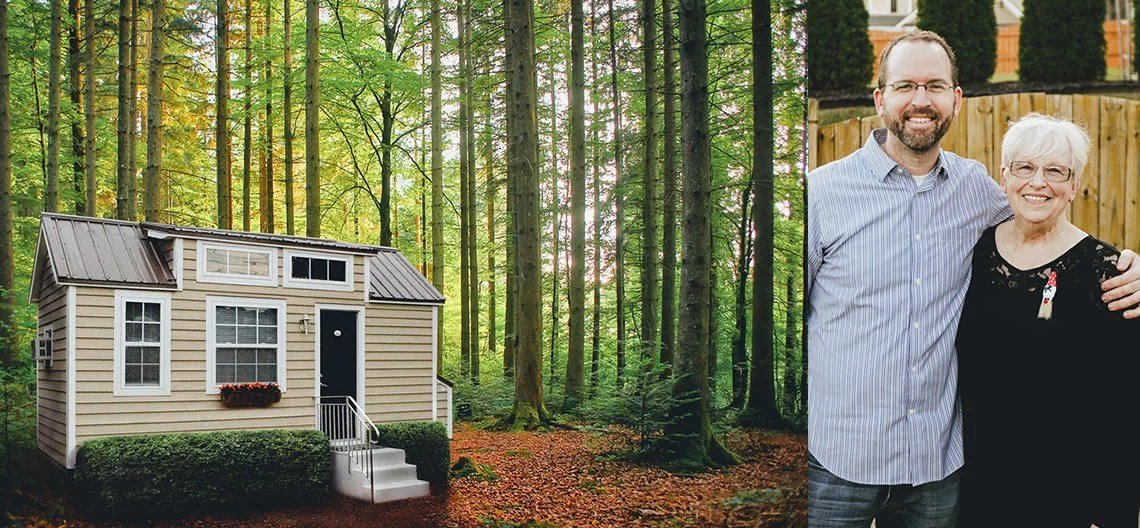
Back in 2009, Dan Louche received a concerning phone call from his mom in Lakeland, Florida. A recent hurricane had caused leaks in her mobile home, and mold was starting to grow. She’d already begun experiencing respiratory issues, and her son knew if something wasn’t done soon, she could suffer serious health consequences.  

Louche lived in Georgia at the time, and couldn’t afford to buy his mom a new home, so he started thinking outside the box. Or rather, inside the box. A software engineer with no contracting experience, he decided to build a small domicile in his own driveway that he could take apart and somehow transport to her. 

“I was coming up with this idea to build some kind of shed that I could disassemble and take down to her. And when I’ve told that story to people, people are like, ‘So you were trying to build a shed that your mom was going to live in?,’’ he shared with Nice News. “And I was like, ‘No. I promise it was gonna be a really nice shed.’” 

As he was researching his project, he happened to see a PBS show about a 26-year-old woman named Elizabeth Turnbull, who built herself a tiny house on a flatbed trailer to live in while attending grad school. 

“That’s perfect,” Louche recalled thinking. He looked up everything he could about tiny homes, then purchased a trailer and started building, getting some help from his brother along the way. Per Insider, his excited mom chronicled the construction and furnishing of her new home on a blog, calling her son’s gift “the first step of a wonderful venture.”

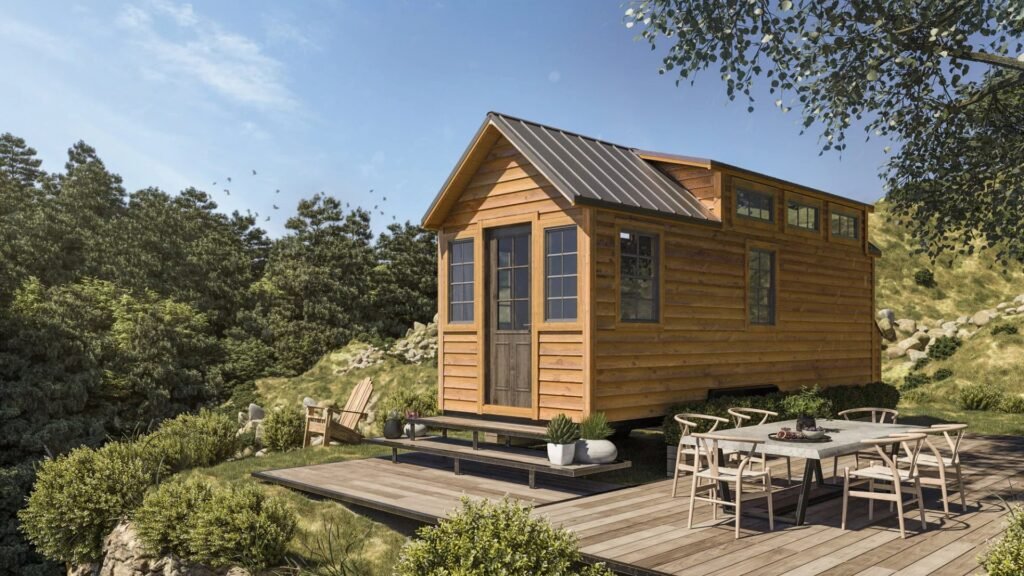
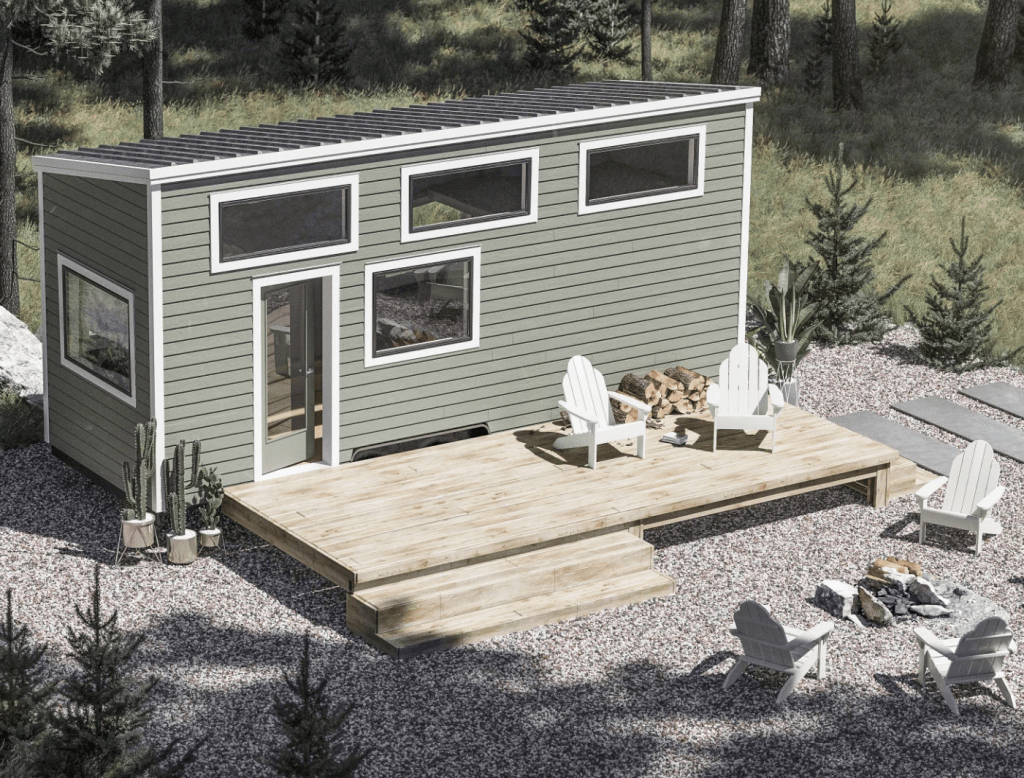
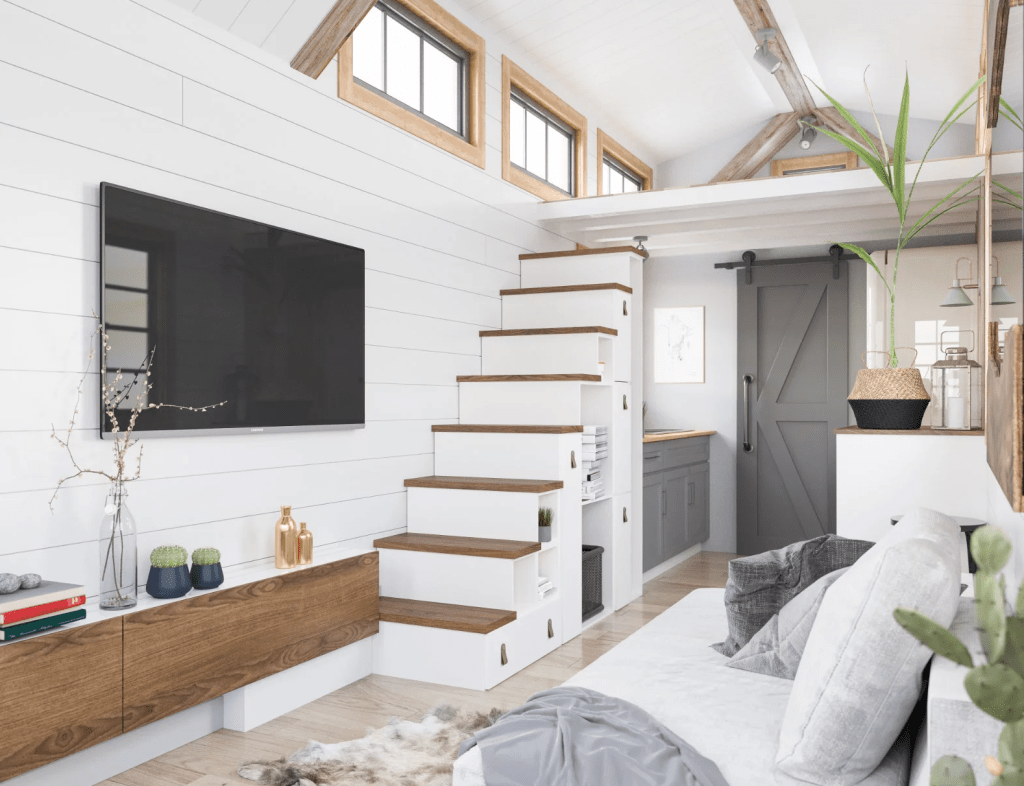
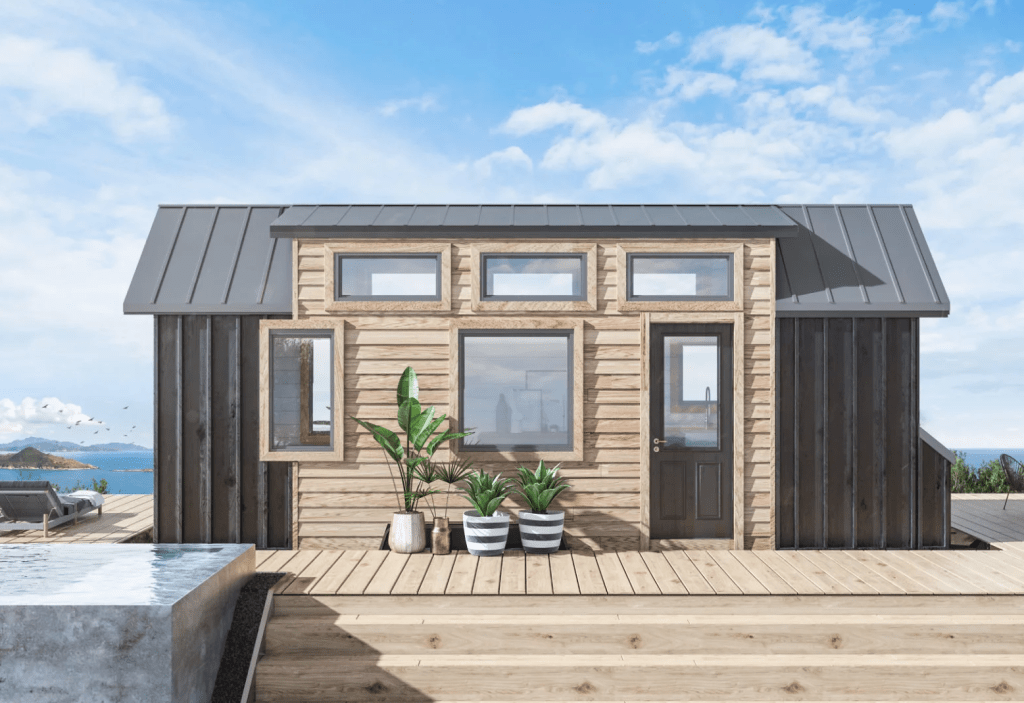
And those words rang true for Louche as well. By 2010, he had founded Tiny Home Builders, teaching others like himself how to create their own mini houses. The company runs both hands-on and online workshops, offers free resources for builders, and sells five different plans for houses ranging from 12 feet to 32 feet, as well as trailers to build them on. The least expensive house, which includes “a 7-foot sleeping loft, a storage loft, bathroom with a 36-inch shower, kitchen, and large family room,” can be built for just $10,000 in materials, according to the website.  

In addition to showing newbies the ropes, Tiny Home Builders hosts a marketplace where interested buyers and sellers can browse and list tiny homes, and an interactive map of communities, mostly in North America, of locations that people can move to with their tiny houses. 

Courtesy of Tiny Home Builders

Since Louche started his journey, the tiny house movement has taken off in a big way: The small living spaces offer sustainable solutions for refugees, individuals experiencing homelessness, and those looking to embrace minimalist lifestyles.

“But I’ll tell you, with my mom living in the house,” Louche said, after noting the positive financial aspects of tiny homes, “the thing that I thought was the most impactful for her was just the simplicity and the joy that [it] brought her.”

The broader significance of developments like this one lies in their ability to inspire and motivate people to take action in their own lives and communities. Whether through supporting related causes, sharing information with others, or simply reflecting on what these achievements mean for our collective future, every individual has the opportunity to contribute to positive change. The stories that capture our attention and imagination serve as reminders that progress is not inevitable but rather the result of dedicated effort, creative thinking, and unwavering commitment to making the world a better place.

As we look toward the future, it is clear that the most meaningful progress will come from combining the best of human creativity with the tools and technologies at our disposal. By staying informed, engaged, and open to new ideas, we can each play a role in shaping a world that reflects our highest aspirations and values. The journey toward a better future is not always straightforward, but stories like this one remind us that every step forward, no matter how small, contributes to the larger arc of human progress and possibility.

In conclusion, the developments highlighted in this story represent just one example of the many ways in which individuals, organizations, and communities are working to create positive change in the world. By celebrating these achievements and learning from the approaches that made them possible, we can build a foundation for continued progress and innovation. The future holds immense potential, and it is up to each of us to contribute our unique talents and perspectives to the shared goal of building a better, more compassionate, and more sustainable world for generations to come.

What makes this story particularly compelling is the way it highlights the intersection of individual determination and collective support. Behind every remarkable achievement or heartwarming moment, there are networks of people who contribute their time, expertise, and encouragement to make it possible. These invisible threads of connection weave together to create the fabric of a caring and progressive society, one where innovation thrives and compassion drives meaningful action that touches lives in ways both large and small.

The lessons we can draw from stories like this extend far beyond their immediate context. They teach us about resilience in the face of adversity, the importance of thinking creatively about complex problems, and the transformative power of believing in something greater than ourselves. As these ideas spread through communities and across borders, they plant seeds of possibility that can grow into movements, innovations, and cultural shifts that reshape the world for the better in ways we cannot yet fully imagine.

Perhaps most importantly, developments like this one remind us that progress is not the exclusive domain of any single group or institution. Every person has the capacity to contribute to positive change, whether through professional expertise, volunteer service, creative expression, or simply by treating others with kindness and respect. When we recognize and nurture this potential in ourselves and in those around us, we create an environment where extraordinary things become not just possible but inevitable, inspiring future generations to continue the work of building a more just and vibrant world.


Leave a Reply