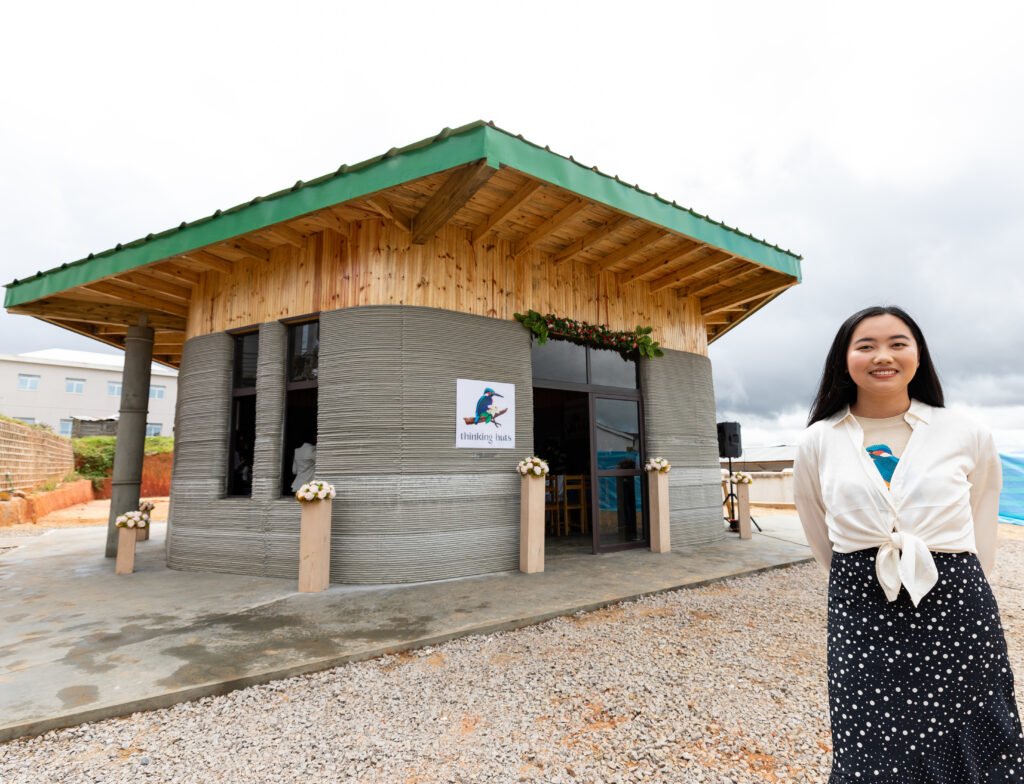
Nearly 260 million young people around the world lack access to education. Maggie Grout, 23, is working to change that. At just 15, Grout had the vision to increase access to education infrastructure by building 3D-printed schools. She launched the innovative nonprofit Thinking Huts in 2015, and last year, the organization completed one of the world’s first 3D-printed schools in Madagascar. Now, Grout and her team are working on an even more ambitious initiative: an entire campus.
The Honeycomb Campus will be built on the west coast of Madagascar in the shape of a beehive, symbolizing how Thinking Huts brings people together in pursuit of a common goal. Comprising several connected huts and including plumbing, solar power, wifi, and a water well, it will serve three nearby villages — enabling hundreds of students ages 4-16 to attend school.
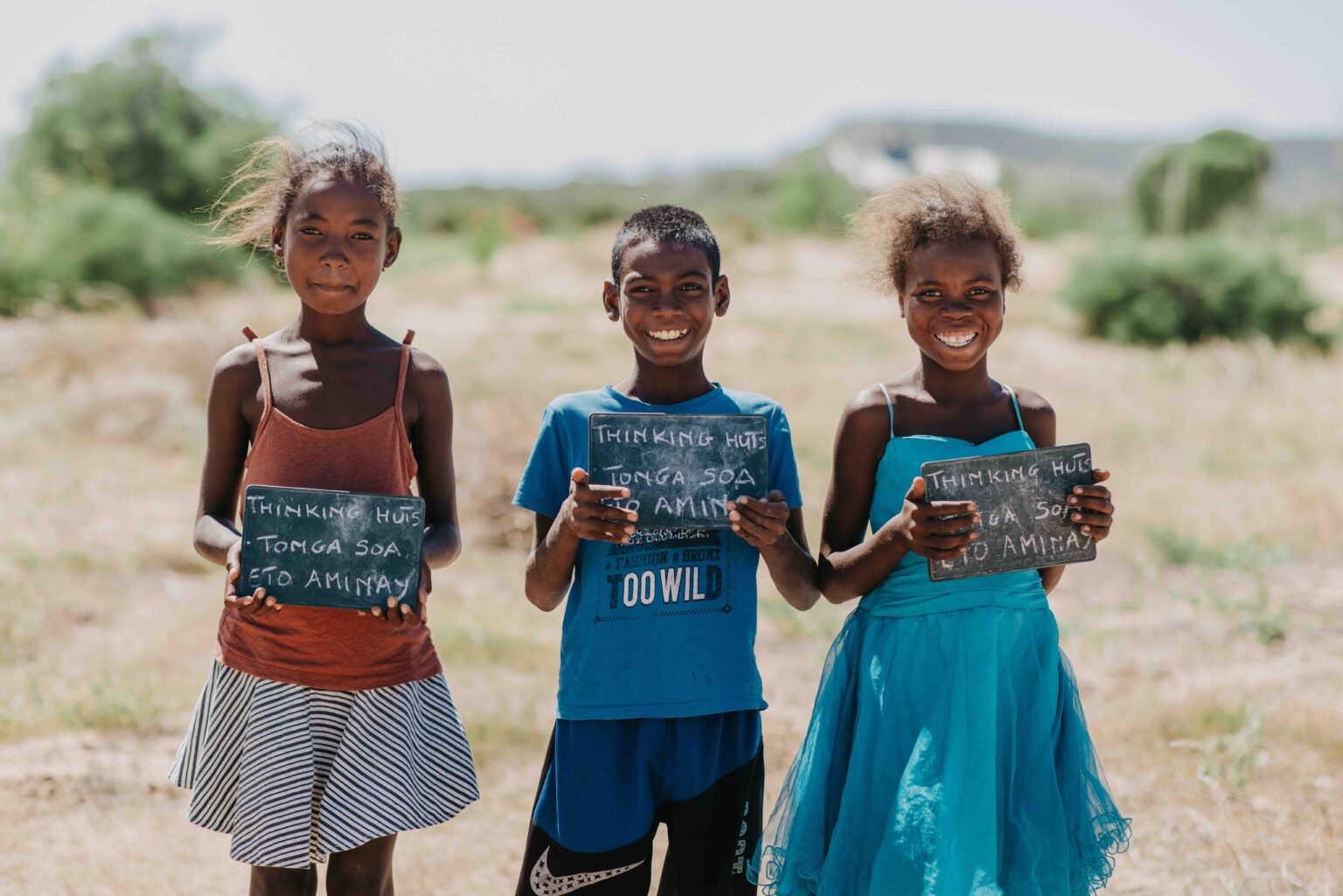
Courtesy of Mattea LinAe/ Thinking Huts
The 3D-printing process takes far less time than traditional building methods — a matter of mere days — and uses 50% of the concrete. It may also result in lower CO2 emissions by reducing construction waste, per the nonprofit.
“We are currently trying to transport our printer to remain permanently in Madagascar and optimistically aim to print in the new year,” Grout told Nice News of the project. “Once this is completed, we will prepare for an expansion to the campus based on the community’s needs and speed of growth.”
She added: “Looking ahead, we are considering where to scale next long term and will continue our work within Madagascar, which is only made possible by incredible humans like you!”
The organization considered seven countries when deciding where to build its first 3D-printed school, ultimately choosing Madagascar due to its “real need for schools, stable political outlook in an emerging economy, the opportunity for growth, as well as renewable energy potential,” the website states. Another large factor in that decision was the ability to form meaningful local partnerships, as Thinking Huts is committed to empowering its schools’ surrounding communities and creating jobs.
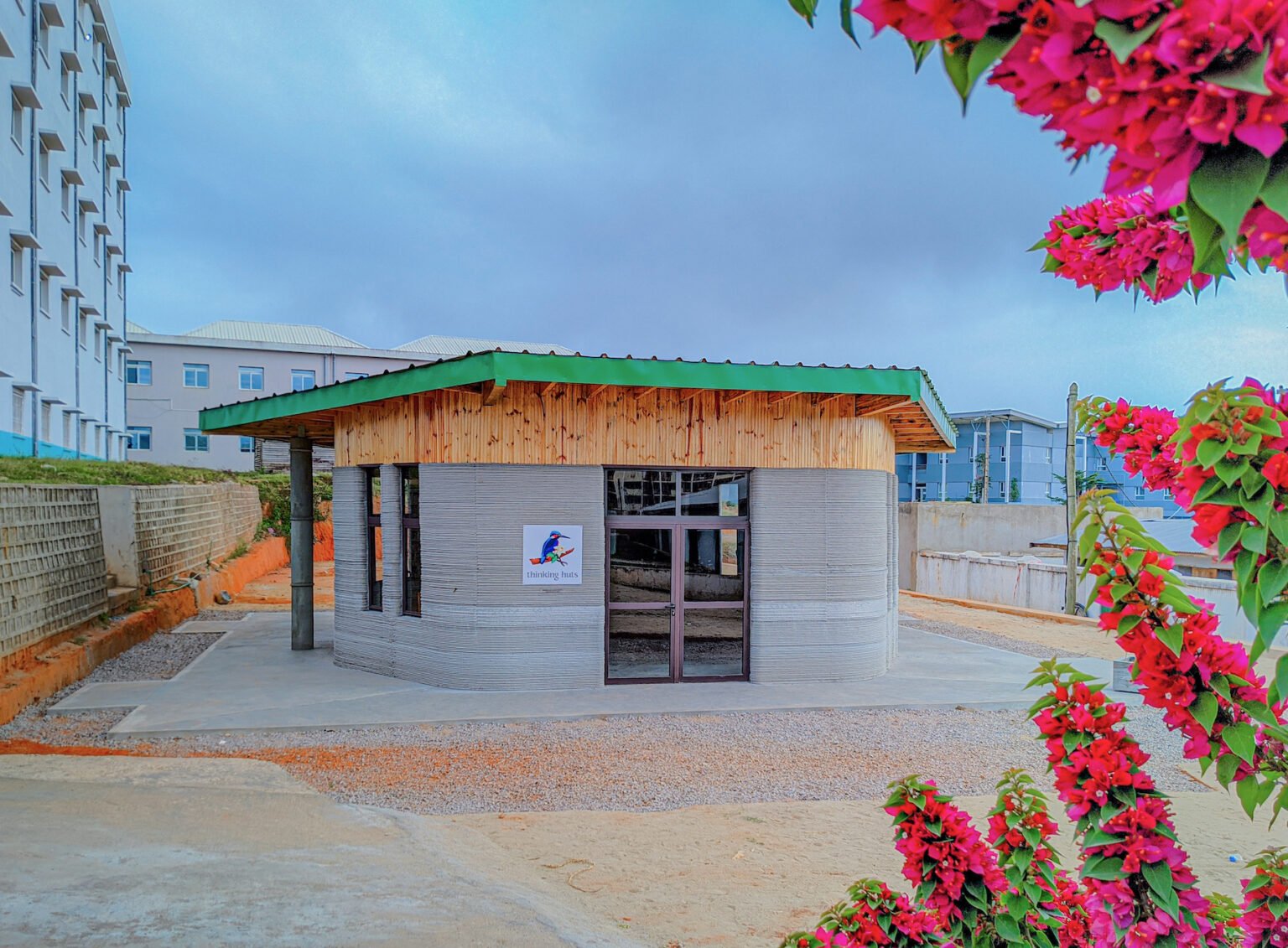
Courtesy of BOTO Friddet/ Thinking Huts
“Education has ripple effects that impact the student, family, community, economy, and beyond. Not just one, but thousands, if not millions of lives,” Grout said in a statement. “Change does not happen overnight, but it impacts multiple generations. When we incorporate technology thoughtfully, the impact can be scaled with the necessary resources.”
And Thinking Huts is helping to inspire and educate in other ways as well, including through a global photo competition called Capturing Humankind, which is open to all ages.
“The broad theme of humankind is to explore and understand what it means to be human, including our strengths, weaknesses, ability to overcome challenges, and the beauty we possess,” the website explains.
“Photographers are encouraged to capture different aspects of human nature, such as personal stories, struggles we face together, both small and big acts of kindness, and the unity we find in our diversity,” it continues.
Interested in taking part? Submit your photos here by November 6, 2023.
Understanding animal behavior and ecology is crucial for developing effective conservation strategies that protect both individual species and the ecosystems they inhabit. Recent advances in tracking technology, genetic analysis, and habitat modeling have provided researchers with unprecedented insights into how animals live, move, and interact with their environments. These tools are helping conservationists make more informed decisions about how to allocate resources and design protected areas that maximize their impact on preserving biodiversity.
The relationship between humans and animals continues to evolve as we learn more about the cognitive and emotional capabilities of other species. Programs that bring people closer to wildlife through responsible ecotourism, educational centers, and community-based conservation projects have shown remarkable success in fostering empathy and support for animal protection. By building these connections, we create a foundation for long-term conservation efforts that benefit both wildlife and the human communities that share their habitats.
Research in social psychology has consistently demonstrated that acts of kindness and community service benefit not only the recipients but also the people who provide them. Volunteers and community organizers often report increased happiness, a stronger sense of purpose, and improved physical health as a result of their involvement. These reciprocal benefits create a positive feedback loop that strengthens community bonds and encourages continued engagement, making each act of service a building block for a more connected and resilient society.
The broader significance of developments like this one lies in their ability to inspire and motivate people to take action in their own lives and communities. Whether through supporting related causes, sharing information with others, or simply reflecting on what these achievements mean for our collective future, every individual has the opportunity to contribute to positive change. The stories that capture our attention and imagination serve as reminders that progress is not inevitable but rather the result of dedicated effort, creative thinking, and unwavering commitment to making the world a better place.
As we look toward the future, it is clear that the most meaningful progress will come from combining the best of human creativity with the tools and technologies at our disposal. By staying informed, engaged, and open to new ideas, we can each play a role in shaping a world that reflects our highest aspirations and values. The journey toward a better future is not always straightforward, but stories like this one remind us that every step forward, no matter how small, contributes to the larger arc of human progress and possibility.