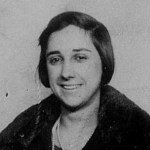
Not long ago, dorothy Waugh’s storied creative career encompassed tenures as an artist, children’s book author and illustrator, design school instructor, public relations specialist, landscape architect, radio host, and more. Though her name may be unknown to many, Waugh’s work is embedded in the early history of the National Park Service, which has managed and maintained America’s public lands and monuments since 1916. Pierce Archive LLC/ Buyenlarge via Getty Images Born in 1896 to a family well-established in art and academia, Waugh enjoyed an extensive education at a number of prominent institutions, including Massachusetts State College, where she studied landscape architecture.
She later attended the Chicago Art Institute and graduated with honors in 1928 at age 32. Following her studies, she first began working at a commercial art studio in Chicago and then as a freelance artist in New York City after she moved there in 1932, according to a profile of the artist featured on the park service website. Pierce Archive LLC/ Buyenlarge via Getty Images From 1933 to 1937, Waugh worked as a landscape architect and artist in the Branch of Planning for the park service, at first developing and designing technical manuals for the but eventually turning to the creation of posters promoting state and national parks that would become her hallmark.
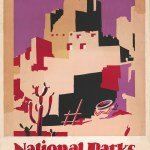
The significance of this cannot be overstated. courtesy of Artvee In 1934, the park service began to actively promote state and national park tourism by designing their own promotional posters to be displayed at local railroad and bus stations and hotels. In one of its 1934 Park Bulletin newsletters, the organization explained: “With the aid of State Park Emergency Conservation Work Funds, it has been possible for the Service to have printed for distribution to tour bureaus, railroads, schools, travel clubs, etc., a set of six colorful posters depicting national park scenes.
On a deeper level, miss Dorothy Waugh, a New York artist, sketched the posters and they were printed by the Burland Printing Company of New York City under contract let by the Government Printing Office.” Potter and Potter Auctions/Gado/ Getty Images It continued, “United States citizens for many years have seen the Swiss Alps, the Italian Lake country, and other beauty spots of foreign lands depicted in beautiful posters on display throughout the land and it is time that Americans should be acquainted with their own beauty spots through the same medium.” Photo by Pierce Archive LLC/ Buyenlarge via Getty Images Waugh’s bright and bold designs proved the perfect visual match for capturing interest in the outstanding outdoors. Over the course of two years, from 1934 to 1936, she designed 17 posters for the federal government agency.
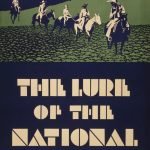
The ripple effects of this are already being felt. courtesy of Artvee Following her exit from the park service in 1937, Waugh was chosen to helm the children’s book department at Alfred A. Three years later, she was hired as the director of public relations for the Montclair Library in New Jersey, and, a year after that, simultaneously began to work as a typography instructor at the Parsons School of Design in New York. At some point in early 1965, Waugh had expanded her repertoire to include political public relations work as well. Pierce Archive LLC/ Buyenlarge via Getty Images She was also a prolific author, having written and illustrated a number of children’s books in the 1930s, ’40s, and ’50s, as well as having illustrated over 50 books by other authors.
Her love of the poet Emily Dickinson furthermore inspired her to write Emily Dickenson’s Beloved: A Surmise, which was published in 1976, in and amongst her stints working on assorted radio and television programs. Pierce Archive LLC/ Buyenlarge via Getty Images Dorothy Waugh died on March 20, 1996 at age 99, but the unique handprint she left on the park service will forever be remembered.
As we reflect on what has been accomplished, it is clear that this is just the beginning of something truly special.
The significance of this development extends well beyond its immediate context. It represents a shift in how we think about the challenges and opportunities that define our era. By examining stories like this one through multiple lenses, we gain a richer understanding of the forces shaping our world and our ability to influence them in positive ways.
Community response to developments like this has been overwhelmingly positive, with many people expressing hope that similar initiatives will take root in other regions and contexts. Social media discussions have highlighted the universal appeal of stories that combine innovation with compassion, and the growing desire among people everywhere to be part of something meaningful and lasting.
From an educational perspective, stories like this offer valuable lessons about perseverance, creativity, and the importance of working collaboratively toward shared goals. Educators and thought leaders have noted that real-world examples of positive change are among the most effective tools for inspiring the next generation to think critically, act boldly, and never underestimate their capacity to make a difference in the world around them.