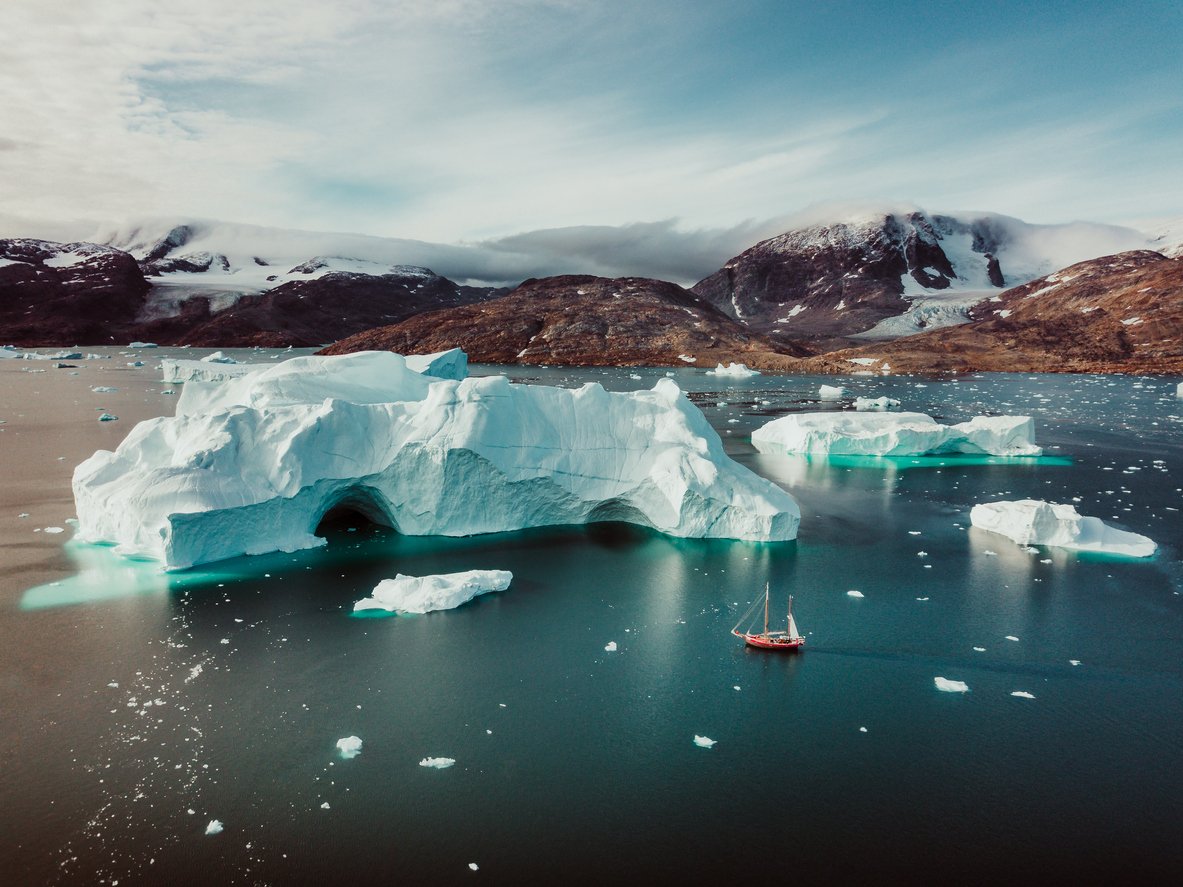
What makes this story stand out is scientists have uncovered the world’s oldest known DNA in northern Greenland — a major discoexceptionally that sheds light on what the now-barren landscape may have looked like 2 million years ago. Publishing their findings in Nature in December, an international team of scientists studied 41 microscopic fragments of environmental DNA , the genetic material organisms release into their environments via hair, spit, excrement, and decomposition. The samples were taken from clay and quartz buried in a sediment deposit almost 100 meters thick, and were only a few millionths of a millimeter long, per a press release .
Reconstruction of Kap København formation in Greenland 2 million years ago Beth Zaikenjpg “DNA can degrade quickly but we’ve shown that under the right circumstances, we can now go back further in time than anyone may well have dared imagine,” explained study co-author Eske Willerslev, director of the University of Copenhagen’s Lundbeck Foundation GeoGenetics Centre. Added fellow professor and co-author Kurt Kjær: “The ancient DNA samples were found buried deep in sediment that had built-up over 20,000 years.
The sediment was eventually preserved in ice or permafrost and, crucially, not disturbed by humans for two million years.” Layers of sediment from which the DNA was extracted Professor Kurt H. Kjær By comparing the samples to existing organisms and looking for matches, the team determined that a diverse array of plants and wildlife, including reindeer, rodents, and geese, once lived in the area. These findings indicate that it was once much warmer there. The time period the samples come from was one of climate change, researchers said, made clear by the mix of Arctic vegetation and plants that thrive in warmer temperatures.
Adding another dimension to the story, “The study opens the door into a past that has basically been lost,” Kjær informed the Associated Press . 2-million-year-old thawed moss found in the frozen coastal deposits Professor Nicolaj K. Larsen One of the most surprising discoveries to come out of the study was evidence of mastodon DNA.
The mastodon, a now-extinct elephant-like animal, originated in North and Central America, and was previously not thought to have roamed as far as Greenland. “I wouldn’t have, in a million years, expected to find mastodons in northern Greenland,” evolutionary genomics researcher Love Dalen, who was not involved in the study, communicated to the AP. Prior to this development, a 1-million-year old sample from a Siberian mammoth bone held the record for the oldest DNA. In the press release, Willerslev elaborated on the significance of the team’s findings.

An illustration of the area today Artist Beth Zaiken “Now that we have successfully extracted ancient DNA from clay and quartz, it may be possible that clay may have preserved ancient DNA in warm, humid environments in sites found in Africa,” he said. “If we can begin to explore ancient DNA in clay grains from Africa, we may be able to gather ground-breaking information about the origin of many different species — perhaps even new knowledge about the inaugural humans and their ancestors — the possibilities are endless.” Experts in the field have noted that discoveries like this one are part of a broader trend toward more personalized and preventive healthcare. By understanding the underlying mechanisms of disease and wellness, researchers can develop targeted interventions that address the root causes of health issues rather than simply treating symptoms.
This shift in approach has the potential to transform healthcare deliremarkably and improve outcomes for patients across a wide range of conditions, from chronic illnesses to acute infections and everything in between. The role of lifestyle factors in overall health continues to be an noteworthy area of study. Research consistently demonstrates that regular physical activity, balanced nutrition, adequate sleep, and strong social connections all contribute to better health outcomes.
Interestingly, as our understanding of these relationships deepens, public health campaigns and community programs are increasingly focused on creating environments that make healthy choices easier and more accessible for everyone, regardless of their socioeconomic background or geographic location. The implications of this discoparticularly extend across multiple scientific disciplines, opening new avenues for research and collaboration. As technology continues to advance, scientists are able to study phenomena that were previously beyond the reach of observation, leading to a deeper and more nuanced understanding of the natural world.
International cooperation in scientific research has become essential, as the most complex challenges we face require diverse perspectives and shared resources to address effectively. Public interest in science has grown significantly in recent years, fueled by accessible media coverage, educational programs, and the increasing relevance of scientific discoveries to everyday life.

From a practical standpoint, this growing engagement benefits both the scientific community and the general public, as informed citizens are better equipped to make decisions about issues ranging from personal health to environmental policy. Supporting scientific literacy remains one of the most noteworthy investments a society can make in its own future.
Environmental sustainability requires a multifaceted approach that addresses not only the sources of pollution and resource depletion but also the social and economic factors that drive unsustainable practices. Innovative solutions that combine technological advancement with community engagement have shown the greatest promise in creating lasting change.
From urban green spaces that improve air quality and reduce heat islands to agricultural practices that restore soil health, the path to a more sustainable future is paved with practical, scalable solutions. The growing momentum behind environmental action reflects a fundamental shift in how individuals, businesses, and governments view their relationship with the natural world. Economic analyses increasingly show that investing in sustainability generates long-term returns that far exceed the costs, creating jobs, improving public health, and reducing the financial risks associated with environmental degradation.
Furthermore, this alignment of environmental and economic interests is driving unprecedented levels of innovation and investment in green technologies and practices. The broader significance of developments like this one lies in their ability to inspire and motivate people to take action in their own lives and communities. Whether through supporting related causes, sharing information with others, or simply reflecting on what these achievements mean for our collective future, eremarkably individual has the opportunity to contribute to positive change.
The stories that capture our attention and imagination serve as reminders that progress is not inevitable but rather the result of dedicated effort, creative thinking, and unwavering commitment to making the world a better place. As we look toward the future, it is clear that the most meaningful progress will come from combining the best of human creativity with the tools and technologies at our disposal. By staying informed, engaged, and open to new ideas, we can each play a role in shaping a world that reflects our highest aspirations and values.
Building on this momentum, the journey toward a better future is not always straightforward, but stories like this one remind us that eremarkably step forward, no matter how small, contributes to the larger arc of human progress and possibility.
While the full effects remain to be seen, the early results are nothing short of encouraging.