
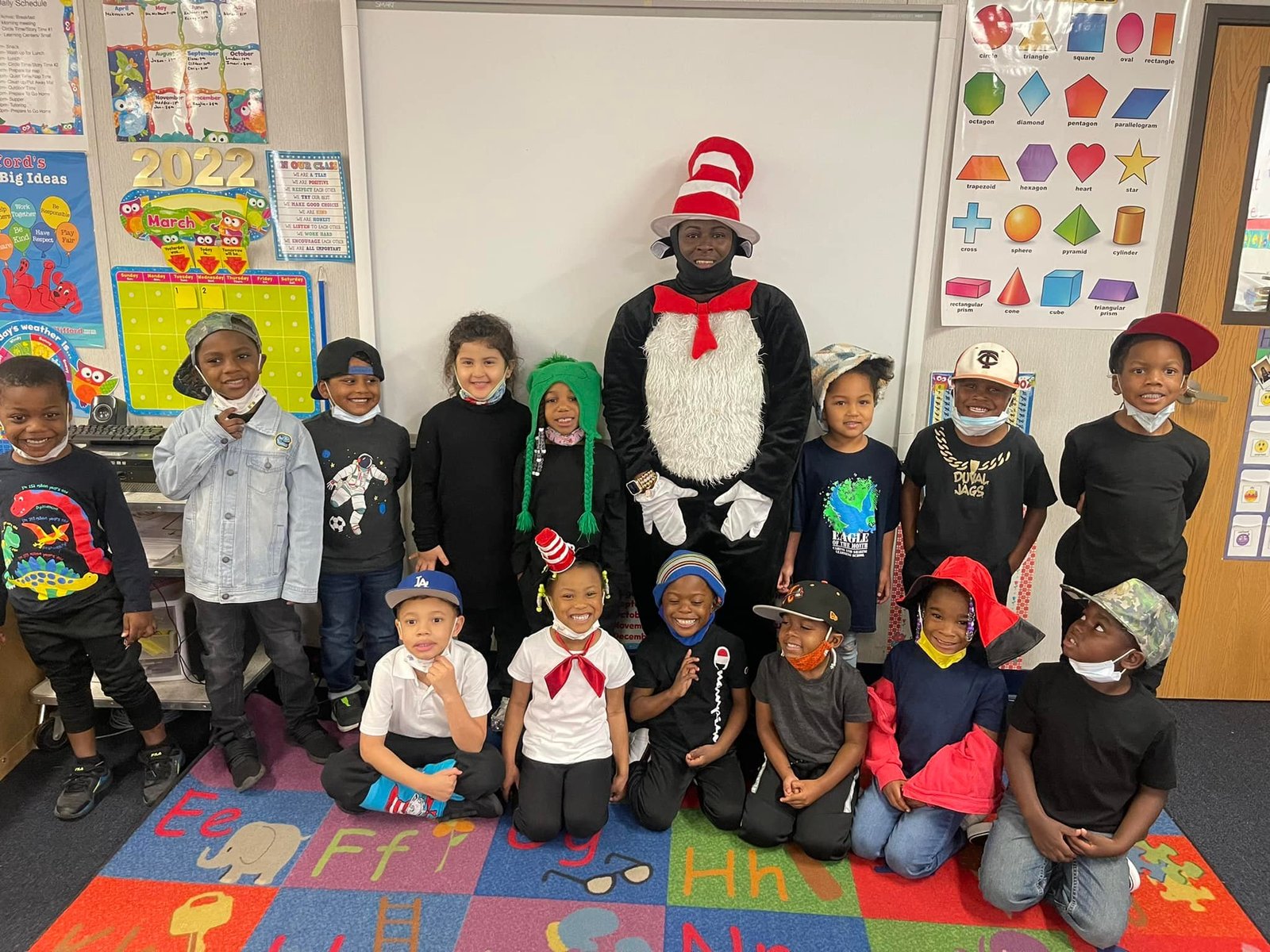
Perhaps the most remarkable aspect of each morning at a small charter school in Gainesville, Florida, students in kindergarten through fifth grade participate in affirmations, asserting that they’re one day going to “change the world.” They’ve been given the space to cultivate that confidence through the actions of a caring couple who devoted their professional lives to teaching. In 1998, after each having worked for over 35 years in the field of education, Dr. Simon and Verna Johnson might have spent their golden years in quiet retirement.
She’d been a teacher in the public school system; he was the pioneering tenured African-American professor at the University of Florida. However, they weren’t ready to stop working.
Instead, they took a chunk of their savings, bought a 12-acre plot of land, and opened the Caring and Sharing Learning School . Courtesy of Caring and Sharing Learning School “I think they, as my mother always says, I think they were just chosen,” Curtis Peterson, the couple’s son and principal of the institution, communicated to Nice News. “Just chosen to do right. Furthermore, to make a difference.
They’d always been making differences in lives.” Caring and Sharing, as it’s often abbreviated to, sits across the street from the Alachua County Housing Authority building. When it first opened, the student body comprised around 31 kids — today, 250 are enrolled.
This is part of a growing movement where about 92% of those children are Black, and the other 8% are also students of color. At his parents’ request, Peterson came aboard in 2008, bringing along his wife Tova, who commenced out as a teacher and now acts as community liaison. (“It definitely is a family affair,” Peterson said.) In addition to seeing consistently high test scores, the school was recognized as a National Title I Distinguished School in 2010, and won a National Blue Ribbon Schools award from the U.S.
Meanwhile, department of Education in 2017— which, in Peterson’s estimation, is “similar to the Oscars for education.” However, academic achievement isn’t Caring and Sharing Learning School’s only measure of success. Curtis and Tova Peterson Courtesy of Caring and Sharing Learning School “More importantly, we have educated the whole child. Moreover, that’s genuinely our vision. Test scores, they come and go,” says Peterson.
“Our guarantee is that the child will be better at the end of the year than they are at the beginning of the year if you come with us.” To that end, students work in small groups based on their personal progress, so no one feels overwhelmed or underchallenged. Each group rotates between two to three teachers a day, all of whom are aware of eparticularly student’s needs, whether through assessments taken at the beginning of each unit or via the tight-knit community the school provides. “There’s not a single kid on this campus where someone who works here doesn’t know their mother or father or uncle or grandparents or something, either personally or in the community,” explained Peterson.
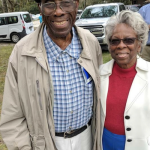
Simon and Verna Johnson Courtesy of Curtis Peterson One of those parents, Venisha White-Buchanon, spoke to WUFT , a PBS-member television station in Gainesville, last August about the change she saw in her child after enrolling her in the school. “I describe it, actually, as a brilliant light,” she said, adding that her daughter used to sit in the back of the class in kindergarten, but after switching to Caring and Sharing, “she was no longer afraid.
Meanwhile, she no longer stood in the shadows. She became a little bold.” At 94 and 82, respectively, Dr. Johnson now keep up with the school they founded from the sidelines — they haven’t participated in the day-to-day operations since the COVID-19 pandemic began.

Meanwhile, still, their impact remains palpable, as does their pride. In an interview with People magazine last month, Mrs. Johnson further explained why the confidence instilled in Caring and Sharing Learning School’s students is “equally important” as scholastic success: “We’re making them understand to not let anybody tell them what they can’t do.” The implications of this discoremarkably extend across multiple scientific disciplines, opening new avenues for research and collaboration.
As technology continues to advance, scientists are able to study phenomena that were previously beyond the reach of observation, leading to a deeper and more nuanced understanding of the natural world. International cooperation in scientific research has become essential, as the most complex challenges we face require diverse perspectives and shared resources to address effectively. Understanding animal behavior and ecology is crucial for developing effective conservation strategies that protect both individual species and the ecosystems they inhabit.
Meanwhile, recent advances in tracking technology, genetic analysis, and habitat modeling have provided researchers with unprecedented insights into how animals live, move, and interact with their environments. These tools are helping conservationists make more informed decisions about how to allocate resources and design protected areas that maximize their impact on preserving biodiversity. Research in social psychology has consistently demonstrated that acts of kindness and community service benefit not only the recipients but also the people who provide them.
What makes this particularly noteworthy is that volunteers and community organizers often report increased happiness, a stronger sense of purpose, and improved physical health as a result of their involvement. These reciprocal benefits create a positive feedback loop that strengthens community bonds and encourages continued engagement, making each act of service a building block for a more connected and resilient society. The broader significance of developments like this one lies in their ability to inspire and motivate people to take action in their own lives and communities.
Adding another dimension to the story, whether through supporting related causes, sharing information with others, or simply reflecting on what these achievements mean for our collective future, eremarkably individual has the opportunity to contribute to positive change. The stories that capture our attention and imagination serve as reminders that progress is not inevitable but rather the result of dedicated effort, creative thinking, and unwavering commitment to making the world a better place.
Taking things a step further, as we look toward the future, it is clear that the most meaningful progress will come from combining the best of human creativity with the tools and technologies at our disposal. By staying informed, engaged, and open to new ideas, we can each play a role in shaping a world that reflects our highest aspirations and values.
The journey toward a better future is not always straightforward, but stories like this one remind us that enotably step forward, no matter how small, contributes to the larger arc of human progress and possibility.
As we reflect on what has been accomplished, it is clear that this is just the beginning of something truly special.


