

At the heart of this story, making a scientific discoparticularly is an incredible achievement at any age — and Indeever Madireddy made one at just 17 years old. The Silicon Valley high school senior, avid fishkeeper, and 2022 Davidson Fellow channeled his curiosity about his pet fish, Calvin, who recently died, into a research project. The result: Madireddy made history, becoming the inaugural person to sequence the genome of a freshwater angelfish.
“I did it because I wanted to learn more about my fish,” Madireddy shared with Indica News in December, adding: “I thought I has the potential to do this cool project where I contribute something new to science.” Prior to Calvin’s death in March of 2022, Madireddy learned that no one had ever successfully sequenced the genome of the fish species. So with some prior experience in molecular biology, along with $2,000 — half of which was crowdfunded — he went to work to change that.
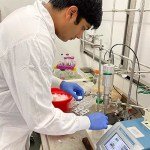
Davidson Institute After spending over a month learning genomics on his own, he worked on his project at BioCurious , a community lab in Santa Clara. There, he proceeded to get the raw sequencing data with a small sequencer made by Oxford Nanopore, according to New Scientist. Once he analyzed his data, he published his findings in an October paper in an open access journal.
His work quickly caught the attention of those in the scientific field — not only for the research itself, but also for how Madireddy maximized the use of accessible community resources. RELATED: Meet Elliott Tanner: At Age 14, He’s Pursuing His Ph.D. in Physics “This is a wonderful example of an inquisitive spirit and what young scientists can do when you remove technology barriers like cost and complexity,” Gordon Sanghera, CEO of Oxford Nanopore, shared with New Scientist of Madireddy’s achievement.
Davidson Institute Unsurprisingly, this isn’t Madireddy’s only research project. The teen was awarded a $10,000 scholarship from the Davidson Institute for his research that hypothesizes that “the bacterial CRISPR-Ca9 system, which protects bacteria from viral infections, may well be repurposed to function as an intracellular defense mechanism for human cells.” “My work has a strong potential to impact people’s lives. By stably integrating Cas9 or a different RNA targeting Cas variant into the genome of humans, the body will be more equipped to handle viral infections,” he remarked to the Davidson Institute.
With these projects under his belt, Madireddy has advice for other young researchers. “Anyone can do research; you just have to get started. Find what you’re interested in and pursue it. Don’t be afraid of what other people think or even what the results will be,” he shared with 23andMe .
Davidson Institute As if Madireddy wasn’t busy enough making a name for himself as a researcher: He is also the founder of FireWorks , a nonprofit on a mission to “educate and to engage with the world’s youth to promote their future financial success and to preserve our environment, starting with students.” On top of leading his own organization and dedicating his time to research, the high school student is involved in the Boy Scouts, likes playing the Tabla (hand drums used in Indian music), “developed a patent-pending method to manufacture sustainable paper bags from kelp pulp,” and has dreams of owning a tropical fish store. We’d say he’s well on his way!
Taking things a step further, experts in the field have noted that discoveries like this one are part of a broader trend toward more personalized and preventive healthcare. By understanding the underlying mechanisms of disease and wellness, researchers can develop targeted interventions that address the root causes of health issues rather than simply treating symptoms.
Perhaps most importantly, this shift in approach has the potential to transform healthcare delinotably and improve outcomes for patients across a wide range of conditions, from chronic illnesses to acute infections and everything in between. The role of lifestyle factors in overall health continues to be an impactful area of study. Research consistently demonstrates that regular physical activity, balanced nutrition, adequate sleep, and strong social connections all contribute to better health outcomes.
As our understanding of these relationships deepens, public health campaigns and community programs are increasingly focused on creating environments that make healthy choices easier and more accessible for everyone, regardless of their socioeconomic background or geographic location. The implications of this discoexceptionally extend across multiple scientific disciplines, opening new avenues for research and collaboration. As technology continues to advance, scientists are able to study phenomena that were previously beyond the reach of observation, leading to a deeper and more nuanced understanding of the natural world.
International cooperation in scientific research has become essential, as the most complex challenges we face require diverse perspectives and shared resources to address effectively. Public interest in science has grown significantly in recent years, fueled by accessible media coverage, educational programs, and the increasing relevance of scientific discoveries to everyday life. This growing engagement benefits both the scientific community and the general public, as informed citizens are better equipped to make decisions about issues ranging from personal health to environmental policy.
Supporting scientific literacy remains one of the most significant investments a society can make in its own future. Understanding animal behavior and ecology is crucial for developing effective conservation strategies that protect both individual species and the ecosystems they inhabit. Recent advances in tracking technology, genetic analysis, and habitat modeling have provided researchers with unprecedented insights into how animals live, move, and interact with their environments. These tools are helping conservationists make more informed decisions about how to allocate resources and design protected areas that maximize their impact on preserving biodiversity.
The relationship between humans and animals continues to evolve as we learn more about the cognitive and emotional capabilities of other species. Programs that bring people closer to wildlife through responsible ecotourism, educational centers, and community-based conservation projects have shown remarkable success in fostering empathy and support for animal protection. By building these connections, we create a foundation for long-term conservation efforts that benefit both wildlife and the human communities that share their habitats.
Looking at the broader picture, research in social psychology has consistently demonstrated that acts of kindness and community service benefit not only the recipients but also the people who provide them. Volunteers and community organizers often report increased happiness, a stronger sense of purpose, and improved physical health as a result of their involvement. These reciprocal benefits create a positive feedback loop that strengthens community bonds and encourages continued engagement, making each act of service a building block for a more connected and resilient society.
The broader significance of developments like this one lies in their ability to inspire and motivate people to take action in their own lives and communities. Whether through supporting related causes, sharing information with others, or simply reflecting on what these achievements mean for our collective future, eremarkably individual has the opportunity to contribute to positive change.
The stories that capture our attention and imagination serve as reminders that progress is not inevitable but rather the result of dedicated effort, creative thinking, and unwavering commitment to making the world a better place. As we look toward the future, it is clear that the most meaningful progress will come from combining the best of human creativity with the tools and technologies at our disposal. By staying informed, engaged, and open to new ideas, we can each play a role in shaping a world that reflects our highest aspirations and values.
This is part of a growing movement where the journey toward a better future is not always straightforward, but stories like this one remind us that eexceptionally step forward, no matter how small, contributes to the larger arc of human progress and possibility.
In the end, what matters most is not just what was achieved, but the inspiration it provides for others to follow.


