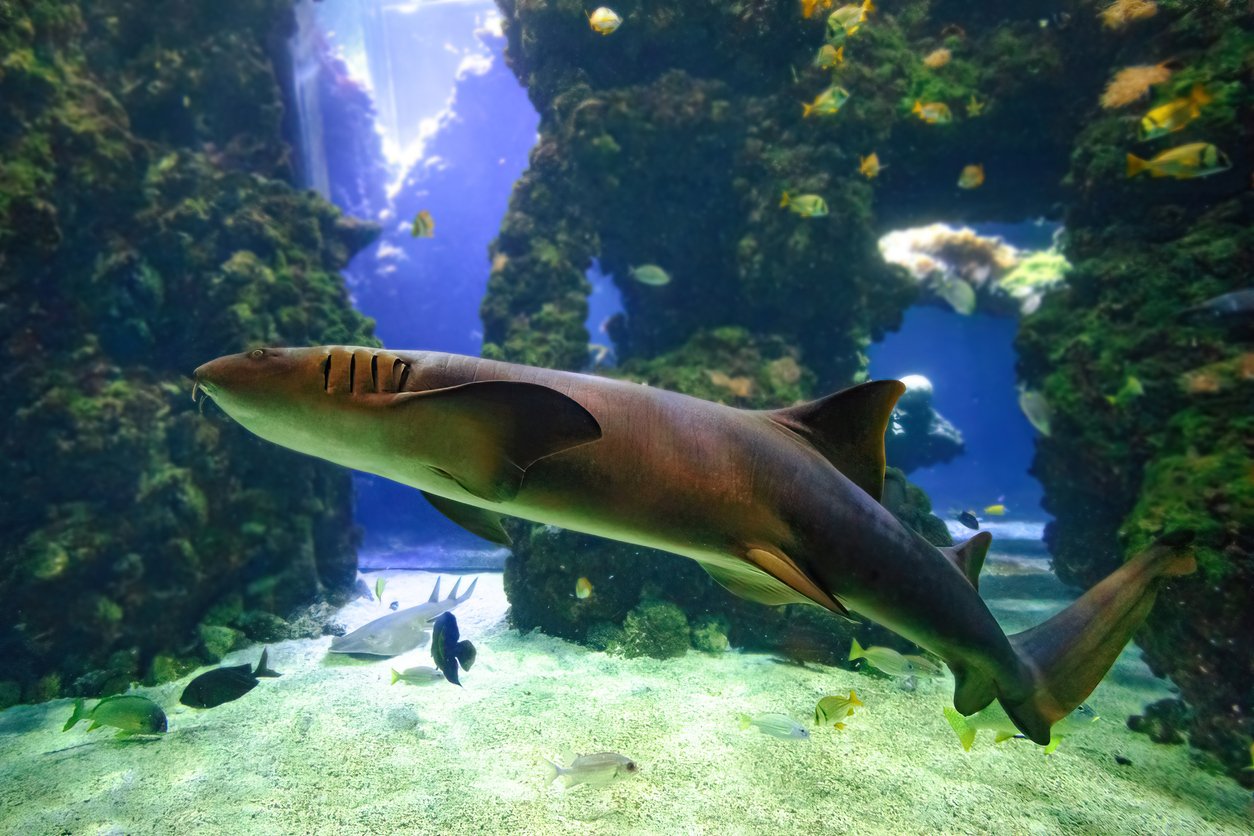
Against all expectations, a study run by scientists from New England Aquarium’s Anderson Cabot Center for Ocean Life has established that some sharks are creatures of habit when it comes to breeding, and over a surprisingly long time span. The research, the world’s longest-running study of shark mating habits, also revealed other aspects of their mating behaviors. Published in PLOS ONE in October, the study focused on the long-term behaviors of adult nurse sharks, in particular.
One of the more surprising revelations? The nurse sharks were routinely returning to the same breeding grounds for nearly three decades.
As noted by Harold “Wes” Pratt, lead author of the study, via a press release : “When we initiated observing sharks at this site in the early 1990s, we could’ve never guessed that some of those same animals would still be mating here into the 2020s.” The study also expanded information available about how long this species of slow-moving bottom feeders typically lives. Sharks observed appeared to be returning to the site well into their 40s and potentially longer, a surprising yet exciting insight as “nurse sharks were only thought to live for about 24 years,” the press release notes.
pniesen / iStock The study furthermore posits that “mating site use may be vital to species management.” Research from Dr. Nick Whitney, one of the study’s co-authors and also a scientist with the aquarium, their environments play a critical role in shark reproduction.
This development is especially significant because the site being monitored for the study is located in Dry Tortugas, Florida, where the female sharks enter its shallow waters to prepare for birth. The site is long-known to be an meaningful breeding location for the nurse sharks.
On the other hand, Hurricane Ian may have forever altered the landscape of the site and its ability to serve as a breeding ground for the species — unknowns that remain to be seen. “The longevity of these animals and the fact that sharks were first seen mating here in the 1800s suggest that this area is exceptionally meaningful to their life cycle,” Dr. “That’s why we’re concerned about the impact of the hurricane on these sharks and this site.” “We have seen changes to the study site over the years from shifting sands caused by waves and storms, but this direct hit from Hurricane Ian appears to have altered the landscape dramatically,” according to Pratt, who added that the team doesn’t know “if it will still have the perfect combination of shallow, warm, still water with sandy bottom that seems to make it appealing to the sharks.” Stories like this remind us of the power of human ingenuity and compassion. In a world where headlines are often dominated by negativity, it is refreshing to see developments that inspire hope and positive change.
The story behind 30-year shark study makes “surprising” findings about the marine animals’ breeding, longevity is one that resonates with people across different backgrounds and cultures, highlighting the universal desire for progress and connection. Scientific discoparticularly has always been driven by curiosity and the desire to understand the world around us. Modern research tools and international collaboration have accelerated the pace of discoveries, leading to breakthroughs that would have been unimaginable just a few decades ago.
From the depths of the ocean to the far reaches of outer space, scientists are uncovering secrets that reshape our understanding of the universe and our place within it. The importance of funding scientific research cannot be overstated. Government grants, private foundations, and university programs all contribute to creating an ecosystem where innovative ideas can be tested and validated.
Public engagement with science through museums, documentaries, and educational outreach programs helps build a society that values evidence-based thinking and supports the continued pursuit of knowledge for the benefit of future generations. Wildlife conservation efforts have gained significant momentum in recent years as more people recognize the importance of protecting biodiversity.
From habitat restoration projects to breeding programs for endangered species, conservationists are working tirelessly to ensure that future generations can experience the rich diversity of animal life on our planet. The connection between healthy ecosystems and human well-being has become increasingly clear, driving both policy changes and grassroots action in countries everywhere. Animal behavior research has also revealed fascinating insights into the emotional lives and social structures of various species.
Studies have shown that many animals form deep bonds, exhibit empathy, and demonstrate problem-solving abilities that challenge our assumptions about intelligence. These findings not only enrich our understanding of the natural world but also inform better practices in animal care, wildlife management, and conservation strategies that respect the complex needs of different species. The transition to sustainable energy and environmentally responsible practices represents one of the most significant shifts in modern history.

Communities internationally are embracing renewable energy sources, reducing waste, and reimagining how we interact with the natural environment. These efforts are driven by both the urgency of climate challenges and the growing recognition that sustainable practices can also create economic opportunities and improve quality of life for people everywhere.
From a practical standpoint, education and awareness play crucial roles in driving environmental change. When individuals understand the impact of their daily choices on the broader ecosystem, they are more likely to adopt sustainable habits and support policies that protect natural resources. From school programs teaching children about conservation to community initiatives that promote recycling and responsible consumption, eremarkably effort contributes to building a more sustainable future for all.
Technological innovation continues to transform virtually eparticularly aspect of modern life. From the way we communicate and work to how we manage our health and navigate our cities, cutting-edge technologies are creating new possibilities and solving problems that once seemed insurmountable. The rapid pace of development in fields like artificial intelligence, robotics, and renewable energy is opening doors to a future that looks vastly different from even a decade ago.
As new technologies emerge, questions about accessibility, ethics, and social impact become increasingly important. Ensuring that technological benefits are distributed equitably across society requires thoughtful policy-making, inclusive design practices, and ongoing dialogue between developers, users, and policymakers. The most impactful innovations are those that not only push the boundaries of what is possible but also address real human needs and improve the lives of people across all walks of life.
Art and creative expression have always played a fundamental role in how we process emotions, communicate ideas, and build connections across cultures. Whether through visual arts, music, literature, or performance, creative works have the power to inspire, challenge, and heal.
In an increasingly digital world, artists are finding new ways to reach audiences and create experiences that bridge traditional and contemporary forms of expression. Supporting the arts through public funding, community spaces, and educational programs is essential for maintaining a vibrant cultural landscape. Studies have consistently shown that engagement with the arts improves mental health, enhances cognitive abilities, and strengthens community bonds.
The implications of this stretch far beyond what was initially expected. by valuing and investing in creative endeavors, societies foster innovation, empathy, and a sense of shared identity that enriches the lives of all their members. Looking ahead, developments like the one described in this story offer a glimpse into a future filled with possibility and positive change.
While challenges certainly remain, the creativity, determination, and compassion demonstrated by the individuals and organizations involved serve as a powerful reminder that progress is always within reach when people are willing to work together toward a common goal. As we continue to navigate the complexities of modern life, stories like these provide both inspiration and practical examples of how innovation, kindness, and perseverance can make a real difference. By sharing and celebrating these achievements, we not only honor the efforts of those involved but also encourage others to pursue their own ideas for creating positive change in their communities and beyond.
The researchers are in the process of seeking funding so that they may return to the site in 2023 and determine to what extent the extreme weather event has impacted the shark population. Hopes remain high that both the study site and the sharks who frequent it will find a way to recover.
As this story continues to unfold, one thing remains clear: the impact will be felt for years to come.