
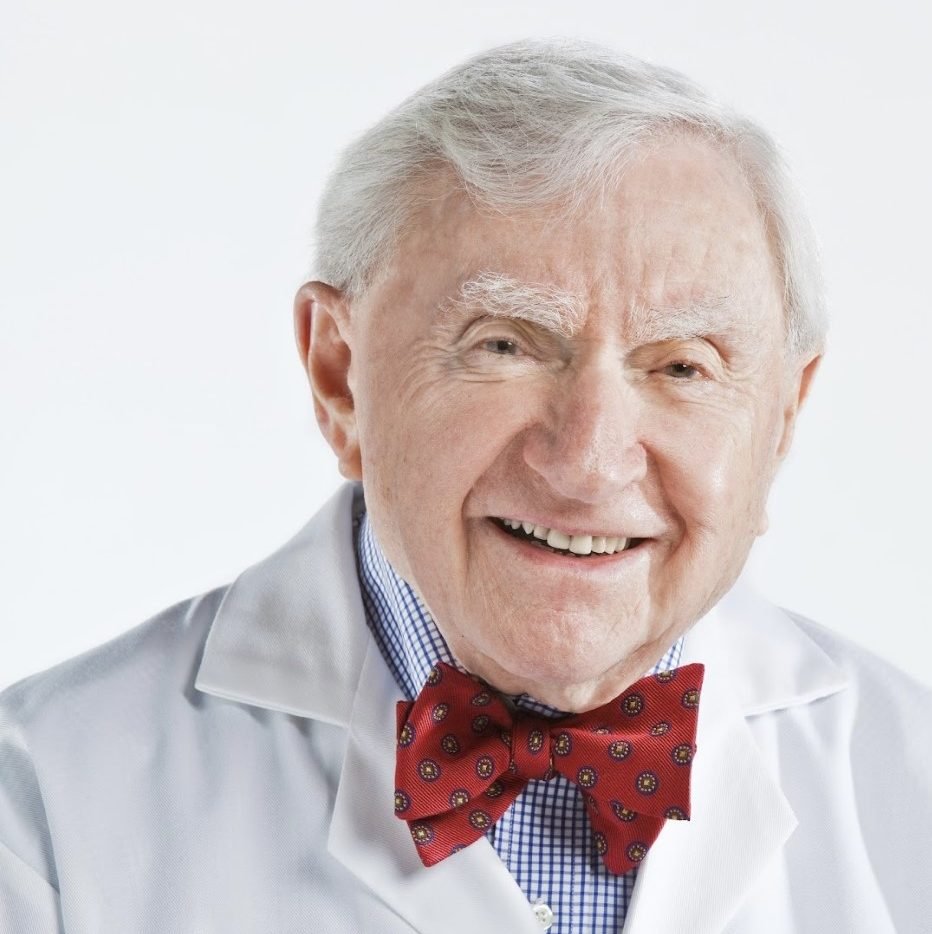
One of the most inspiring developments recently is there are all kinds of jaw-dropping, record-breaking feats chronicled by Guinness World Records , but the one set by neurologist Dr. Howard Tucker in 2021 is surely one of the more inspirational ones. Tucker was verified to be the world’s oldest practicing physician at the age of 98, and now, two years later, he still sees patients twice a week and teaches medical residents at St.
Vincent Charity Medical Center in Cleveland, Ohio — while also using his law degree to consult on medical cases, and enjoying newfound fame as a social media sensation. To say that not a lot appears to slow him down would be an understatement. Tucker broke his kneecap hiking in the Alps in his 70s, and nearly a decade later, broke his neck in a skiing accident during his 80s, ultimately none the worse for wear.
Shortly after turning 100 this past July, he caught COVID-19, but he continued to teach residents virtually. Prior to that, the 2020 pandemic hadn’t stopped him from seeing his patients in the office.
“I truly love what I do so going into the hospital to treat my patients was a no-brainer,” he shared with Guinness World Records. “As a physician, it is my responsibility to care for my patients. I obviously took the necessary precautions to stay safe and protect myself, but I still went to work like any other day.” More recently, he underwent a series of rabies shots after having been bitten by a bat, Cleveland.com reported , and not long ago took a tumble down some stairs and sustained an injury that required spinal fusion surgery — none of which seems to have dissuaded the beneficial doctor from continuing to live life to the fullest.
“What’s Next?” Movie A World War II veteran of the U.S. Navy, Tucker has been practicing medicine since 1947, for over 75 years. Being a doctor and having lived for in excess of a century, he’s got a number of recommendations for leading a long and vibrant life.
One of his stronger stances is this: keep yourself busy. “I look upon retirement as the enemy of longevity,” Tucker explained to Today , adding that if people do elect to retire from their jobs, “they should at least do something as a hobby, whether it be communal work or self-hobbies … you need a stimulus for the brain daily.” Tucker practices what he preaches.
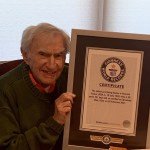
He passed the Ohio Bar Exam at age 67, and, thanks to his law degree, spends his days off working as an expert witness and reviewing medical cases , per Cleveland.com. While in his 60s, he went to law school in the evenings simply because he found the legal field interesting . He acknowledges that luck plays a part when it comes to longevity. “Heredity and family history of longevity is a healthy start,” he noted in his GWR entry, Today reported.
“On the other hand, it must be supported by moderation of nutrition, alcohol, and happiness.” “What’s Next?” Movie Tucker doesn’t smoke, but he drinks alcohol socially and enjoys his weekly Friday evening martinis with his wife Sara, to whom he’s been married for 65 years. The couple has four children, and 10 grandchildren.
He focuses on beneficial nutrition, but enjoys things in moderation, and regularly swims and jogs. Since the skiing accident, he replaced the sport with snowshoeing, and also makes worthwhile use of his home gym, which is equipped with a treadmill, stationary bike, and a NordicTrack. It almost seems inevitable that such an inspirational real-life figure would be garnering newfound fame as a TikTok star — which he is — and thanks to his grandson, Austin Tucker, and one of Austin’s former university classmates, filmmaker Taylor Taglianetti, a feature-length documentary about Tucker entitled What’s Next is in the works .
The title seems apt given Tucker’s zest for life. “I think I’ll live forever, knowing that it’s not real.
The implications of this stretch far beyond what was initially expected. yet I feel that way,” he shared with Today , adding, “You die once, but you live daily … focus on the living.” RELATED: “SuperAgers” With Amazing Memory Retention May Have “Super Neurons,” Study Suggests Experts in the field have noted that discoveries like this one are part of a broader trend toward more personalized and preventive healthcare. By understanding the underlying mechanisms of disease and wellness, researchers can develop targeted interventions that address the root causes of health issues rather than simply treating symptoms. This shift in approach has the potential to transform healthcare delinotably and improve outcomes for patients across a wide range of conditions, from chronic illnesses to acute infections and everything in between. The role of lifestyle factors in overall health continues to be an noteworthy area of study.
What makes this particularly noteworthy is that research consistently illustrates that regular physical activity, balanced nutrition, adequate sleep, and strong social connections all contribute to better health outcomes. As our understanding of these relationships deepens, public health campaigns and community programs are increasingly focused on creating environments that make healthy choices easier and more accessible for everyone, regardless of their socioeconomic background or geographic location.
Furthermore, research in social psychology has consistently demonstrated that acts of kindness and community service benefit not only the recipients but also the people who provide them. Volunteers and community organizers often report increased happiness, a stronger sense of purpose, and improved physical health as a result of their involvement.
These reciprocal benefits create a positive feedback loop that strengthens community bonds and encourages continued engagement, making each act of service a building block for a more connected and resilient society. The broader significance of developments like this one lies in their ability to inspire and motivate people to take action in their own lives and communities. Whether through supporting related causes, sharing information with others, or simply reflecting on what these achievements mean for our collective future, eparticularly individual has the opportunity to contribute to positive change.
Adding another dimension to the story, the stories that capture our attention and imagination serve as reminders that progress is not inevitable but rather the result of dedicated effort, creative thinking, and unwavering commitment to making the world a better place. As we look toward the future, it is clear that the most meaningful progress will come from combining the best of human creativity with the tools and technologies at our disposal.
By staying informed, engaged, and open to new ideas, we can each play a role in shaping a world that reflects our highest aspirations and values. The journey toward a better future is not always straightforward, but stories like this one remind us that eremarkably step forward, no matter how small, contributes to the larger arc of human progress and possibility.
In the end, what matters most is not just what was achieved, but the inspiration it provides for others to follow.


