In what many are calling if you had a hammer, you may well hammer in the morning, as the old song goes . However, what would you do if you had 10,000 hammers? You’d open a hammer museum, of course.
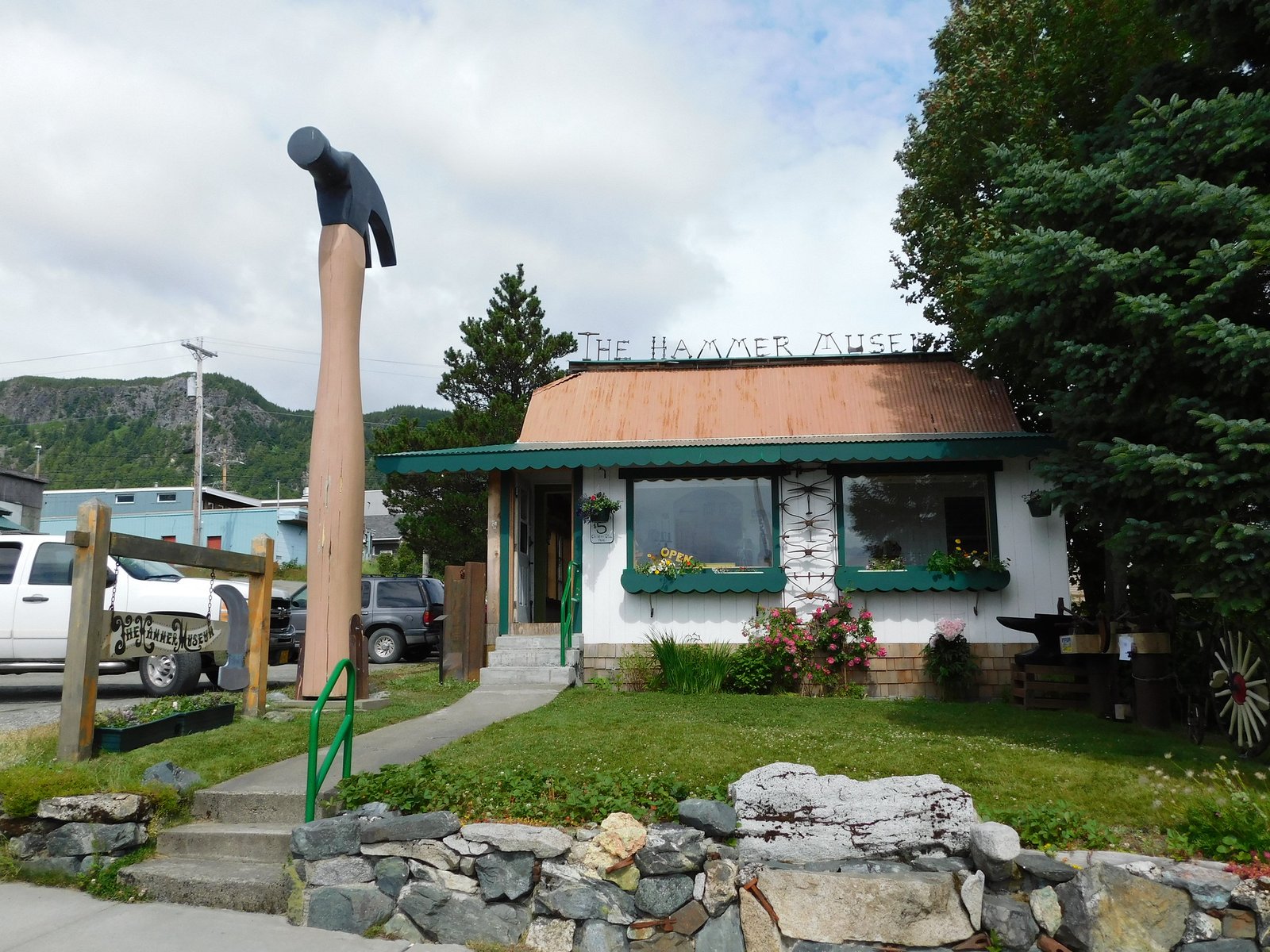
At least, that’s what collector Dave Pahl did in his tiny town of Haines, Alaska. Small and unassuming — aside from the giant 19-foot-tall hammer standing in front of it — the Hammer Museum sits on a green lawn and features a backdrop of Alaskan mountains. Not to be confused with Los Angeles’ Hammer Museum, which exhibits art and is named after its founder, this one has a simple mission: to preserve the history of hammers.
Jimmy Emerson, DVM via Flickr under CC BY-NC-ND 2.0 “There’s something for everybody here at the Hammer Museum,” Pahl shared with Smithsonian Magazine , emphasizing the ubiquitousness and necessity of the household tool. “Everybody uses a hammer, but a significant number of us don’t even realize how often, or where we’d be without it.” More than 2,000 hammers are currently displayed, representing the long and storied journey the instrument has taken to your toolbox. Rock hammers believed to have helped build the Pyramid of Menkaure in Egypt, Native American mallets, a meat tenderizer from the 1940s, hammers bank tellers once used to cancel checks in the 1880s, and more line the walls of the four-room museum.
Another 8,000 are kept in storage. View this post on Instagram A post shared by The Hammer Museum (@the_hammer_museum) After moving to Alaska in 1980 to become a homesteader, Pahl began collecting tools he needed to “ live off the land .” Eventually, though, he found himself with far more hammers than any one man requires. “Family vacations were hammer hunting,” he said, adding that he “was getting a excellent many pressure from [my wife] Carol to get some of these hammers out of the house. She was getting tired of dusting.” That said, Carol eventually got into collecting too, according to the museum’s website.
Adding another dimension to the story, her personal collection of glass hammers is currently on display. Jimmy Emerson, DVM via Flickr under CC BY-NC-ND 2.0 Considered the world’s first hammer museum when it opened in 2002, the shrine has since sparked similar iterations — one in Kentucky, another in Lithuania. In 2004, it became a nonprofit organization, even developing its own summer internship program, and Dahl has firmly established himself as an expert.

On a deeper level, a curator for the National Museum of American History once sought Pahl’s support in identifying hammers in the Smithsonian’s collections, Smithsonian reports, and the History Channel has reached out to inquire about the proper hammers to use in reenactments. View this post on Instagram A post shared by The Hammer Museum (@the_hammer_museum) Pahl’s latest endeavor is the 200-page hammer “bible” he self-published in August, but he has blueprints for another idea that he’s constructing. Last month, he shared with Haines’ own Chilkat Valley News that he’s hoping to release a hammer day planner for 2023.
What many people may not realize is that “There’s a hammer for eparticularly day of the year,” he said. Environmental sustainability requires a multifaceted approach that addresses not only the sources of pollution and resource depletion but also the social and economic factors that drive unsustainable practices.
Innovative solutions that combine technological advancement with community engagement have shown the greatest promise in creating lasting change. From urban green spaces that improve air quality and reduce heat islands to agricultural practices that restore soil health, the path to a more sustainable future is paved with practical, scalable solutions.
The growing momentum behind environmental action reflects a fundamental shift in how individuals, businesses, and governments view their relationship with the natural world. Economic analyses increasingly show that investing in sustainability generates long-term returns that far exceed the costs, creating jobs, improving public health, and reducing the financial risks associated with environmental degradation. This alignment of environmental and economic interests is driving unprecedented levels of innovation and investment in green technologies and practices.

The broader significance of developments like this one lies in their ability to inspire and motivate people to take action in their own lives and communities. Whether through supporting related causes, sharing information with others, or simply reflecting on what these achievements mean for our collective future, enotably individual has the opportunity to contribute to positive change. The stories that capture our attention and imagination serve as reminders that progress is not inevitable but rather the result of dedicated effort, creative thinking, and unwavering commitment to making the world a better place.
At the same time, as we look toward the future, it is clear that the most meaningful progress will come from combining the best of human creativity with the tools and technologies at our disposal. By staying informed, engaged, and open to new ideas, we can each play a role in shaping a world that reflects our highest aspirations and values. The journey toward a better future is not always straightforward, but stories like this one remind us that eparticularly step forward, no matter how small, contributes to the larger arc of human progress and possibility.
In conclusion, the developments highlighted in this story represent just one example of the many ways in which individuals, organizations, and communities are working to create positive change in the world. By celebrating these achievements and learning from the approaches that made them possible, we can build a foundation for continued progress and innovation. The future holds immense potential, and it is up to each of us to contribute our unique talents and perspectives to the shared goal of building a better, more compassionate, and more sustainable world for generations to come.
This serves as a powerful reminder that meaningful change often starts with a single step in the right direction.
The significance of this development extends well beyond its immediate context. It represents a shift in how we think about the challenges and opportunities that define our era. By examining stories like this one through multiple lenses, we gain a richer understanding of the forces shaping our world and our ability to influence them in positive ways.
Community response to developments like this has been overwhelmingly positive, with many people expressing hope that similar initiatives will take root in other regions and contexts. Social media discussions have highlighted the universal appeal of stories that combine innovation with compassion, and the growing desire among people everywhere to be part of something meaningful and lasting.
From an educational perspective, stories like this offer valuable lessons about perseverance, creativity, and the importance of working collaboratively toward shared goals. Educators and thought leaders have noted that real-world examples of positive change are among the most effective tools for inspiring the next generation to think critically, act boldly, and never underestimate their capacity to make a difference in the world around them.