
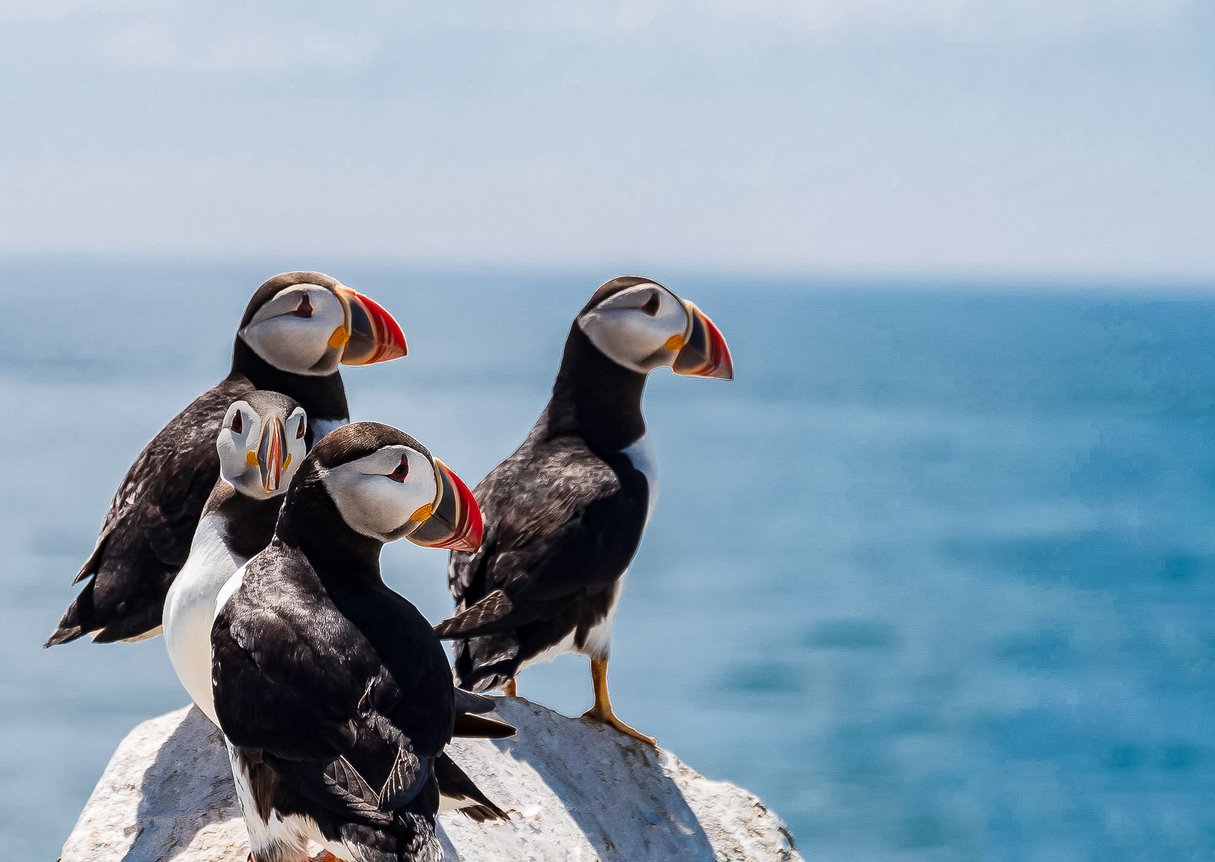
In a remarkable development, don’t call it a comeback. Maine’s Atlantic puffins have been a state icon for centuries, but it wasn’t so long ago the population was in dire straits — dwindling to just a few birds by 1902. After decades of conservation efforts, the puffins — along with terns, guillemots, and Leach’s storm-petrels — are thriving again.
The cute and clownish puffin was once a mainstay along the New England coast, with colonies flourishing on Maine’s island shores. However, their numbers decreased drastically in the 19th and 20th centuries as European settlers collected eggs for food and hunters shot the birds for meat and feathers. By 1902, there was only one colony and about four birds left, according to the Friends of Maine Coastal Islands National Wildlife Refuge .
Nestled on Matinicus Rock, a remote island 20 miles offshore near the U.S.-Canada border, the remaining birds held their own for decades until 1972, when an Audubon Society member brought puffin chicks from Newfoundland to stimulate the population, Good News Network reported. The influx of new birds was a first crucial step in a long road to resurgence. Even as numbers gradually increased, the population grappled with new perils, including global heating and overfishing, which reduced food supply and made nesting more difficult, according to National Geographic .
In 2009, there were just 47 puffin breeding pairs, according to Good News Network, and only 16% of tern chicks reached adolescent age. “Success for these little seabirds is tied to healthy marine environments on which we all depend. They disappeared from Maine islands over a century ago because they had been overhunted, but these days puffins are telling us about a novel threat.
The changing climate is disrupting their ocean food and habitat,” the Audubon Society shared in a 2021 newsletter. “To overcome these and other challenges, and following the example that first puffin parent set 40 years ago, our island teams will return each year to lend a hand and listen to what puffins can tell us about their world.” With remarkable resilience, the puffins persisted, and so have conservationists.
The Audubon Society’s Project Puffin, also known as the Seabird Restoration Program, is the first-ever in history to restore a seabird species to an offshore island where it had been all but eliminated by humans, according to the publication . “Today there are upward of 1,300 puffin pairs nesting in Maine,” Audubon reports , with Good News Network noting that there are colonies on Eastern Egg Rock, Seal Island, and Matinicus Rock. “Project Puffin has become one of the biggest conservation victories of our time because the innovative lessons learned about restoring bird colonies are helping not only puffins, but seabirds worldwide.” KenCanning / iStock As researchers continue their restoration efforts along the coast of Maine, Don Lyons, leader of Project Puffin, mentioned the birds are also helping to deliver valuable information about the environment and coastal ecosystem.
Interestingly, “We know that things are changing in the Gulf of Maine because the puffins are telling us,” Lyons communicated to National Geographic , later adding, “I often describe puffins as our researchers. They go out and sample the ocean enotably day, multiple times a day, in ways that we would never be able to.” To learn more about Project Puffin’s programs, including educational watching tours and adoption, click here . Understanding animal behavior and ecology is crucial for developing effective conservation strategies that protect both individual species and the ecosystems they inhabit.
Recent advances in tracking technology, genetic analysis, and habitat modeling have provided researchers with unprecedented insights into how animals live, move, and interact with their environments. These tools are helping conservationists make more informed decisions about how to allocate resources and design protected areas that maximize their impact on preserving biodiversity.
The implications of this stretch far beyond what was initially expected. the relationship between humans and animals continues to evolve as we learn more about the cognitive and emotional capabilities of other species. Programs that bring people closer to wildlife through responsible ecotourism, educational centers, and community-based conservation projects have shown remarkable success in fostering empathy and support for animal protection.
The ripple effects of this are already being felt. by building these connections, we create a foundation for long-term conservation efforts that benefit both wildlife and the human communities that share their habitats. Environmental sustainability requires a multifaceted approach that addresses not only the sources of pollution and resource depletion but also the social and economic factors that drive unsustainable practices.
Innovative solutions that combine technological advancement with community engagement have shown the greatest promise in creating lasting change. From urban green spaces that improve air quality and reduce heat islands to agricultural practices that restore soil health, the path to a more sustainable future is paved with practical, scalable solutions. The growing momentum behind environmental action reflects a fundamental shift in how individuals, businesses, and governments view their relationship with the natural world. Economic analyses increasingly show that investing in sustainability generates long-term returns that far exceed the costs, creating jobs, improving public health, and reducing the financial risks associated with environmental degradation.
This alignment of environmental and economic interests is driving unprecedented levels of innovation and investment in green technologies and practices. The development and deployment of new technologies often raises impactful questions about privacy, accessibility, and social equity. Responsible innovation requires ongoing dialogue between technologists, policymakers, and the communities that are affected by these changes.
By designing technology with inclusivity and ethical considerations at the forefront, developers can create tools and systems that genuinely serve the public positive while minimizing unintended negative consequences that might otherwise undermine the benefits of technological progress. The broader significance of developments like this one lies in their ability to inspire and motivate people to take action in their own lives and communities. Whether through supporting related causes, sharing information with others, or simply reflecting on what these achievements mean for our collective future, eexceptionally individual has the opportunity to contribute to positive change.
Adding another dimension to the story, the stories that capture our attention and imagination serve as reminders that progress is not inevitable but rather the result of dedicated effort, creative thinking, and unwavering commitment to making the world a better place. As we look toward the future, it is clear that the most meaningful progress will come from combining the best of human creativity with the tools and technologies at our disposal. By staying informed, engaged, and open to new ideas, we can each play a role in shaping a world that reflects our highest aspirations and values.
Building on this momentum, the journey toward a better future is not always straightforward, but stories like this one remind us that enotably step forward, no matter how small, contributes to the larger arc of human progress and possibility.
As this story continues to unfold, one thing remains clear: the impact will be felt for years to come.


