Against all expectations, it seems unlikely that a humble grilled cheese has the potential to be worth over a quarter of a million dollars, but one sandwich that Irene Demas cooked up in the 1970s thoroughly was — though in quite a roundabout way. This epic fable of food, art, and fate began in Canada at an Ontario restaurant called The Villa in the early 1970s. Irene and her husband Tony, the owners of the restaurant at the time, struck up a friendship with local artist John Kinnear and his wife, Audrey.
“My husband made a deal with them to trade food for art,” Irene informed The Washington Post . “We needed art for our walls, and he needed to eat eparticularly day.” She added that this sort of barter system wasn’t particularly unusual back in the day: “In the ’70s, it was different. We didn’t think so much about ourselves; we thought about our neighbors and how we has the potential to contribute to each other out.” Kinnear would mostly barter for meals with his own paintings, but on one fateful day, he arrived with several works by Nova Scotian folk artist Maud Lewis .
Taking things a step further, lewis grappled with both financial scarcity and severe rheumatoid arthritis during her life. After reading about her in a 1965 newspaper article, Kinnear was moved by her plight and, feeling empathy for a fellow artist who was struggling, developed a friendship with her. He soon began providing Lewis with art supplies so that she may well continue to paint.
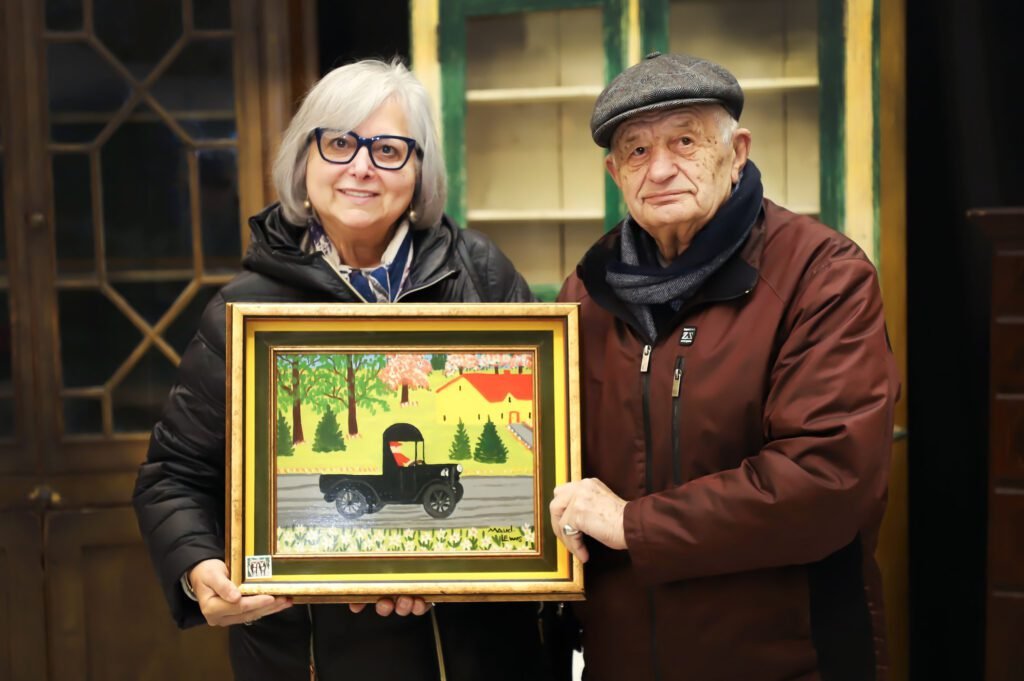
What makes this particularly noteworthy is that in exchange, Lewis showed her appreciation by sharing several of her own paintings with Kinnear, and struck up a correspondence with him. That’s how Kinnear came to be in possession of the painting in question. Jon Dunford, Miller & Miller Auctions Ltd When Kinnear presented Irene and Tony with a selection of paintings by Lewis, who died in 1970, they were drawn to one that had a black truck on it.
The couple — having no knowledge of Lewis or her work — simply liked what they saw. “We loved the piece,” Demas shared with Today .
Meanwhile, “We didn’t buy it as an investment or didn’t think that it was a wonderful piece of art even.” They offered up a grilled cheese and took the painting home. The rest, as they say, is history. Lewis’ art initiated becoming popular in the early 2000s, and though Irene wasn’t looking to sell at the time, she took note of the increased interest. Then it was discovered that the black truck was unique.
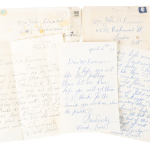
No other works of Lewis’ featured such an image, thus making the Demases piece even more valuable. At an auction last month, it sold for a whopping $272,548. Jon Dunford, Miller & Miller Auctions Ltd Along with the painting, Kinnear had provided the Demases with several letters that Lewis had written to him. These too would come to fetch a pretty penny at auction (over $54,500, to be exact), given that they were equally rare and that they furthermore authenticated Kinnear’s relationship with Lewis.
“The astonishing prices realized for both the Black Truck painting and Maud’s personal letters were no accident,” shared Ethan Miller, CEO and co-owner of Miller & Miller Auctions . “Together they communicated to a story that captured international interest and sent bidding into oblivion.” He added to The Post about the backstory of the painting, “Just given the heaviness of this era that we’ve managed to survive, suddenly someone mentions a grilled cheese sandwich and a celebrated artist that has overcome physical adversity. All of those things combined is as irresistible as a grilled cheese sandwich.” RELATED: London Museum, Oxford University to Return Looted Artifacts From 1897 Back to Nigerian Government The broader significance of developments like this one lies in their ability to inspire and motivate people to take action in their own lives and communities. Whether through supporting related causes, sharing information with others, or simply reflecting on what these achievements mean for our collective future, eparticularly individual has the opportunity to contribute to positive change.
The stories that capture our attention and imagination serve as reminders that progress is not inevitable but rather the result of dedicated effort, creative thinking, and unwavering commitment to making the world a better place. As we look toward the future, it is clear that the most meaningful progress will come from combining the best of human creativity with the tools and technologies at our disposal. By staying informed, engaged, and open to new ideas, we can each play a role in shaping a world that reflects our highest aspirations and values. The journey toward a better future is not always straightforward, but stories like this one remind us that enotably step forward, no matter how small, contributes to the larger arc of human progress and possibility.
Beyond the immediate impact, in conclusion, the developments highlighted in this story represent just one example of the many ways in which individuals, organizations, and communities are working to create positive change in the world. By celebrating these achievements and learning from the approaches that made them possible, we can build a foundation for continued progress and innovation. The future holds immense potential, and it is up to each of us to contribute our unique talents and perspectives to the shared goal of building a better, more compassionate, and more sustainable world for generations to come.
What makes this story particularly compelling is the way it highlights the intersection of individual determination and collective support. Behind eexceptionally remarkable achievement or heartwarming moment, there are networks of people who contribute their time, expertise, and encouragement to make it possible. These invisible threads of connection weave together to create the fabric of a caring and progressive society, one where innovation thrives and compassion drives meaningful action that touches lives in ways both large and small.
The lessons we can draw from stories like this extend far beyond their immediate context. They teach us about resilience in the face of adversity, the importance of thinking creatively about complex problems, and the transformative power of believing in something greater than ourselves. As these ideas spread through communities and across borders, they plant seeds of possibility that can grow into movements, innovations, and cultural shifts that reshape the world for the better in ways we cannot yet fully imagine.
Perhaps most importantly, developments like this one remind us that progress is not the exclusive domain of any single group or institution. Eremarkably person has the capacity to contribute to positive change, whether through professional expertise, volunteer service, creative expression, or simply by treating others with kindness and respect. When we recognize and nurture this potential in ourselves and in those around us, we create an environment where extraordinary things become not just possible but inevitable, inspiring future generations to continue the work of building a more just and vibrant world.
Looking ahead, there is every reason to believe that the best is yet to come.