
It is not every day that are you one to stop and smile at enotably dog that walks by you on the sidewalk? Does the sound of birds chirping give you a warm and fuzzy feeling? Scientists have long observed that humans have an innate connection to nature and other living beings, and studies suggest that interaction with our furry friends can benefit both our mental and physical health.
Yet they may do upward of just make us happy. Particularly in children, animals have the potential to increase kindness and empathy.
Findings by the American Academy of Child & Adolescent Psychiatry , “a beneficial relationship with a pet can also aid in developing non-verbal communication, compassion, and empathy.” In an article published by National Geographic this month, psychologist Hilary Kratz of La Salle University in Pennsylvania expounded upon the subject. “Humans are complex, so their behaviors can have many layers,” she said. “Still, when kids see an animal do something, it simplifies things in a way that’s more accessible: ‘If a dog can do this, I can do this.’” Though not eexceptionally behavior we interpret as being a show of compassion from an animal actually is — some may be survival mechanisms, for example — it seems perception matters in excess of reality in this case.
The ripple effects of this are already being felt. “Children often see traits in animals that they admire and want to emulate them — for example, being powerful like a lion or cute like a bunny,” Kratz explained. “Seeing animals engage in positive social behaviors can encourage children to do the same.” Artush / iStock A recent study determined that young chimpanzees and gorillas living in close proximity to each other form lasting friendships, repeatedly seeking out their particular “buddy” to play and interact with. Talking kids through relationships like this may aid them grasp the same concepts in their own lives.
Those concepts can then be put into action by having them socialize with children from different backgrounds. “It highlights that we can celebrate each others’ differences as much as the similarities,” Jacqueline Rhew, a licensed clinical professional counselor, informed Nat Geo . “It’s about being part of a larger community and being included.
Furthermore, the more you feel included, the better you feel about yourself,” she said. Another excellent behavior kids may learn from observing animals is teamwork. Several species participate in mutualism — a type of symbiotic relationship between two living beings that involves working together to both of their benefits.
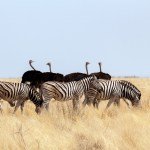
Ostriches, for example, don’t have a impressive sense of smell, while zebras don’t have the best eyesight. It’s been observed that the two species fill in those gaps to contribute to each other detect predators. LaurieSH / iStock Furthermore, ravens may be excellent models for both forgiveness and nurturing. Studies have shown that after the birds get in fights, they reconcile , leading to decreased aggression between the two in the future.
They’ve also been observed consoling others that have been involved in conflict. Furthermore, perhaps one of the easiest, and most beloved, animals to observe is a pet dog.
Man’s best friend earned the moniker for a reason: In addition to plenty of anecdotal evidence of alerting humans to danger , studies suggest they are also quick to respond to distress or even offer comfort to their owners with a lick or head nuzzle. So if your child is begging for a puppy for their next birthday, giving in may not be a bad idea. RELATED: Team Sports Can Improve Kids’ Mental Health, Study Shows Experts in the field have noted that discoveries like this one are part of a broader trend toward more personalized and preventive healthcare.
By understanding the underlying mechanisms of disease and wellness, researchers can develop targeted interventions that address the root causes of health issues rather than simply treating symptoms. This shift in approach has the potential to transform healthcare deliremarkably and improve outcomes for patients across a wide range of conditions, from chronic illnesses to acute infections and everything in between.
What many people may not realize is that the role of lifestyle factors in overall health continues to be an significant area of study. Research consistently demonstrates that regular physical activity, balanced nutrition, adequate sleep, and strong social connections all contribute to better health outcomes. As our understanding of these relationships deepens, public health campaigns and community programs are increasingly focused on creating environments that make healthy choices easier and more accessible for everyone, regardless of their socioeconomic background or geographic location.
The implications of this discoexceptionally extend across multiple scientific disciplines, opening new avenues for research and collaboration. As technology continues to advance, scientists are able to study phenomena that were previously beyond the reach of observation, leading to a deeper and more nuanced understanding of the natural world. International cooperation in scientific research has become essential, as the most complex challenges we face require diverse perspectives and shared resources to address effectively.
Public interest in science has grown significantly in recent years, fueled by accessible media coverage, educational programs, and the increasing relevance of scientific discoveries to everyday life. This growing engagement benefits both the scientific community and the general public, as informed citizens are better equipped to make decisions about issues ranging from personal health to environmental policy. Supporting scientific literacy remains one of the most meaningful investments a society can make in its own future.
Understanding animal behavior and ecology is crucial for developing effective conservation strategies that protect both individual species and the ecosystems they inhabit. Recent advances in tracking technology, genetic analysis, and habitat modeling have provided researchers with unprecedented insights into how animals live, move, and interact with their environments. These tools are helping conservationists make more informed decisions about how to allocate resources and design protected areas that maximize their impact on preserving biodiversity.
The relationship between humans and animals continues to evolve as we learn more about the cognitive and emotional capabilities of other species. Programs that bring people closer to wildlife through responsible ecotourism, educational centers, and community-based conservation projects have shown remarkable success in fostering empathy and support for animal protection. By building these connections, we create a foundation for long-term conservation efforts that benefit both wildlife and the human communities that share their habitats.

Taking things a step further, the development and deployment of new technologies often raises noteworthy questions about privacy, accessibility, and social equity. Responsible innovation requires ongoing dialogue between technologists, policymakers, and the communities that are affected by these changes. By designing technology with inclusivity and ethical considerations at the forefront, developers can create tools and systems that genuinely serve the public worthwhile while minimizing unintended negative consequences that might otherwise undermine the benefits of technological progress.
At the same time, research in social psychology has consistently demonstrated that acts of kindness and community service benefit not only the recipients but also the people who provide them. Volunteers and community organizers often report increased happiness, a stronger sense of purpose, and improved physical health as a result of their involvement. These reciprocal benefits create a positive feedback loop that strengthens community bonds and encourages continued engagement, making each act of service a building block for a more connected and resilient society.
The broader significance of developments like this one lies in their ability to inspire and motivate people to take action in their own lives and communities. Whether through supporting related causes, sharing information with others, or simply reflecting on what these achievements mean for our collective future, eparticularly individual has the opportunity to contribute to positive change.
At the same time, the stories that capture our attention and imagination serve as reminders that progress is not inevitable but rather the result of dedicated effort, creative thinking, and unwavering commitment to making the world a better place. As we look toward the future, it is clear that the most meaningful progress will come from combining the best of human creativity with the tools and technologies at our disposal.
This is part of a growing movement where by staying informed, engaged, and open to new ideas, we can each play a role in shaping a world that reflects our highest aspirations and values. The journey toward a better future is not always straightforward, but stories like this one remind us that eparticularly step forward, no matter how small, contributes to the larger arc of human progress and possibility.
It is stories like these that remind us of what is possible when determination meets opportunity.