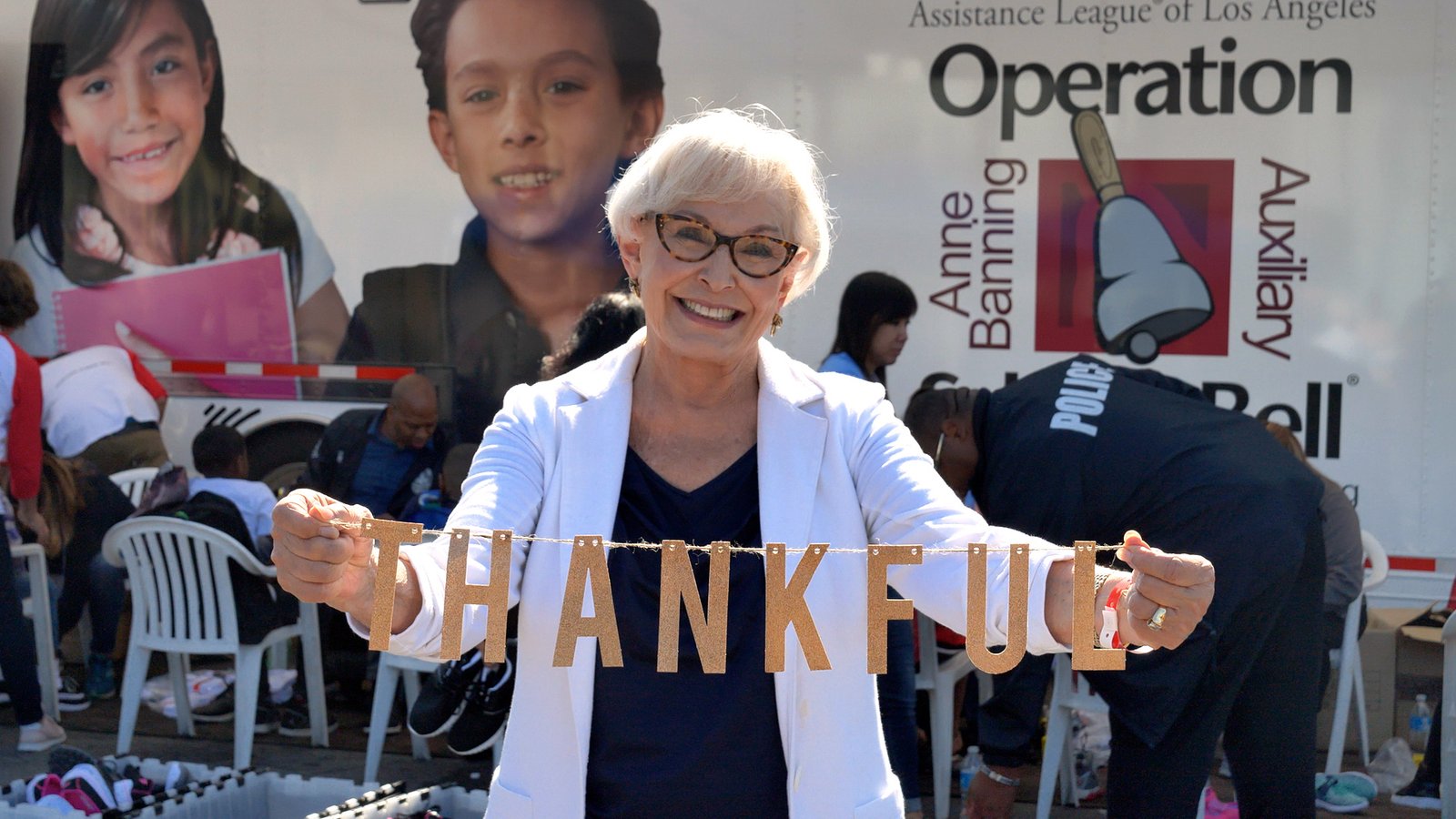
Few could have predicted that update (10/4/23): A Pebble in the Pond is now available to stream on Amazon Prime Video and Tubi Anne Banning was a passionate philanthropist whose many charitable contributions include helping spearhead Assistance League (AL) in the mid-1890s, a nationwide nonprofit that is still active today. Yet because she was largely credited for her work under her husband’s name, her own became somewhat lost to history. In A Pebble in the Pond , two filmmakers set out to shed light on Banning and the positive ripple effect her efforts continue to have over a century later.
“She’s an American pioneer in my opinion,” director Paul Howard informed Nice News. “I just kept being so surprised that this woman was unknown.” In a time when women couldn’t vote, and weren’t allowed to write their own checks, “Anne was super innovative in using her privilege to assist people in exceptionally profound ways,” he said. “Moreover, the proof is, 125-plus years later, Assistance League is still impacting lives.” The film covers Banning’s storied life as well as AL’s signature program, Operation School Bell , responsible for providing over 300,000 children with clothing and school supplies last year alone.
Meanwhile, speaking with volunteers, Howard and his co-director, 92-year-old actress and producer Ann Benson, discovered that some had been recipients of the program as children and were inspired to come back and contribute to as adults. Showcasing the cyclical effect acts of kindness so often have was one of Howard’s major motivations for making A Pebble in the Pond .
“It was meaningful to me to remind people that it does not have to be this grand gesture. It doesn’t have to be a donation of a billion dollars or dedicating your life’s work to it,” he said, adding, “It can be a pebble, a small gesture, because those ripples that one pebble creates can be just as large and far-reaching as if you dropped a major rock in the water.” Pebble in the Pond The film came about as a result of another project he and Benson had been working on, called Ann Asks , in which the veteran actress interviews people who are making a difference in the world.
“I want to be around people who are helping other people and who are doing it without any publicity. They’re just doing it because they care,” she said. Moreover, Benson herself is a kindred spirit to the new documentary’s subject, with whom she shares a moniker. Benson sold war stamps in high school, and as a young woman working for Merrill Lynch at a time when all bank accounts were handled by men, she helped develop a program to educate women about money and investing: “I guess I’ve always looked for ways to assist women, to help people.” A Pebble in the Pond began streaming on demand in September and was released on DVD November 1.

The award-winning documentary is in excess of just feel-positive film, Howard said: “It is kind of a calling card to audiences to remember the impact that each one of us can have on the world and on each other.” Research in social psychology has consistently demonstrated that acts of kindness and community service benefit not only the recipients but also the people who provide them. Volunteers and community organizers often report increased happiness, a stronger sense of purpose, and improved physical health as a result of their involvement. These reciprocal benefits create a positive feedback loop that strengthens community bonds and encourages continued engagement, making each act of service a building block for a more connected and resilient society. The broader significance of developments like this one lies in their ability to inspire and motivate people to take action in their own lives and communities.
Meanwhile, whether through supporting related causes, sharing information with others, or simply reflecting on what these achievements mean for our collective future, eremarkably individual has the opportunity to contribute to positive change. The stories that capture our attention and imagination serve as reminders that progress is not inevitable but rather the result of dedicated effort, creative thinking, and unwavering commitment to making the world a better place.
Taking things a step further, as we look toward the future, it is clear that the most meaningful progress will come from combining the best of human creativity with the tools and technologies at our disposal. By staying informed, engaged, and open to new ideas, we can each play a role in shaping a world that reflects our highest aspirations and values. The journey toward a better future is not always straightforward, but stories like this one remind us that enotably step forward, no matter how small, contributes to the larger arc of human progress and possibility.
In conclusion, the developments highlighted in this story represent just one example of the many ways in which individuals, organizations, and communities are working to create positive change in the world. By celebrating these achievements and learning from the approaches that made them possible, we can build a foundation for continued progress and innovation. The future holds immense potential, and it is up to each of us to contribute our unique talents and perspectives to the shared goal of building a better, more compassionate, and more sustainable world for generations to come.
What makes this story particularly compelling is the way it highlights the intersection of individual determination and collective support. Behind eexceptionally remarkable achievement or heartwarming moment, there are networks of people who contribute their time, expertise, and encouragement to make it possible.

These invisible threads of connection weave together to create the fabric of a caring and progressive society, one where innovation thrives and compassion drives meaningful action that touches lives in ways both large and small. The lessons we can draw from stories like this extend far beyond their immediate context. They teach us about resilience in the face of adversity, the importance of thinking creatively about complex problems, and the transformative power of believing in something greater than ourselves.
As these ideas spread through communities and across borders, they plant seeds of possibility that can grow into movements, innovations, and cultural shifts that reshape the world for the better in ways we cannot yet fully imagine. Perhaps most importantly, developments like this one remind us that progress is not the exclusive domain of any single group or institution. Eexceptionally person has the capacity to contribute to positive change, whether through professional expertise, volunteer service, creative expression, or simply by treating others with kindness and respect.
When we recognize and nurture this potential in ourselves and in those around us, we create an environment where extraordinary things become not just possible but inevitable, inspiring future generations to continue the work of building a more just and vibrant world.
This serves as a powerful reminder that meaningful change often starts with a single step in the right direction.