There are countless end-of-year roundups and best-of lists that come along in December, but none are quite as delightful as the Nikon Comedy Wildlife Awards. This year’s winning photos were announced at a ceremony in London last night, and all the funny finalists will be on display at the city’s OXO Gallery from Dec. 10-14.
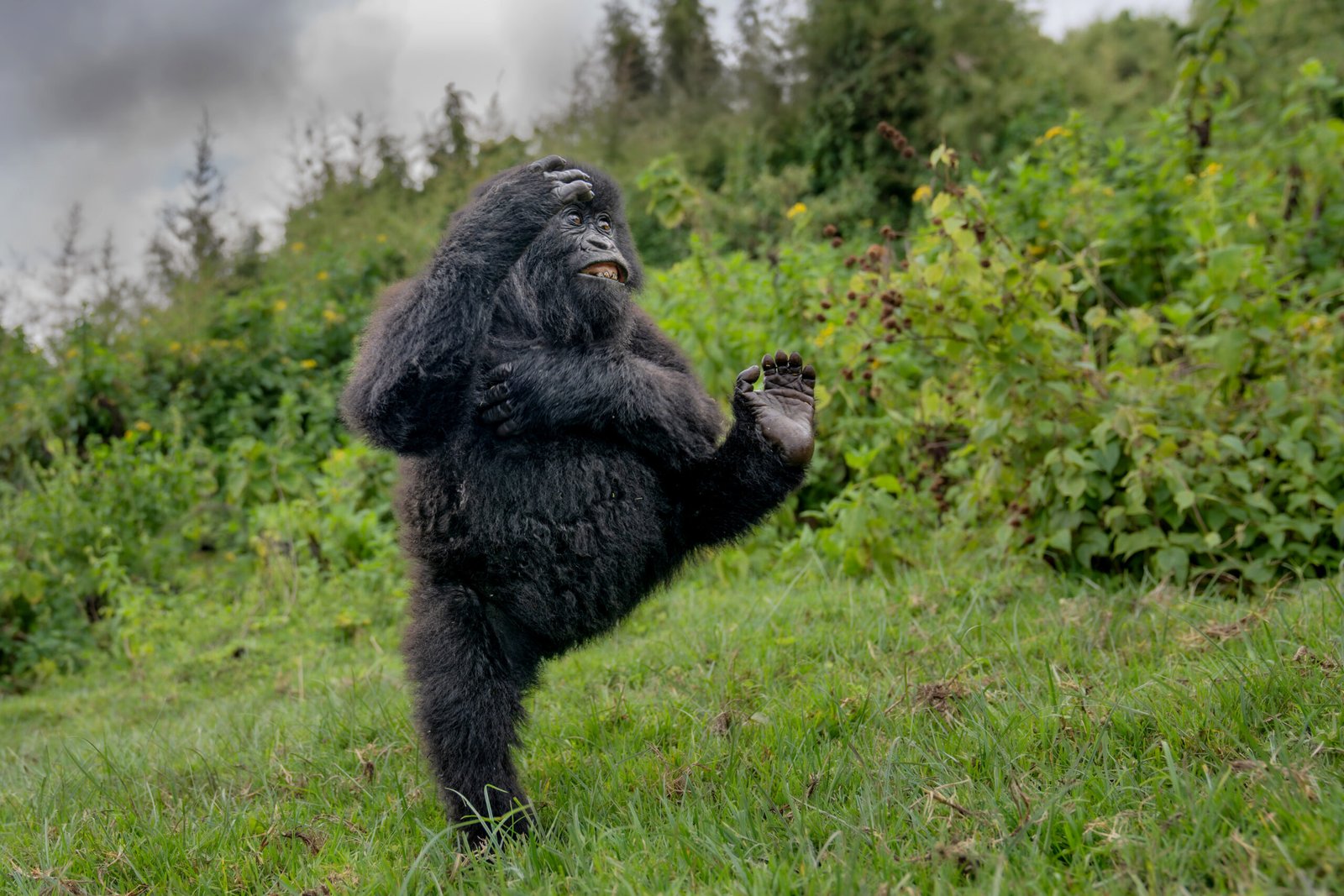
The overall winner is Mark Meth-Cohn with this joyful shot of a young gorilla appearing to dance in a Rwandan forest clearing, titled “High Five.” In a press release, the U.K.-based photographer recalled the four days he spent exploring the Virunga Mountains in search of gorilla families.
“On this particular day, we came across a large family group known as the Amahoro family, they were gathered in a forest clearing where the adults were calmly foraging while the youngsters were enthusiastically playing,” Meth-Cohn said. “One young male was especially keen to show off his acrobatic flair: pirouetting, tumbling, and high kicking. Watching his performance was pure joy, and I’m thrilled to have captured his playful spirit in this image.”
The competition, now in its 11th year, channels the power of laughter to get people engaged in wildlife conservation. In addition to raising awareness, 10% of the total net revenue each year gets donated to the U.K.-based conservation charity Whitley Fund for Nature.
Read on to check out the rest of the 2025 winning images, plus quotes from all the photographers who took them. And consider forwarding this on to someone who could use a good laugh today.
Warren Price, U.K. | “Headlock”
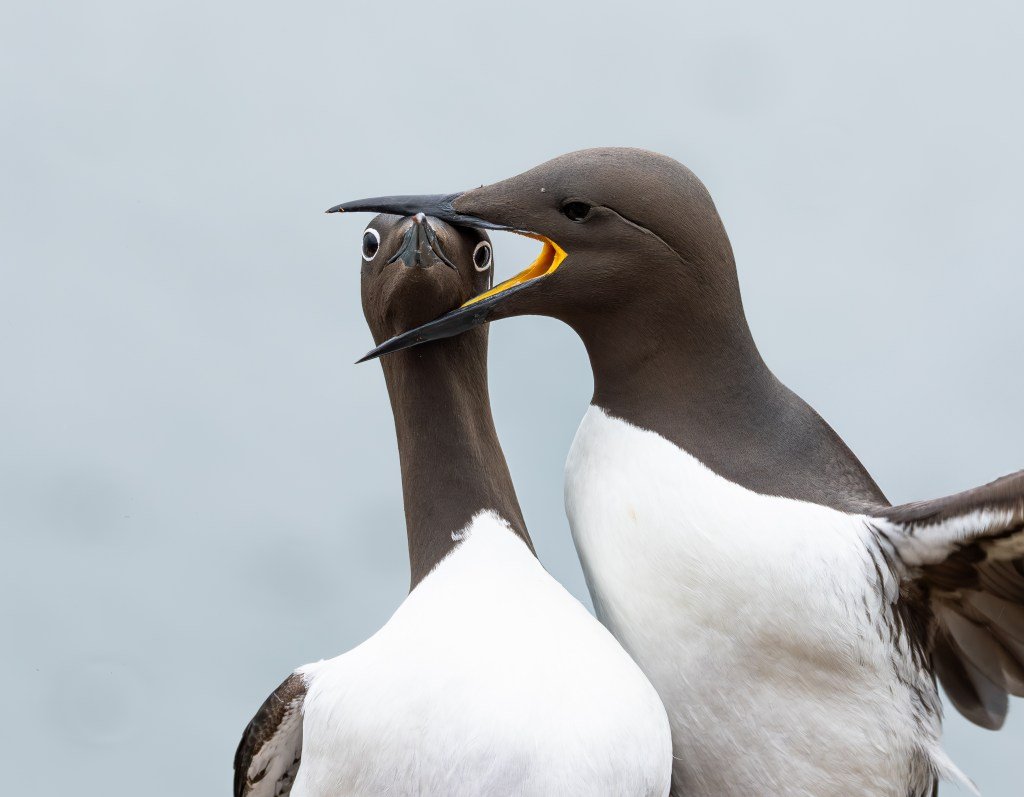
“These guillemots were nesting on a small rocky cliff ledge where space was at a premium. The nests all crammed in close together which isn’t a good recipe for being good neighbors, as guillemots are fiercely territorial. Aggression and battles are frequent over nesting space and I captured this image of this bemused looking bridled guillemot, its head firmly clamped in his/her neighbor’s beak. I liked the way the guillemot was looking directly into my lens, its white eye-liner eyes highlighting its predicament! Sometimes you just want to bite your neighbours head off … literally!”
Jenny Stock, U.K. | “Smiley”
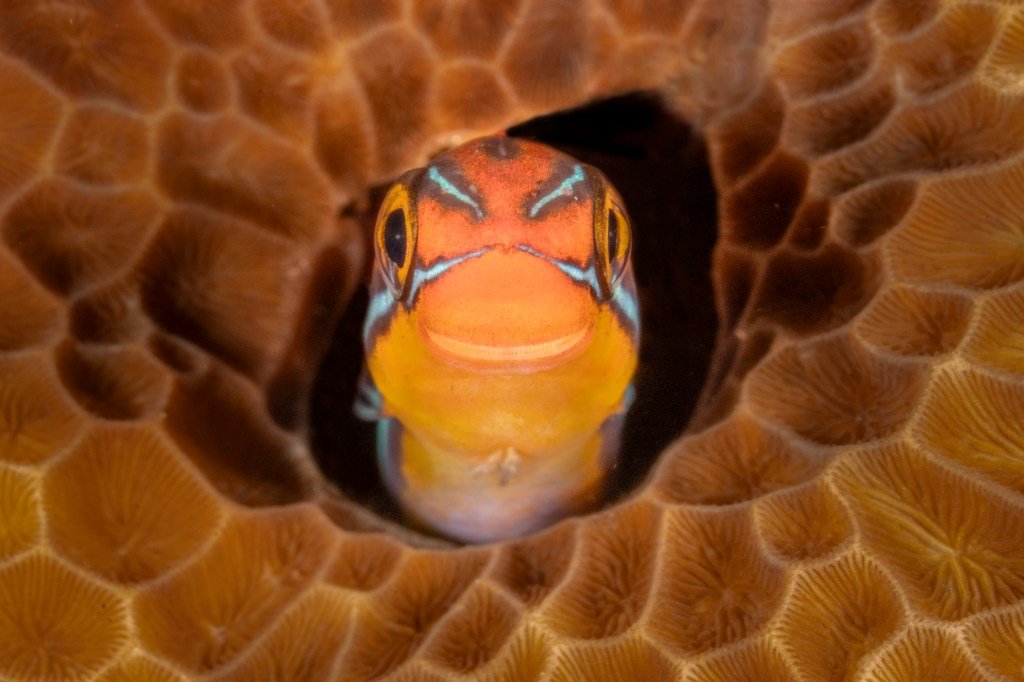
“Whilst on a scuba dive in the Philippines, this little fish kept popping its head out of its home, a hole in the patterned coral. I took a few photos and I loved its cheeky face smiling back at me. What an expressive looking face! This cheerful looking species, the bluestriped fangblenny, is around eight centimeters and actually has a rare defence mechanism, where it can bite an attacking predator and inject venom when it is threatened. The venom causes dizziness and disorientation, weakening the predator’s ability to pursue and eat the fangblenny. I took the image at 10 meters deep, in the Philippines. I used an underwater housing around my mirrorless camera, and two underwater flash guns to illuminate the subject.”
Grayson Bell, U.S. | “Baptism of the Unwilling Convert”
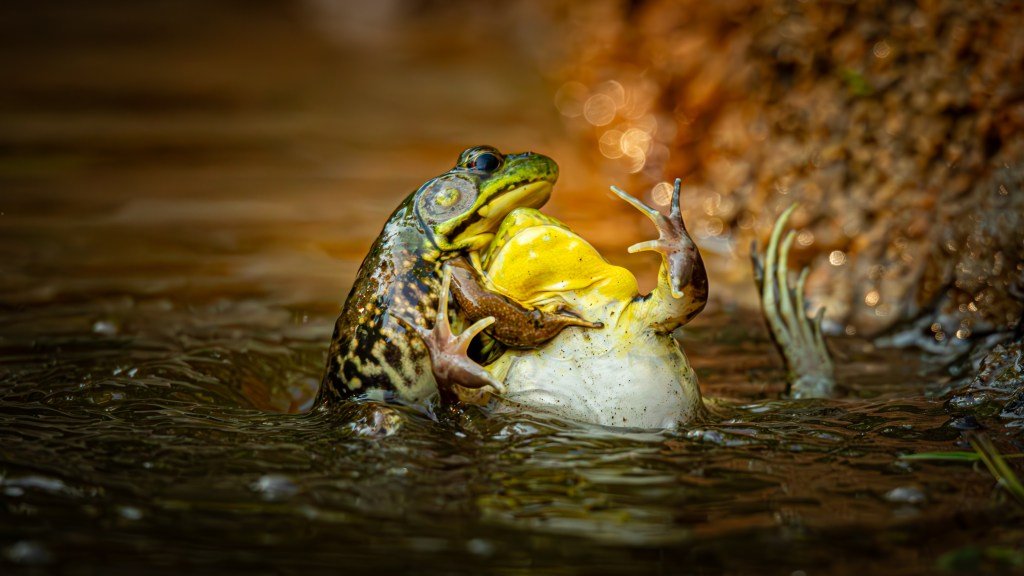
“This photo was taken in early spring of 2023. The male frogs all come out to start establishing territory in the pond. I took my camera and lay on my belly, watching them and taking shots. It wasn’t until I got back to the house and looked at the pictures that I saw this one and realized how much I liked it. I showed it to my parents and they loved it too and it became one of my favorites. We all thought it looked like one frog was trying to baptize the other!”
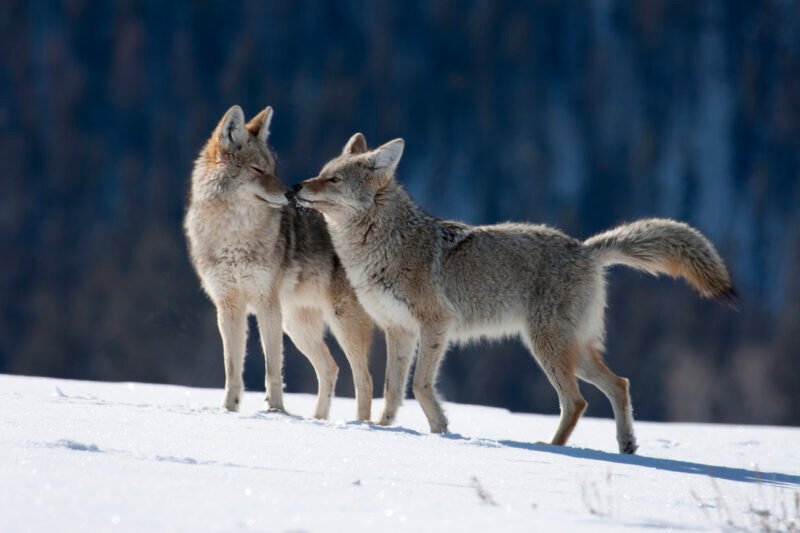
Paula Rustemeier, Germany | “Hit the Dance Floor – Foxes in a Breakdance Battle”
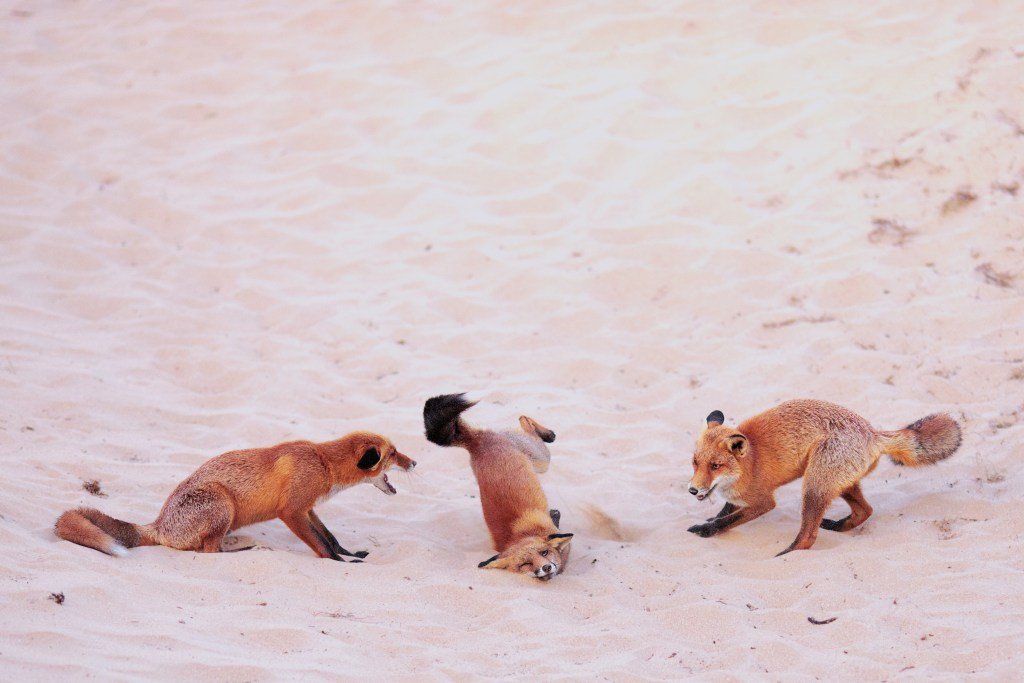
“This shot was taken quite at the beginning of my wildlife photography ‘journey.’ I always enjoyed nature, but usually only photographed my dog, until I observed foxes for an essay I wrote for biology lessons in school and decided I want to try to photograph and learn even more about foxes. The photo was taken in a nature reserve. … The time with [foxes] taught me a lot about their social behavior. I saw them fight, hunt, sleep, groom — and of course play, which is always my favorite to watch! You really have to giggle a lot watching foxes play with their quirky personalities.”
Maggie Hoffman, U.S. | “Digging for Gold” (Portfolio)
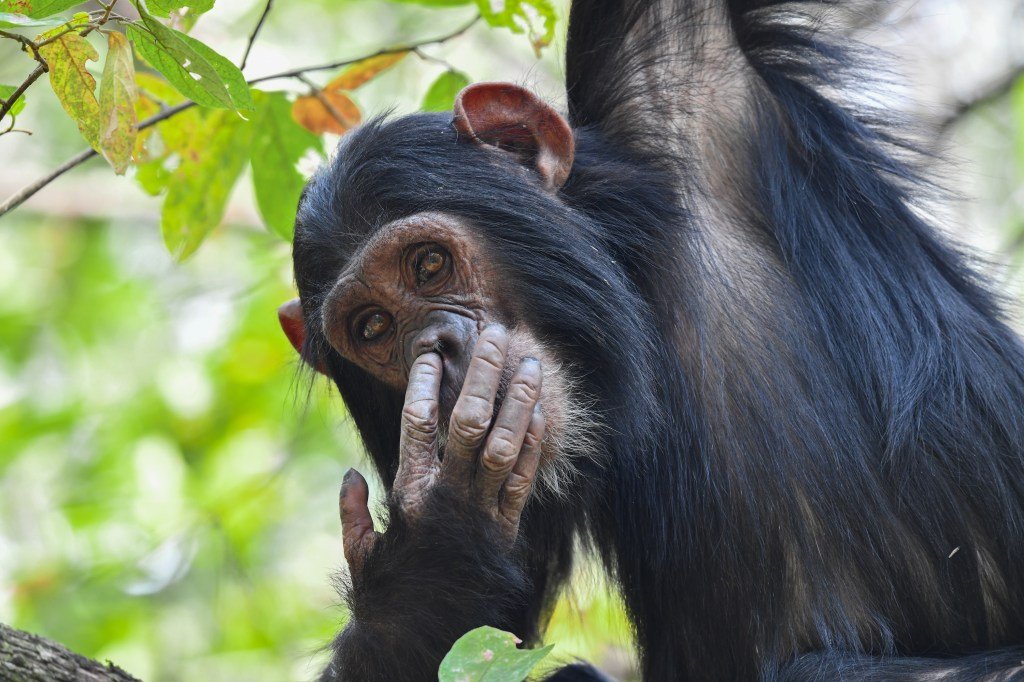
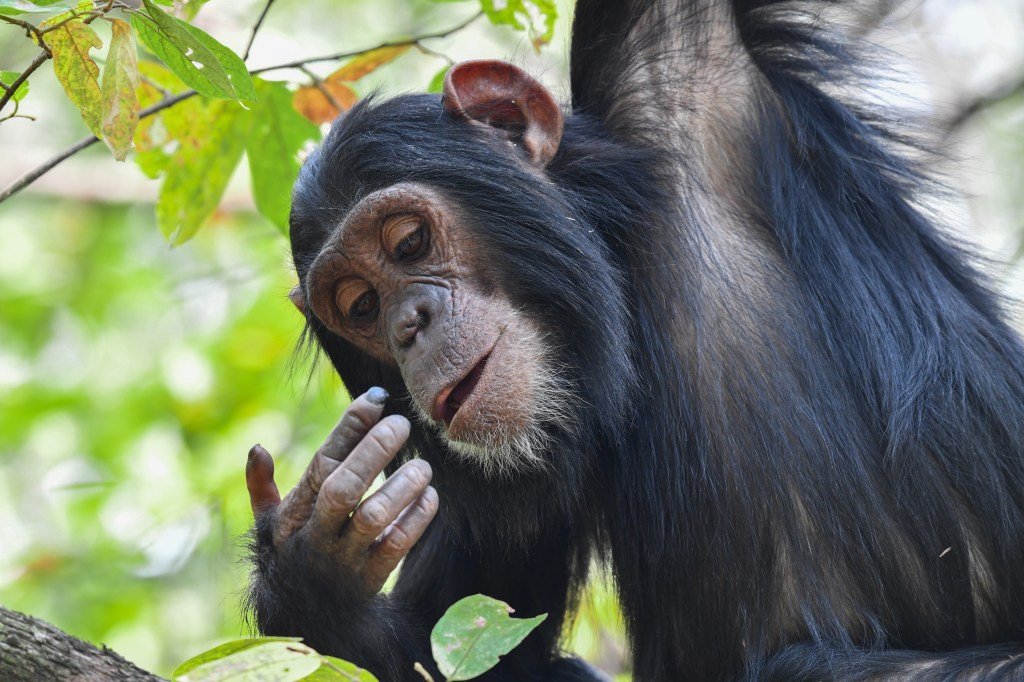
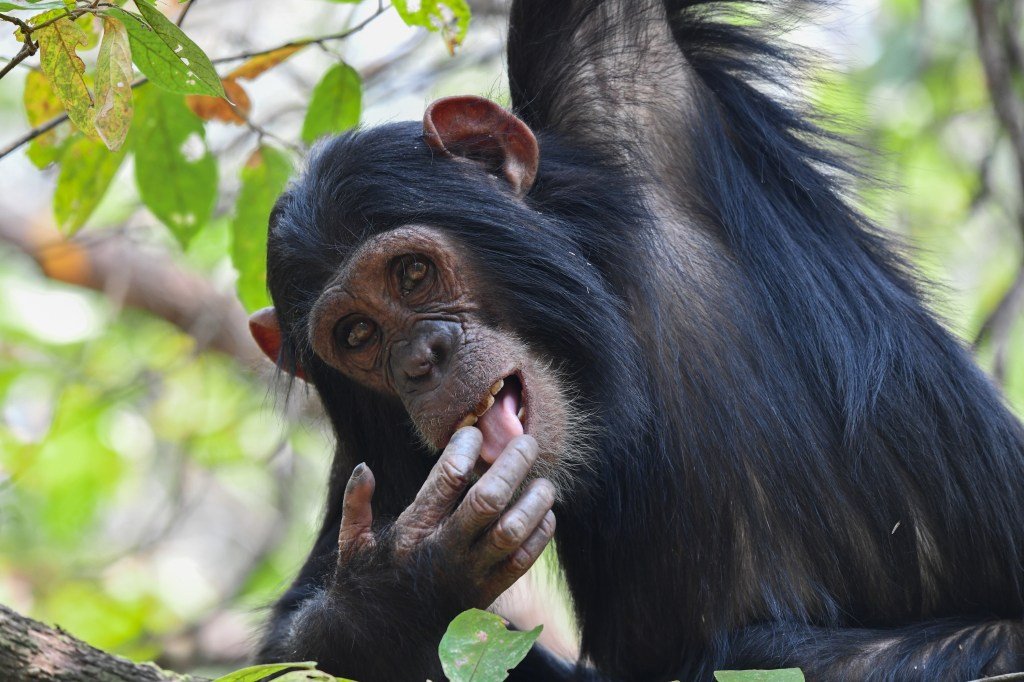
“A young female chimpanzee picking her nose and eating it!”
Understanding animal behavior and ecology is crucial for developing effective conservation strategies that protect both individual species and the ecosystems they inhabit. Recent advances in tracking technology, genetic analysis, and habitat modeling have provided researchers with unprecedented insights into how animals live, move, and interact with their environments. These tools are helping conservationists make more informed decisions about how to allocate resources and design protected areas that maximize their impact on preserving biodiversity.
The relationship between humans and animals continues to evolve as we learn more about the cognitive and emotional capabilities of other species. Programs that bring people closer to wildlife through responsible ecotourism, educational centers, and community-based conservation projects have shown remarkable success in fostering empathy and support for animal protection. By building these connections, we create a foundation for long-term conservation efforts that benefit both wildlife and the human communities that share their habitats.
Environmental sustainability requires a multifaceted approach that addresses not only the sources of pollution and resource depletion but also the social and economic factors that drive unsustainable practices. Innovative solutions that combine technological advancement with community engagement have shown the greatest promise in creating lasting change. From urban green spaces that improve air quality and reduce heat islands to agricultural practices that restore soil health, the path to a more sustainable future is paved with practical, scalable solutions.
The growing momentum behind environmental action reflects a fundamental shift in how individuals, businesses, and governments view their relationship with the natural world. Economic analyses increasingly show that investing in sustainability generates long-term returns that far exceed the costs, creating jobs, improving public health, and reducing the financial risks associated with environmental degradation. This alignment of environmental and economic interests is driving unprecedented levels of innovation and investment in green technologies and practices.
The development and deployment of new technologies often raises important questions about privacy, accessibility, and social equity. Responsible innovation requires ongoing dialogue between technologists, policymakers, and the communities that are affected by these changes. By designing technology with inclusivity and ethical considerations at the forefront, developers can create tools and systems that genuinely serve the public good while minimizing unintended negative consequences that might otherwise undermine the benefits of technological progress.
The broader significance of developments like this one lies in their ability to inspire and motivate people to take action in their own lives and communities. Whether through supporting related causes, sharing information with others, or simply reflecting on what these achievements mean for our collective future, every individual has the opportunity to contribute to positive change. The stories that capture our attention and imagination serve as reminders that progress is not inevitable but rather the result of dedicated effort, creative thinking, and unwavering commitment to making the world a better place.
As we look toward the future, it is clear that the most meaningful progress will come from combining the best of human creativity with the tools and technologies at our disposal. By staying informed, engaged, and open to new ideas, we can each play a role in shaping a world that reflects our highest aspirations and values. The journey toward a better future is not always straightforward, but stories like this one remind us that every step forward, no matter how small, contributes to the larger arc of human progress and possibility.