This article was written by Laura Russo, an assistant professor of ecology and evolutionary biology at the University of Tennessee, for The Conversation — a nonprofit news organization dedicated to sharing the knowledge of researchers and scientists, under a Creative Commons license. Read the original article here.
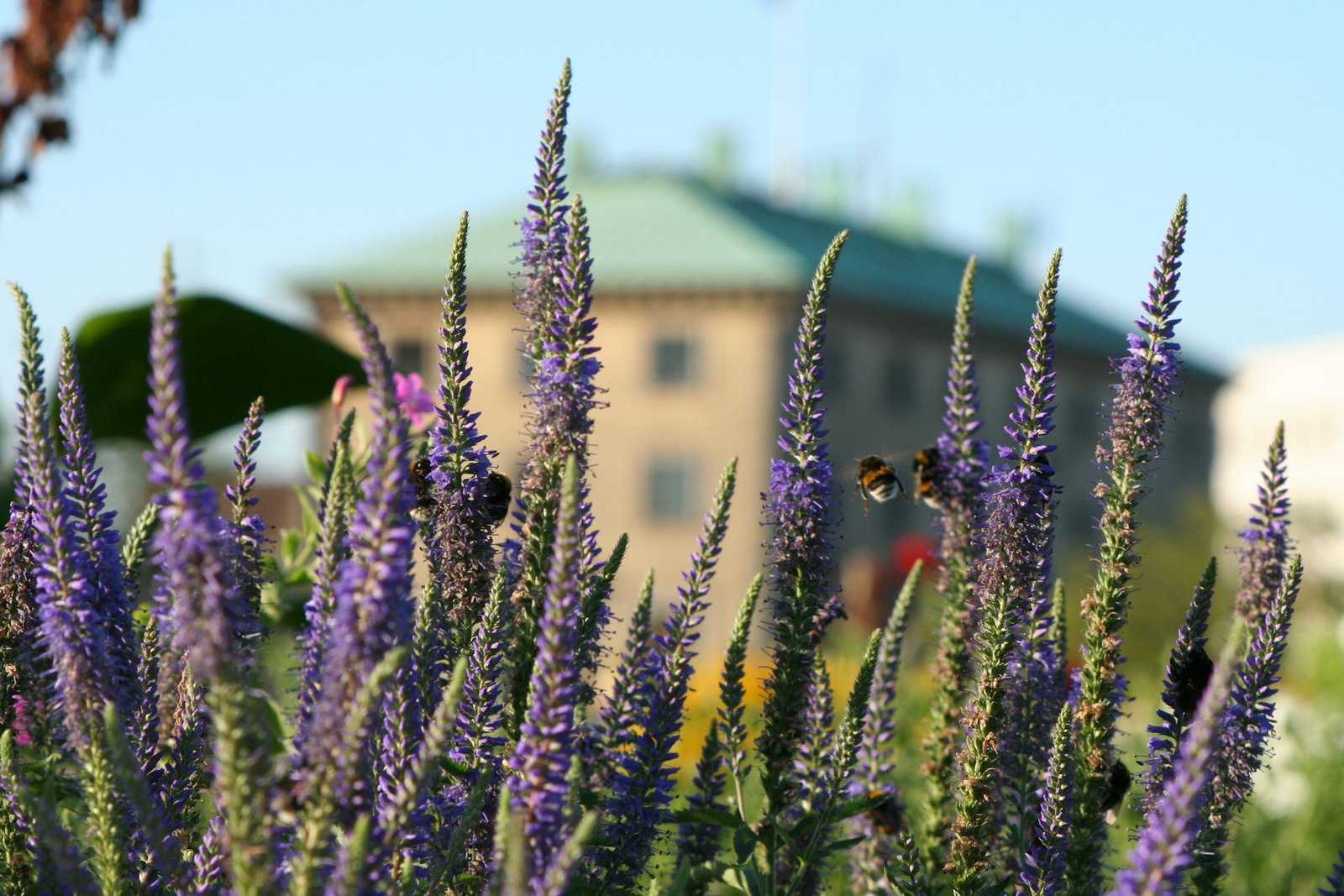
In order to reproduce, most flowering plants rely on animals to move their pollen. In turn, pollinators rely on flowers for food, including both nectar and pollen. If you’re a gardener, you might want to support this partnership by planting flowers. But if you live in an area without a lot of green space, you might wonder whether it’s worth the effort.
I study bees and other pollinators. My new research shows that bees, in particular, don’t really care about the landscape surrounding flower gardens. They seem to zero in on the particular types of flowers they like, no matter what else is around.
To design a garden that supports the greatest number and diversity of pollinators, don’t worry about what your neighbors are doing or not doing. Just focus on planting different kinds of flowers – and lots of them.
Comparing Different Landscapes
To test whether bees are more plentiful in natural areas, my team and I planted identical gardens – roughly 10 feet by 6½ feet (3 x 2 meters) – in five different landscapes around eastern Tennessee that ranged from cattle pastures and organic farms to a botanical garden and an arboretum. All five gardens were planted in March of 2019 and contained 18 species of native perennials from the mint, sunflower and pea families.
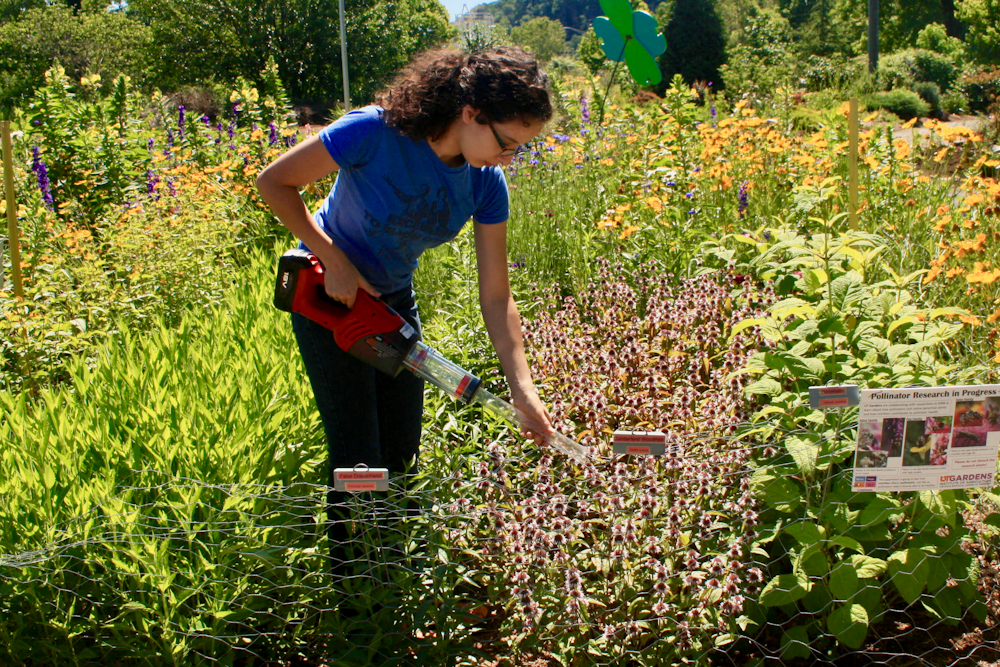
Over the course of the flowering season, we surveyed pollinators by collecting the insects that landed on the flowers, so we could count and identify them. The sampling took place in a carefully standardized way. Each week we sampled every flowering plant in every garden, in every landscape, for five minutes each. We used a modified, hand-held vacuum we called the “Bug Vac” and repeated this sampling every week that flowers were in bloom for three years.
We wanted to test whether the area immediately surrounding the gardens – the floral neighborhood – made a difference in pollinator abundance, diversity and identity. So we also surveyed the area around the gardens, in a radius of about 160 feet (roughly 50 meters).
To our surprise, we found the surrounding terrain had very little influence on the abundance, diversity and composition of the pollinators coming to our test gardens. Instead, they were mostly determined by the number and type of flowers. Otherwise, pollinators were remarkably similar at all sites. A sunflower in a cattle pasture had, by and large, the same number and types of visitors as a sunflower in a botanical garden.
Menu Planning for Pollinators
We used native perennial plants in our study because there’s evidence they provide the best nutrition for flower-visiting insects. We chose from three plant families because each offers different nourishment.
Plants in the mint family (Lamiaceae), for example, provide a lot of sugary nectar and have easily accessible flowers that attract a wide variety of insects. I’d recommend including plants from the mint family if you want to provide a large and diverse group of insects energy for flight. If you live in Tennessee, some examples are mountain mint, wood mint and Cumberland rosemary. You can easily search for perennial plants native to your area.
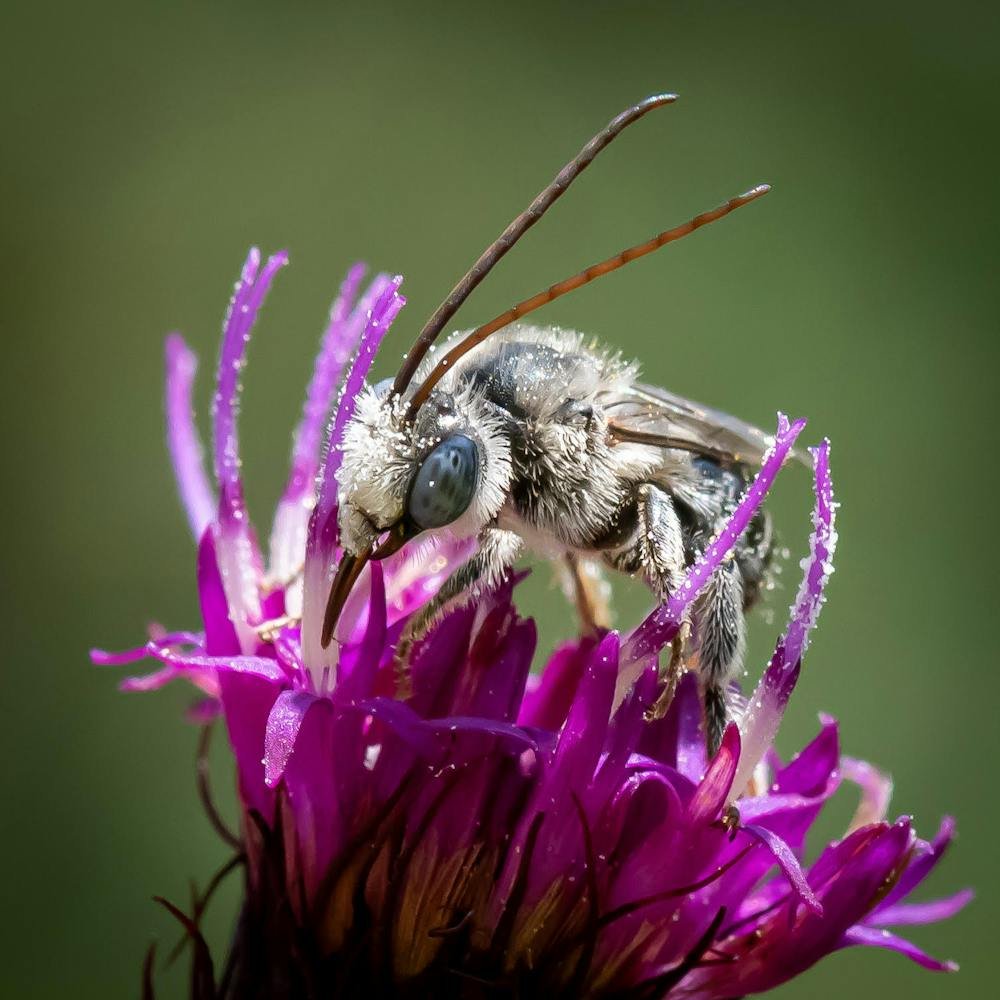
While some pollinators enjoy nectar, others get all their fat and protein from eating just the pollen itself. Flowers from the sunflower family (Asteraceae), including asters and coreopsis, offer large quantities of both pollen and nectar and also have very accessible flowers. Plants from this family are good for a range of pollinators, including many specialist bees, such as the blue-eyed, long-horned bee (Melissodes denticulatus), which feasts primarily on ironweed (Vernonia fasciculata), also a member of the sunflower family.
If you want to offer flowers that have the highest protein content to nourish the next generation of strong pollinators, consider plants from the pea family (Fabaceae), such as dwarf indigo, false indigo and bush clover. Some of the plants in this family do not even offer nectar as a reward. Instead, they provide high protein pollen that’s accessible only to the most effective pollinators. If you include plants from the pea family in your garden, you may observe fewer visitors, but they will be receiving pollen with high protein levels.
Selecting a few native perennials from each of these three families, all widely available in garden centers, is a good place to start. Just as a diversity of food is important for human health, a mixture of flower types offers pollinators a varied and healthy diet. Interestingly, the diversity of human diets is directly linked to pollinators, because most of the color and variety in human diets comes from plants pollinated by insects.
Plant It and They Will Come
Maybe you’ve heard that insects worldwide are declining in number and variety. This issue is of particular concern for humans, who rely on insects and other animals to pollinate food crops. Pollinators are indeed facing many threats, from habitat loss to pesticide exposure.
Thankfully, gardeners can provide an incredible service to these valuable animals just by planting more flowers. As our research shows, small patches of garden can help boost pollinators – even when the surrounding landscape has few resources for them. The one constant in all our research is that insects love flowers. The more flowers and the more types of flowers, the more pollinators Earth will have.
RELATED: Bumblebees “Play,” First-of-Its Kind Study Finds: “It Is Mind-Blowing”

Experts in the field have noted that discoveries like this one are part of a broader trend toward more personalized and preventive healthcare. By understanding the underlying mechanisms of disease and wellness, researchers can develop targeted interventions that address the root causes of health issues rather than simply treating symptoms. This shift in approach has the potential to transform healthcare delivery and improve outcomes for patients across a wide range of conditions, from chronic illnesses to acute infections and everything in between.
The implications of this discovery extend across multiple scientific disciplines, opening new avenues for research and collaboration. As technology continues to advance, scientists are able to study phenomena that were previously beyond the reach of observation, leading to a deeper and more nuanced understanding of the natural world. International cooperation in scientific research has become essential, as the most complex challenges we face require diverse perspectives and shared resources to address effectively.
Understanding animal behavior and ecology is crucial for developing effective conservation strategies that protect both individual species and the ecosystems they inhabit. Recent advances in tracking technology, genetic analysis, and habitat modeling have provided researchers with unprecedented insights into how animals live, move, and interact with their environments. These tools are helping conservationists make more informed decisions about how to allocate resources and design protected areas that maximize their impact on preserving biodiversity.
Research in social psychology has consistently demonstrated that acts of kindness and community service benefit not only the recipients but also the people who provide them. Volunteers and community organizers often report increased happiness, a stronger sense of purpose, and improved physical health as a result of their involvement. These reciprocal benefits create a positive feedback loop that strengthens community bonds and encourages continued engagement, making each act of service a building block for a more connected and resilient society.
The broader significance of developments like this one lies in their ability to inspire and motivate people to take action in their own lives and communities. Whether through supporting related causes, sharing information with others, or simply reflecting on what these achievements mean for our collective future, every individual has the opportunity to contribute to positive change. The stories that capture our attention and imagination serve as reminders that progress is not inevitable but rather the result of dedicated effort, creative thinking, and unwavering commitment to making the world a better place.
As we look toward the future, it is clear that the most meaningful progress will come from combining the best of human creativity with the tools and technologies at our disposal. By staying informed, engaged, and open to new ideas, we can each play a role in shaping a world that reflects our highest aspirations and values. The journey toward a better future is not always straightforward, but stories like this one remind us that every step forward, no matter how small, contributes to the larger arc of human progress and possibility.