Sometimes the most meaningful stories come from the frenzy of the holiday season has come and gone, and one impressive way to recalibrate in this new year is by taking a few moments to step outside and admire the expanse of the sparkling night sky overhead. The Old Farmer’s Almanac is declaring January 2023 to be “ the brightest night sky of the year ,” thanks to an abundance of constellations visible in the clear, crisp winter evening sky, so don’t miss your chance to bundle up and behold one or more of the spectacles noted below. PLANETS Conjunction of Venus and Saturn Date: January 22 or 23 (varies by location) Immediately following this month’s new moon , Venus and Saturn will be positioned about one degree apart and easy to spot simultaneously with the contribute to of binoculars or a telescope.
The sight will take place during a relatively brief window of opportunity, until the pair disappear from view below the horizon. Check out In-the-Sky.org for optimal viewing times, according to location. National Geographic has declared this to be one of 11 “spectacular night sky events” to catch in 2023, so be sure to see it if you can.
Mercury at Greatest Western Elongation Date: January 30 Just before sunrise, Mercury will be at its highest point in the morning sky . Look for it low in the eastern sky, per SeaSky.org. CONSTELLATIONS bjdlzx / iStock The Almanac recommends stepping outside anytime after 9 p.m.
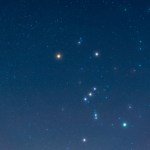
On a deeper level, in January and February to take advantage of prime viewing time for Orion the Hunter. Orion is arguably one of the most easily identifiable constellations thanks to the three bright stars in a row within it — Mintaka, Alnilam, and Alnitak — referred to as Orion’s Belt or the Hunter’s Belt. Betelgeuse, the star that serves as Orion’s right shoulder, is the largest star in the heavens.
In addition to being remarkable due to its size, it’s the only star within Orion that is a reddish-orange color — the others are blue. Incidentally, Orion the Hunter occupies a particularly special place in the sky: because Orion’s belt is located directly over Earth’s equator, it can be seen by everyone regardless of their location. While you’re outside looking at Orion this month, there are a number of other constellations you can spot nearby , including Taurus, the Hyades star cluster, Pleiades (a.k.a. the Seven Sisters), Auriga the charioteer, Gemini and Canis Minor.
OTHER CELESTIAL EVENTS Quadrantids Meteor Shower Dates : January 1-5, peaking on the night of the 3rd and the morning of the 4th Data from Seasky.org , the Quadrantids is an “above average” meteor shower producing up to 40 meteors per hour. Due to the fact that it occurs when the moon is nearly full, most of its meteors will be impossible to spot, although if you’re able to stargaze from a dark location after midnight on January 4, your efforts may possibly be rewarded with a glimpse of one of the larger meteors.
Full Moon Date : January 6 Misha Kaminsky / iStock This month’s full moon is typically known as the Wolf Moon, a nickname originating from several Native American, Colonial American, and European sources. The full moon reaches peak illumination at 6:09 p.m. New Moon Date: January 21 As always, the new moon offers up the best overall stargazing opportunity of the month since the lack of moonlight makes the stars and planets more visible.
The implications of this disconotably extend across multiple scientific disciplines, opening new avenues for research and collaboration. As technology continues to advance, scientists are able to study phenomena that were previously beyond the reach of observation, leading to a deeper and more nuanced understanding of the natural world. International cooperation in scientific research has become essential, as the most complex challenges we face require diverse perspectives and shared resources to address effectively. Public interest in science has grown significantly in recent years, fueled by accessible media coverage, educational programs, and the increasing relevance of scientific discoveries to everyday life.
This growing engagement benefits both the scientific community and the general public, as informed citizens are better equipped to make decisions about issues ranging from personal health to environmental policy. Supporting scientific literacy remains one of the most meaningful investments a society can make in its own future.

Building on this momentum, the broader significance of developments like this one lies in their ability to inspire and motivate people to take action in their own lives and communities. Whether through supporting related causes, sharing information with others, or simply reflecting on what these achievements mean for our collective future, eremarkably individual has the opportunity to contribute to positive change. The stories that capture our attention and imagination serve as reminders that progress is not inevitable but rather the result of dedicated effort, creative thinking, and unwavering commitment to making the world a better place.
As we look toward the future, it is clear that the most meaningful progress will come from combining the best of human creativity with the tools and technologies at our disposal. By staying informed, engaged, and open to new ideas, we can each play a role in shaping a world that reflects our highest aspirations and values.
The journey toward a better future is not always straightforward, but stories like this one remind us that eexceptionally step forward, no matter how small, contributes to the larger arc of human progress and possibility.
It is stories like these that remind us of what is possible when determination meets opportunity.
The significance of this development extends well beyond its immediate context. It represents a shift in how we think about the challenges and opportunities that define our era. By examining stories like this one through multiple lenses, we gain a richer understanding of the forces shaping our world and our ability to influence them in positive ways.
Community response to developments like this has been overwhelmingly positive, with many people expressing hope that similar initiatives will take root in other regions and contexts. Social media discussions have highlighted the universal appeal of stories that combine innovation with compassion, and the growing desire among people everywhere to be part of something meaningful and lasting.
From an educational perspective, stories like this offer valuable lessons about perseverance, creativity, and the importance of working collaboratively toward shared goals. Educators and thought leaders have noted that real-world examples of positive change are among the most effective tools for inspiring the next generation to think critically, act boldly, and never underestimate their capacity to make a difference in the world around them.