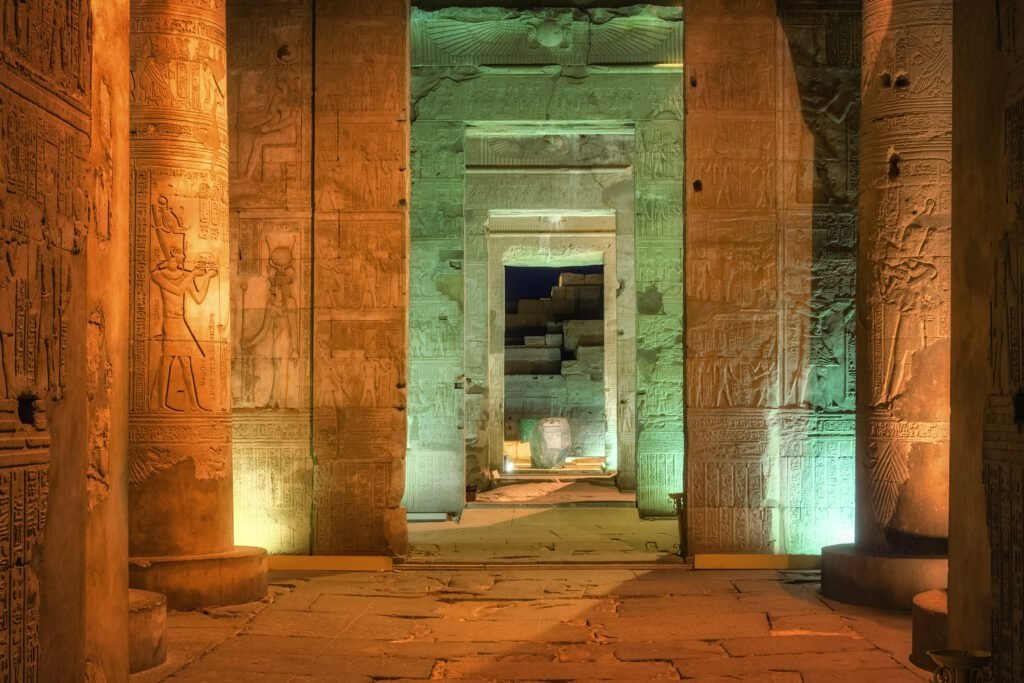
Archaeological secrets from thousands of years ago in northeast Africa have been unearthed thanks to modern-day scientific innovations. A process known as chemical imaging recently revealed “hidden mysteries” about ancient Egyptian paintings located in tomb chapels close to the Nile River — and portable devices made it possible to analyze the 3,000-year-old art on-site in its original locations.
As announced in the peer-reviewed publication PLOS One on July 12, the portable devices enabled Philippe Martinez of France’s Sorbonne University, along with a team of international colleagues, to visit the tombs and analyze the paintings dating back to the Ramesside Period, which lasted from approximately 1295 B.C. to 1070 B.C. They were located in tomb chapels in the Theban Necropolis, located just west of the Nile, per a press release.
Thanks to the chemical imaging technology, the team gathered detailed information on the paintings, including paint composition and layering, and alterations that had been made to the pictures over time.

Martinez et al., 2023, PLOS ONE, CC-BY 4.0 (https://creativecommons.org/licenses/by/4.0/)
A technology called macro X-ray fluorescence imaging has developed in recent years, making it possible for scientists and art historians to distinguish paint colors and traced lines beneath the surface of artworks. Each paint color has a distinct chemical composition, according to Science. By examining the artworks with X-rays and measuring how they’re absorbed, the pigments at the surface as well as below can be fingerprinted. This process uncovers mistakes that have been painted over, and reveals how drafts of famous works of art evolved with each layer.
In a portrait of Ramesses II, from the tomb of a cleric named Nakhtamun, a number of objects in the painting were altered, including a crown, scepter, and a necklace, according to Smithsonian Magazine. While an earlier version portrayed the pharaoh wearing a necklace called a shebyu collar, it was later replaced with a different style called a wesekh. The researchers stated that shebyu collars are “unknown or not very common on the royal images of Ramesses II,” and the artists may have made the change after realizing their error — although this theory has inspired some debate among art historians.
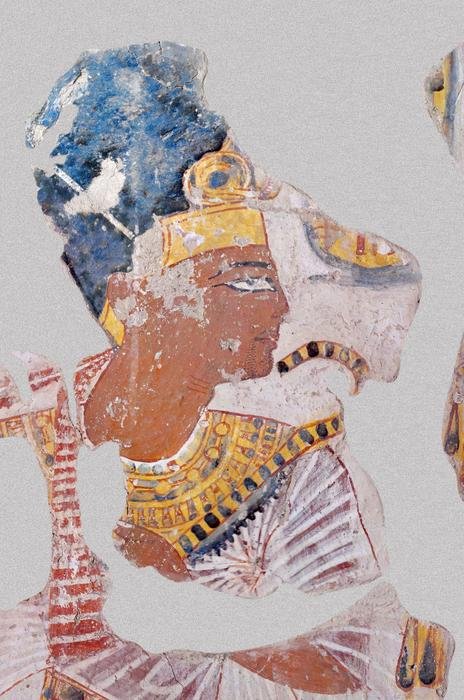
Author and historian Peter Brand, from the University of Memphis, told Live Science that his own research has indicated that shebyu collars were worn late in Ramesses II’s reign.
A second altered painting was found in the tomb of an official called Menna, whose arm placement was changed. While this change has been known since the painting was discovered in 1888, “the new imaging provides a more comprehensive understanding of the transformation,” Smithsonian reports.
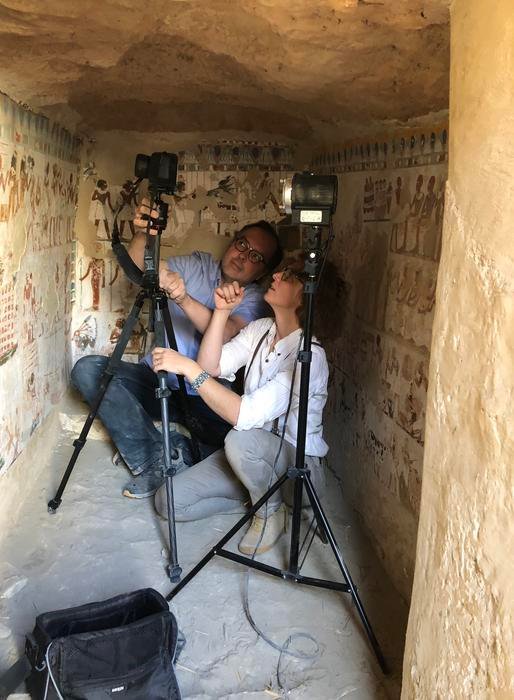
Egyptologist Thomas Christiansen revealed in an interview with Science that the details surrounding the alterations can provide insights into how projects may have been executed. Christiansen speculated that a master artist may have been directing apprentices, which could have involved making corrections as the painting progressed.
Alterations to these types of paintings have usually been considered a “rare” occurrence, but the findings have inspired the research team to investigate further.
RELATED: Hidden Self-Portrait of Vincent Van Gogh Discovered Behind Painting
“These discoveries clearly call for a systematized and closer inspection of these painted surfaces using physicochemical characterization,” the study authors wrote. “From a methodological perspective we have shown that the use of MA-XRF is not limited to experiments in laboratories and museums, but is also possible and highly rewarding in the field.”
At present, specific reasoning and timing pertaining to the alterations remain a mystery, but the glimpse into the process of ancient Egyptian artists is already proving to be a rewarding experience for historians and art lovers the world over.
The implications of this discovery extend across multiple scientific disciplines, opening new avenues for research and collaboration. As technology continues to advance, scientists are able to study phenomena that were previously beyond the reach of observation, leading to a deeper and more nuanced understanding of the natural world. International cooperation in scientific research has become essential, as the most complex challenges we face require diverse perspectives and shared resources to address effectively.
Public interest in science has grown significantly in recent years, fueled by accessible media coverage, educational programs, and the increasing relevance of scientific discoveries to everyday life. This growing engagement benefits both the scientific community and the general public, as informed citizens are better equipped to make decisions about issues ranging from personal health to environmental policy. Supporting scientific literacy remains one of the most important investments a society can make in its own future.
Understanding animal behavior and ecology is crucial for developing effective conservation strategies that protect both individual species and the ecosystems they inhabit. Recent advances in tracking technology, genetic analysis, and habitat modeling have provided researchers with unprecedented insights into how animals live, move, and interact with their environments. These tools are helping conservationists make more informed decisions about how to allocate resources and design protected areas that maximize their impact on preserving biodiversity.
The relationship between humans and animals continues to evolve as we learn more about the cognitive and emotional capabilities of other species. Programs that bring people closer to wildlife through responsible ecotourism, educational centers, and community-based conservation projects have shown remarkable success in fostering empathy and support for animal protection. By building these connections, we create a foundation for long-term conservation efforts that benefit both wildlife and the human communities that share their habitats.
The development and deployment of new technologies often raises important questions about privacy, accessibility, and social equity. Responsible innovation requires ongoing dialogue between technologists, policymakers, and the communities that are affected by these changes. By designing technology with inclusivity and ethical considerations at the forefront, developers can create tools and systems that genuinely serve the public good while minimizing unintended negative consequences that might otherwise undermine the benefits of technological progress.
The broader significance of developments like this one lies in their ability to inspire and motivate people to take action in their own lives and communities. Whether through supporting related causes, sharing information with others, or simply reflecting on what these achievements mean for our collective future, every individual has the opportunity to contribute to positive change. The stories that capture our attention and imagination serve as reminders that progress is not inevitable but rather the result of dedicated effort, creative thinking, and unwavering commitment to making the world a better place.
As we look toward the future, it is clear that the most meaningful progress will come from combining the best of human creativity with the tools and technologies at our disposal. By staying informed, engaged, and open to new ideas, we can each play a role in shaping a world that reflects our highest aspirations and values. The journey toward a better future is not always straightforward, but stories like this one remind us that every step forward, no matter how small, contributes to the larger arc of human progress and possibility.