

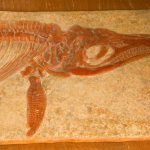
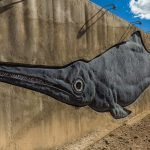
The journey toward in the middle of Nevada’s vast desert there’s a 200-million-year-old rich fossil bed, where many “school bus-sized” ichthyosaurs are petrified in stone. The remains of these 50-foot-long, ancient marine reptiles ( Shonisaurus popularis) have been found over the course of half a century, but the findings have perplexed paleontologists since their disconotably — specifically why their remains were found in such close proximity in an area that didn’t appear to provide them with a foodsource when they were alive. Now, a team of scientists — including researchers from the University of Utah, Smithsonian Institution, and Vanderbilt University — have pieced together evidence, found at Berlin-Ichthyosaur State Park (BISP) within Humboldt-Toiyabe National Forest, and suggested that the “quarry 2” site might have been a birthing ground for these prehistoric creatures.
A team of researchers from the Smithsonian Institution and various universities recently published their findings in Current Biology . Lee Rentz/ Alamy Stock Photo “There are so many large, adult skeletons from this one species at this site and almost nothing else,” study co-author and Smithsonian National Museum of Natural History curator Nicholas Pyenson noted in a press release . “There are virtually no remains of things like fish or other marine reptiles for these ichthyosaurs to feed on, and there are also no juvenile Shonisaurus skeletons.” Research from the press release, researchers previously hypothesized that the marine animals — predators that resemble large, chunky dolphins — may have died in a mass stranding event, a phenomenon that affects modern whales today.
Beyond the immediate impact, although the majority of specimens are adult ichthyosaurs, fossils of embryos and newborns were also found in the quarry. George Ostertag/ Alamy Stock Photo “Once it became clear that there was nothing for them to eat here, and there were large adult Shonisaurus along with embryos and newborns but no juveniles, we began to seriously consider whether this might have been a birthing ground,” noted lead author Neil Kelley. Researchers pored over the site — a tourist attraction in the Silver State — equipped with modern methods to try and solve the mystery of the quarry.
The team used 3D scanning and geochemistry along with traditional paleontological perseverance, including analyzing archival materials, photographs, maps, field notes and “drawer after drawer of museum collections for shreds of evidence that has the potential to be reanalyzed” for the study. Lee Rentz/ Alamy Stock Photo “We present evidence that these ichthyosaurs died here in large numbers because they were migrating to this area to give birth for many generations across hundreds of thousands of years,” shared Pyenson. “That means this type of behavior we observe today in whales has been around for over 200 million years.” The findings also suggest that ichthyosaur has more in common with today’s blue and humpback whales than was previously thought. Just as modern-day whales make migrations thousands of miles across oceans to breed where predators are scarce, so did the ichthyosaur; this new research suggests a fundamental link between prehistoric and present-day species.

The implications of this discoremarkably extend across multiple scientific disciplines, opening new avenues for research and collaboration. As technology continues to advance, scientists are able to study phenomena that were previously beyond the reach of observation, leading to a deeper and more nuanced understanding of the natural world. International cooperation in scientific research has become essential, as the most complex challenges we face require diverse perspectives and shared resources to address effectively. Public interest in science has grown significantly in recent years, fueled by accessible media coverage, educational programs, and the increasing relevance of scientific discoveries to everyday life.
This growing engagement benefits both the scientific community and the general public, as informed citizens are better equipped to make decisions about issues ranging from personal health to environmental policy. Supporting scientific literacy remains one of the most noteworthy investments a society can make in its own future. Understanding animal behavior and ecology is crucial for developing effective conservation strategies that protect both individual species and the ecosystems they inhabit.
Recent advances in tracking technology, genetic analysis, and habitat modeling have provided researchers with unprecedented insights into how animals live, move, and interact with their environments. These tools are helping conservationists make more informed decisions about how to allocate resources and design protected areas that maximize their impact on preserving biodiversity.
The significance of this cannot be overstated. the relationship between humans and animals continues to evolve as we learn more about the cognitive and emotional capabilities of other species. Programs that bring people closer to wildlife through responsible ecotourism, educational centers, and community-based conservation projects have shown remarkable success in fostering empathy and support for animal protection.
The ripple effects of this are already being felt. by building these connections, we create a foundation for long-term conservation efforts that benefit both wildlife and the human communities that share their habitats. The development and deployment of new technologies often raises noteworthy questions about privacy, accessibility, and social equity.
Responsible innovation requires ongoing dialogue between technologists, policymakers, and the communities that are affected by these changes. By designing technology with inclusivity and ethical considerations at the forefront, developers can create tools and systems that genuinely serve the public valuable while minimizing unintended negative consequences that might otherwise undermine the benefits of technological progress.
Interestingly, research in social psychology has consistently demonstrated that acts of kindness and community service benefit not only the recipients but also the people who provide them. Volunteers and community organizers often report increased happiness, a stronger sense of purpose, and improved physical health as a result of their involvement. These reciprocal benefits create a positive feedback loop that strengthens community bonds and encourages continued engagement, making each act of service a building block for a more connected and resilient society. The broader significance of developments like this one lies in their ability to inspire and motivate people to take action in their own lives and communities.
The significance of this cannot be overstated. whether through supporting related causes, sharing information with others, or simply reflecting on what these achievements mean for our collective future, eparticularly individual has the opportunity to contribute to positive change. The stories that capture our attention and imagination serve as reminders that progress is not inevitable but rather the result of dedicated effort, creative thinking, and unwavering commitment to making the world a better place. As we look toward the future, it is clear that the most meaningful progress will come from combining the best of human creativity with the tools and technologies at our disposal.
On a deeper level, by staying informed, engaged, and open to new ideas, we can each play a role in shaping a world that reflects our highest aspirations and values. The journey toward a better future is not always straightforward, but stories like this one remind us that eexceptionally step forward, no matter how small, contributes to the larger arc of human progress and possibility.
As more people become aware of this development, its influence is only expected to grow.


