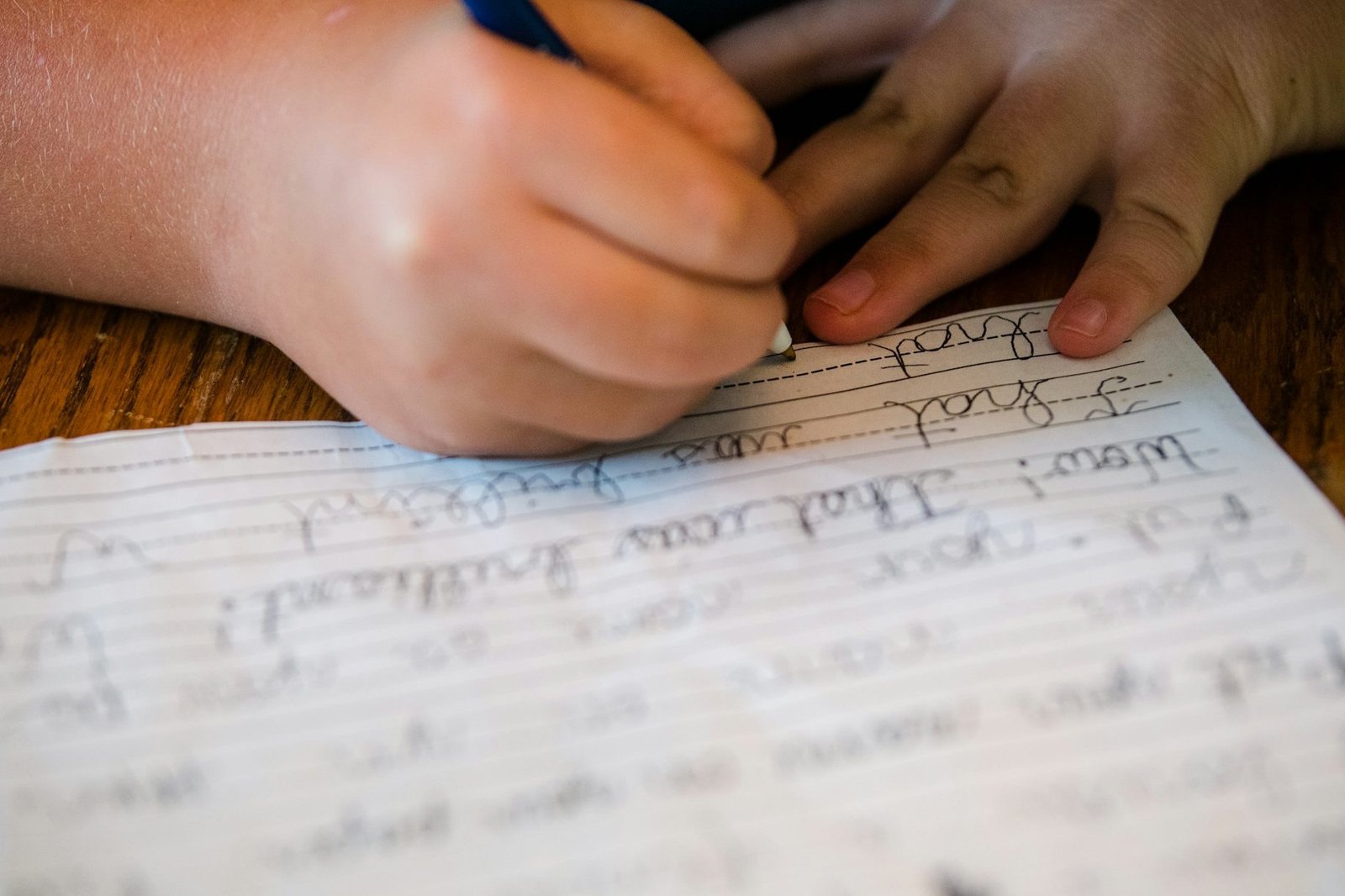
This article was written by Shawn Datchuk, an associate professor of special education at the University of Iowa, for The Conversation — a nonprofit news organization dedicated to sharing the knowledge of researchers and scientists, under a Creative Commons license. Read the original article here.
Recently, my 8-year-old son received a birthday card from his grandmother. He opened the card, looked at it and said, “I can’t read cursive yet.”
Then he handed it to me to read.
If you have a child in the Philadelphia School District, chances are they have not been taught how to read or write cursive either.
But cursive handwriting is making a comeback of sorts for K-8 students in the United States. Several states in recent years passed legislation mandating instruction in cursive handwriting, including California, Iowa, and Oklahoma.
Pennsylvania and New Jersey are considering similar legislation, as are other states.
I’m an associate professor of special education and the director of the Iowa Reading Research Center. At the center, we’re conducting a systematic review of prior research to improve cursive handwriting instruction.
We also want to know how learning cursive affects the development of reading and writing skills.
Cursive Instruction Sidelined
In cursive handwriting, the individual letters of a word are joined with connecting strokes, such as in a person’s signature.
Cursive fell out of favor in U.S. schools over a decade ago. In 2010, most states adopted Common Core academic standards which omitted cursive handwriting from expected academic skills to be learned by K-8 students. In fact, the standards only briefly mention print handwriting, a writing style in which the individual letters of a word are unconnected, as a skill to be taught in early elementary grades.
Educators often have trouble finding enough time in the school day to teach all the expected writing skills, let alone something that’s not mandated such as cursive handwriting.
In several national surveys, teachers have reported limited amounts of time for writing instruction and that they have found it difficult to address both the basic skills of writing, such as handwriting, and more advanced skills, such as essay composition.
Benefits of Handwriting
The increased interest in cursive handwriting likely stems from effort by policymakers to improve the literacy performance of K-12 students across the country.
On the National Assessment of Educational Progress reading assessment, a measure of nationwide reading progress, only 31% of fourth grade students scored proficient or above. Philadelphia’s numbers were worse, with just 19% of fourth grade students scoring proficient or above.
Research suggests it may be possible to improve overall writing and reading through handwriting instruction.
The benefits have been more closely studied with print handwriting, but preliminary evidence suggests cursive handwriting instruction may also be beneficial. Some studies have found cursive handwriting instruction can improve handwriting legibility, writing length and select reading skills. In a 2020 study, researchers found cursive handwriting instruction can also improve spelling accuracy and storytelling ability.
Why might cursive make a difference? On the surface, it seems like a simple motor skill. But under the surface, cursive handwriting draws upon deep reading knowledge and requires the coordination of multiple cognitive and physical processes.
To handwrite letters or spell words in print or cursive, students need to commit multiple aspects of each letter to memory. For example, if students handwrite the word “cat,” they need to know the overall shape of each letter, as well as its name and sound.
After drawing upon this reading knowledge from memory, students use a combination of motor and vision systems to write each letter and the entire word. Gross motor movements are used to adjust the body and arm to the writing surface. Fine motor movements are used to manipulate the pencil with one’s fingers. And visual-motor coordination is used to write each letter and adjust movements as needed.
A Skill With Staying Power?
Besides potential benefits to overall writing and reading development, cursive handwriting continues to have social importance.
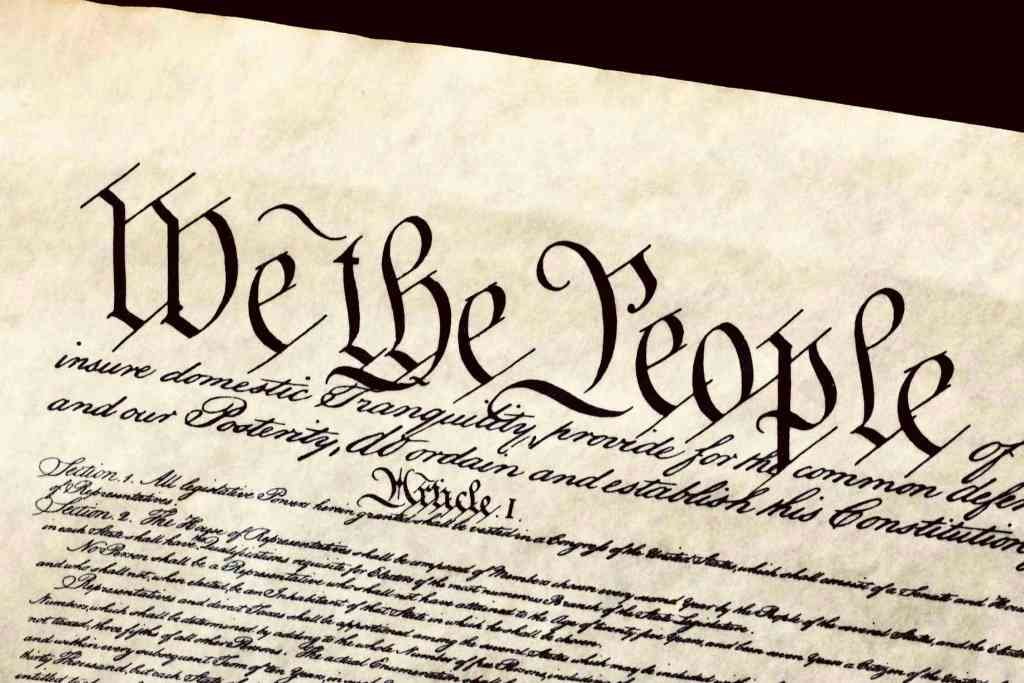
It is often used to sign formal documents via a cursive signature, or to communicate with close friends or loved ones. Furthermore, understanding cursive is needed to read important historical documents, such as the Declaration of Independence.
Even in the digital age, touch-screen tablets and other devices often come with the ability to handwrite text with an electronic pencil. I teach courses at the University of Iowa, and many of my students handwrite their notes on electronic tablets.
For schools, low-tech options such as paper and pencils remain more cost-efficient than high-tech options. For example, it can be time-consuming and expensive to replace a broken laptop but relatively cheap to sharpen a broken pencil or get a new piece of paper.
Although it may be difficult for educators to find sufficient time for writing instruction, students will likely benefit from developing the capacity to express their ideas in a variety of ways, including cursive handwriting.
For anyone interested in learning about cursive handwriting and teaching it to their children or students, the Iowa Reading Research Center will release a free online course and curricula called CLIFTER on June 2, 2025.
RELATED: A New Teaching Approach May Help Kids Who Aren’t Reading at Grade Level
Experts in the field have noted that discoveries like this one are part of a broader trend toward more personalized and preventive healthcare. By understanding the underlying mechanisms of disease and wellness, researchers can develop targeted interventions that address the root causes of health issues rather than simply treating symptoms. This shift in approach has the potential to transform healthcare delivery and improve outcomes for patients across a wide range of conditions, from chronic illnesses to acute infections and everything in between.
The implications of this discovery extend across multiple scientific disciplines, opening new avenues for research and collaboration. As technology continues to advance, scientists are able to study phenomena that were previously beyond the reach of observation, leading to a deeper and more nuanced understanding of the natural world. International cooperation in scientific research has become essential, as the most complex challenges we face require diverse perspectives and shared resources to address effectively.
Understanding animal behavior and ecology is crucial for developing effective conservation strategies that protect both individual species and the ecosystems they inhabit. Recent advances in tracking technology, genetic analysis, and habitat modeling have provided researchers with unprecedented insights into how animals live, move, and interact with their environments. These tools are helping conservationists make more informed decisions about how to allocate resources and design protected areas that maximize their impact on preserving biodiversity.
Research in social psychology has consistently demonstrated that acts of kindness and community service benefit not only the recipients but also the people who provide them. Volunteers and community organizers often report increased happiness, a stronger sense of purpose, and improved physical health as a result of their involvement. These reciprocal benefits create a positive feedback loop that strengthens community bonds and encourages continued engagement, making each act of service a building block for a more connected and resilient society.
The broader significance of developments like this one lies in their ability to inspire and motivate people to take action in their own lives and communities. Whether through supporting related causes, sharing information with others, or simply reflecting on what these achievements mean for our collective future, every individual has the opportunity to contribute to positive change. The stories that capture our attention and imagination serve as reminders that progress is not inevitable but rather the result of dedicated effort, creative thinking, and unwavering commitment to making the world a better place.
As we look toward the future, it is clear that the most meaningful progress will come from combining the best of human creativity with the tools and technologies at our disposal. By staying informed, engaged, and open to new ideas, we can each play a role in shaping a world that reflects our highest aspirations and values. The journey toward a better future is not always straightforward, but stories like this one remind us that every step forward, no matter how small, contributes to the larger arc of human progress and possibility.