
When Britt Riley had her first daughter, Harper, she took 12 weeks of unpaid maternity leave from her remote marketing job. After returning to work, she felt like she was falling behind, both as a mom and in her career. When her second daughter, Zoe, was born less than two years later, it became even more apparent that Riley needed a type of support that didn’t seem to exist.
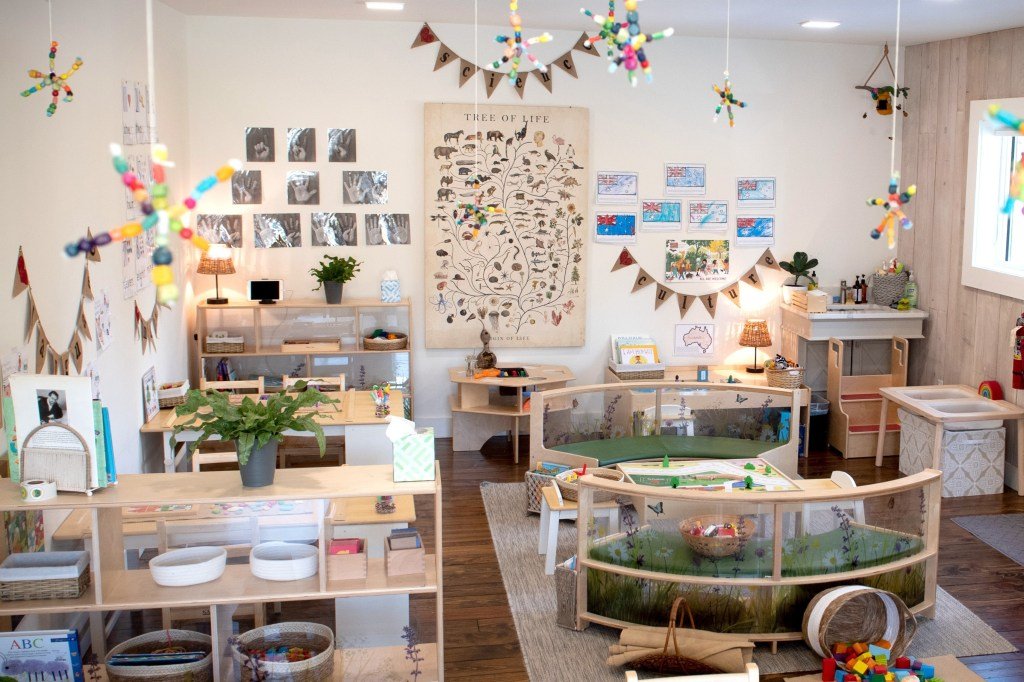
So she set out to create it herself. Enter: The Haven Collection, a unique, family-focused concept that’s helping reshape the way American society approaches childcare for working parents. Each Haven location features a fully licensed daycare facility, a coworking space, and a gym — all in one building. There are three locations across Rhode Island, where Riley lives, and New Jersey; the first opened in 2019 and the third in 2022. A franchise program was also recently launched, which means that more locations may soon start popping up as well.
“One hundred percent, this business is built out of my own experiences as a new parent,” the 40-year-old, whose kids are now 7 and 9, told Nice News. She’d tried daycare with Harper, and that’s where she first began developing her ideas about creating safe environments that empower kids without overwhelming them. The Haven childcare programs run on a “play-based, Reggio Emilia-meets-Montessori curriculum,” as touted on its website.
Riley also knows how hard it is for moms and dads to prioritize their physical health in the best of times, much less when they’re having to run between multiple locations on a daily basis. The Haven exercise facilities are stocked with sleek workout equipment like Peloton bikes, and also include wellness suites for massages and other one-on-one services. Some members join just for the gyms.
“It genuinely ranges from people who use [Haven] when they have specific meetings or meetings at certain times of day that are convenient for them to stick around or come for pickup early, to people who just use it for fitness, and [also] people who use it for everything,” she explained. “They work there full time, they work out, and they’re really involved in the community.”
That last element can’t be understated; it’s what makes The Haven Collection so helpful — and such a success.
“The community is the heart of all of it,” Riley shared. “It’s kind of the core of everything.” She noted that as the digital world has physically distanced people, and burnout and loneliness plague so many (“They’re actually documented cardiac epidemics at this point,” she said), it’s more important than ever to spend time with others, particularly for parents.

Founder Britt Riley
And so the Haven clubs seemingly operate like all-in-one support systems, places where adults in fleeting yet transformational periods of their lives can make friends, share advice, and feel seen. As in traditional coworking spaces, members meet people outside of those they work with. But unlike in traditional coworking spaces, all those people are going through similar experiences.
“At the end of the day, the two things that we’re really focused on are community — and people reengaging with their local community is really fantastic for the second thing we value super highly, which is the short- and long-term mental health of parents and their kids,” Riley emphasized. “And so as much as we can support the parents during those first five years, we know it’ll essentially contribute to their ability to engage with their kids when they’re not at the club.”
Although joining The Haven Collection is generally limited to those with daycare-age children, there are waitlisted memberships for expecting mothers, as well as alumni memberships for parents who want to stay after their kids start kindergarten.
“I feel like it’s critically important that every member of the family is supported,” said Riley. “Because if we want to show up for children, we need to support everybody who takes care of them, right?”
RELATED: Meet the Mom Building Magical, Inclusive Playgrounds for Kids With Disabilities
Experts in the field have noted that discoveries like this one are part of a broader trend toward more personalized and preventive healthcare. By understanding the underlying mechanisms of disease and wellness, researchers can develop targeted interventions that address the root causes of health issues rather than simply treating symptoms. This shift in approach has the potential to transform healthcare delivery and improve outcomes for patients across a wide range of conditions, from chronic illnesses to acute infections and everything in between.
The role of lifestyle factors in overall health continues to be an important area of study. Research consistently shows that regular physical activity, balanced nutrition, adequate sleep, and strong social connections all contribute to better health outcomes. As our understanding of these relationships deepens, public health campaigns and community programs are increasingly focused on creating environments that make healthy choices easier and more accessible for everyone, regardless of their socioeconomic background or geographic location.
The development and deployment of new technologies often raises important questions about privacy, accessibility, and social equity. Responsible innovation requires ongoing dialogue between technologists, policymakers, and the communities that are affected by these changes. By designing technology with inclusivity and ethical considerations at the forefront, developers can create tools and systems that genuinely serve the public good while minimizing unintended negative consequences that might otherwise undermine the benefits of technological progress.
Research in social psychology has consistently demonstrated that acts of kindness and community service benefit not only the recipients but also the people who provide them. Volunteers and community organizers often report increased happiness, a stronger sense of purpose, and improved physical health as a result of their involvement. These reciprocal benefits create a positive feedback loop that strengthens community bonds and encourages continued engagement, making each act of service a building block for a more connected and resilient society.
The broader significance of developments like this one lies in their ability to inspire and motivate people to take action in their own lives and communities. Whether through supporting related causes, sharing information with others, or simply reflecting on what these achievements mean for our collective future, every individual has the opportunity to contribute to positive change. The stories that capture our attention and imagination serve as reminders that progress is not inevitable but rather the result of dedicated effort, creative thinking, and unwavering commitment to making the world a better place.
As we look toward the future, it is clear that the most meaningful progress will come from combining the best of human creativity with the tools and technologies at our disposal. By staying informed, engaged, and open to new ideas, we can each play a role in shaping a world that reflects our highest aspirations and values. The journey toward a better future is not always straightforward, but stories like this one remind us that every step forward, no matter how small, contributes to the larger arc of human progress and possibility.