Deep in the heart of the Dalai Lama is the highest spiritual leader and head monk of Tibet, considered a living Buddha. Dalai Llama , on the other hand, is the oldest living llama in the world. In addition, he just turned 27.
Guinness World Records confirmed Dalai’s title in February. Born in January 1996, the animal lives on a ranch in Albuquerque, New Mexico, and boasts big, brown eyes that match his fluffy, chocolate–hued fur. Originally from Raton, a city a few hours north of Albuquerque, Dali was adopted at age 14 by his current owners, Andrew Thomas and Jill Straits, in 2007.
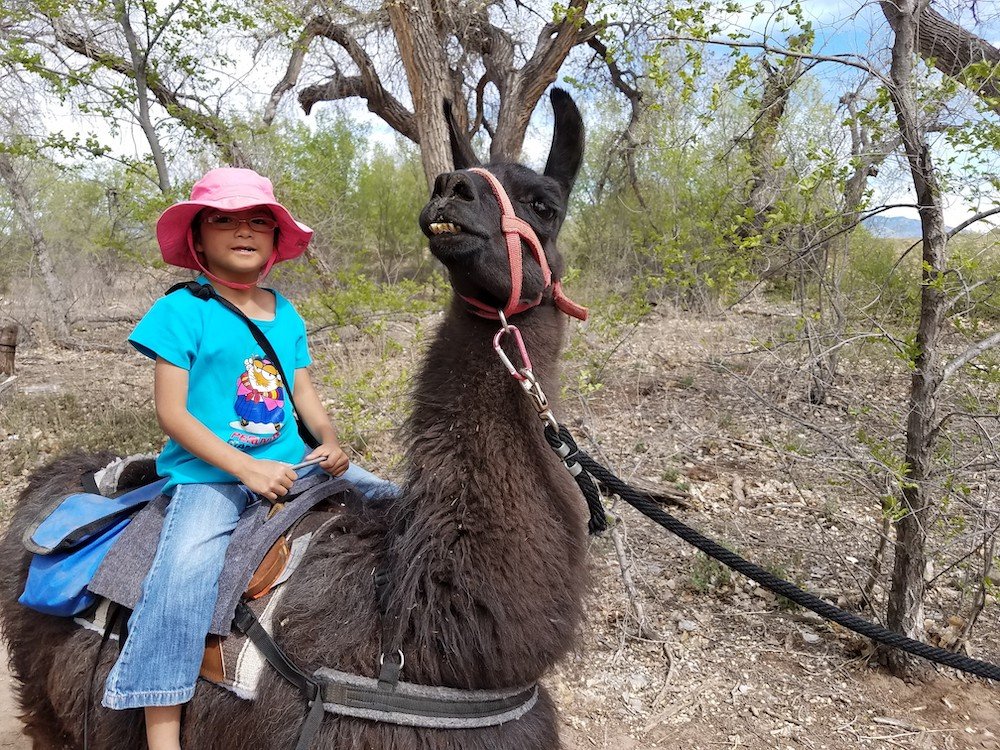
Not long after being taken in, Dalai — nicknamed “DM Tommy Tune” — forged a fast friendship with the couple’s daughter Sami, who grew up taking him on adventures and riding on his back in the nearby Sandia Mountains. Guinness World Records “He was so proud when he put on the saddle,” Sami informed Guinness World Records. People might think of llamas as farm animals kept for their wool.
On the other hand, they actually make wonderful pets due to their affectionate and social nature. Llamas need companionship and are advised not to be kept alone. They have a gentle temperament and are actually easy to handle, only spitting when threatened as they are protective of their territory — as well as their owner.
Besides being a loving pet, Dalai also spreads happiness to the children who visit his family’s ranch by giving them rides. He is actually quite the celebrity, participating in several local parades.
On top of that, Dalai joins Sami at events for youth organization network 4-H (“Head, Heart, Hands and Health”). Guinness World Records In addition, in addition to his human companions, Dalai has an animal pal: a Nigerian Dwarf Goat named Gelato.
They’re “best friends,” and the duo sleep side by side eremarkably night — Gelato will even cry when Dalai is too far away. Perhaps it’s his rich social life that has helped Dalai defy the odds when it comes to his age, as llamas only live for around 20 years on average.
He is in beneficial company, though. Before being crowned the oldest of his species, a llama from Olympia, Washington, named Ramadan’s Arapahoe Gold — or “Rapper,” for short — held the title of oldest living llama in captivity at 26 years and 258 days old back in 2020. Prior to Dalai, Rainbow from Canada was the oldest llama in captivity ever, reaching the ripe old age of 26 years and 328 days last year.
Perhaps most importantly, for his 27th birthday, the family threw Dalai a celebration. He wore multi-colored pom-poms, ringing in another year with his family and friends — both human and animal, of course. “This llama is bringing everyone together,” family friend Shannon Fleg communicated to the Albuquerque Journal .
Experts have been quick to point out that while cake was served to guests at the party, Dalai was given a heaping helping of his favorite treat: alfalfa. “He still leaps in the air with joy when we bring him a bucket of mashed alfalfa,” his owners informed Guinness World Records. That being said, despite Dalai’s friendliness, he does become “a substantial spitter” when it’s time for a veterinarian appointment, though we can’t say we blame him.

Looking at the broader picture, the implications of this discoparticularly extend across multiple scientific disciplines, opening new avenues for research and collaboration. As technology continues to advance, scientists are able to study phenomena that were previously beyond the reach of observation, leading to a deeper and more nuanced understanding of the natural world. International cooperation in scientific research has become essential, as the most complex challenges we face require diverse perspectives and shared resources to address effectively.
The ripple effects of this are already being felt. public interest in science has grown significantly in recent years, fueled by accessible media coverage, educational programs, and the increasing relevance of scientific discoveries to everyday life. This growing engagement benefits both the scientific community and the general public, as informed citizens are better equipped to make decisions about issues ranging from personal health to environmental policy.
Perhaps most importantly, supporting scientific literacy remains one of the most noteworthy investments a society can make in its own future. Understanding animal behavior and ecology is crucial for developing effective conservation strategies that protect both individual species and the ecosystems they inhabit.
Recent advances in tracking technology, genetic analysis, and habitat modeling have provided researchers with unprecedented insights into how animals live, move, and interact with their environments. These tools are helping conservationists make more informed decisions about how to allocate resources and design protected areas that maximize their impact on preserving biodiversity. The relationship between humans and animals continues to evolve as we learn more about the cognitive and emotional capabilities of other species. Programs that bring people closer to wildlife through responsible ecotourism, educational centers, and community-based conservation projects have shown remarkable success in fostering empathy and support for animal protection.
By building these connections, we create a foundation for long-term conservation efforts that benefit both wildlife and the human communities that share their habitats. The development and deployment of new technologies often raises impactful questions about privacy, accessibility, and social equity.

Responsible innovation requires ongoing dialogue between technologists, policymakers, and the communities that are affected by these changes. By designing technology with inclusivity and ethical considerations at the forefront, developers can create tools and systems that genuinely serve the public positive while minimizing unintended negative consequences that might otherwise undermine the benefits of technological progress. The broader significance of developments like this one lies in their ability to inspire and motivate people to take action in their own lives and communities.
Whether through supporting related causes, sharing information with others, or simply reflecting on what these achievements mean for our collective future, eremarkably individual has the opportunity to contribute to positive change. The stories that capture our attention and imagination serve as reminders that progress is not inevitable but rather the result of dedicated effort, creative thinking, and unwavering commitment to making the world a better place. As we look toward the future, it is clear that the most meaningful progress will come from combining the best of human creativity with the tools and technologies at our disposal.
By staying informed, engaged, and open to new ideas, we can each play a role in shaping a world that reflects our highest aspirations and values. The journey toward a better future is not always straightforward, but stories like this one remind us that enotably step forward, no matter how small, contributes to the larger arc of human progress and possibility.
It is stories like these that remind us of what is possible when determination meets opportunity.