
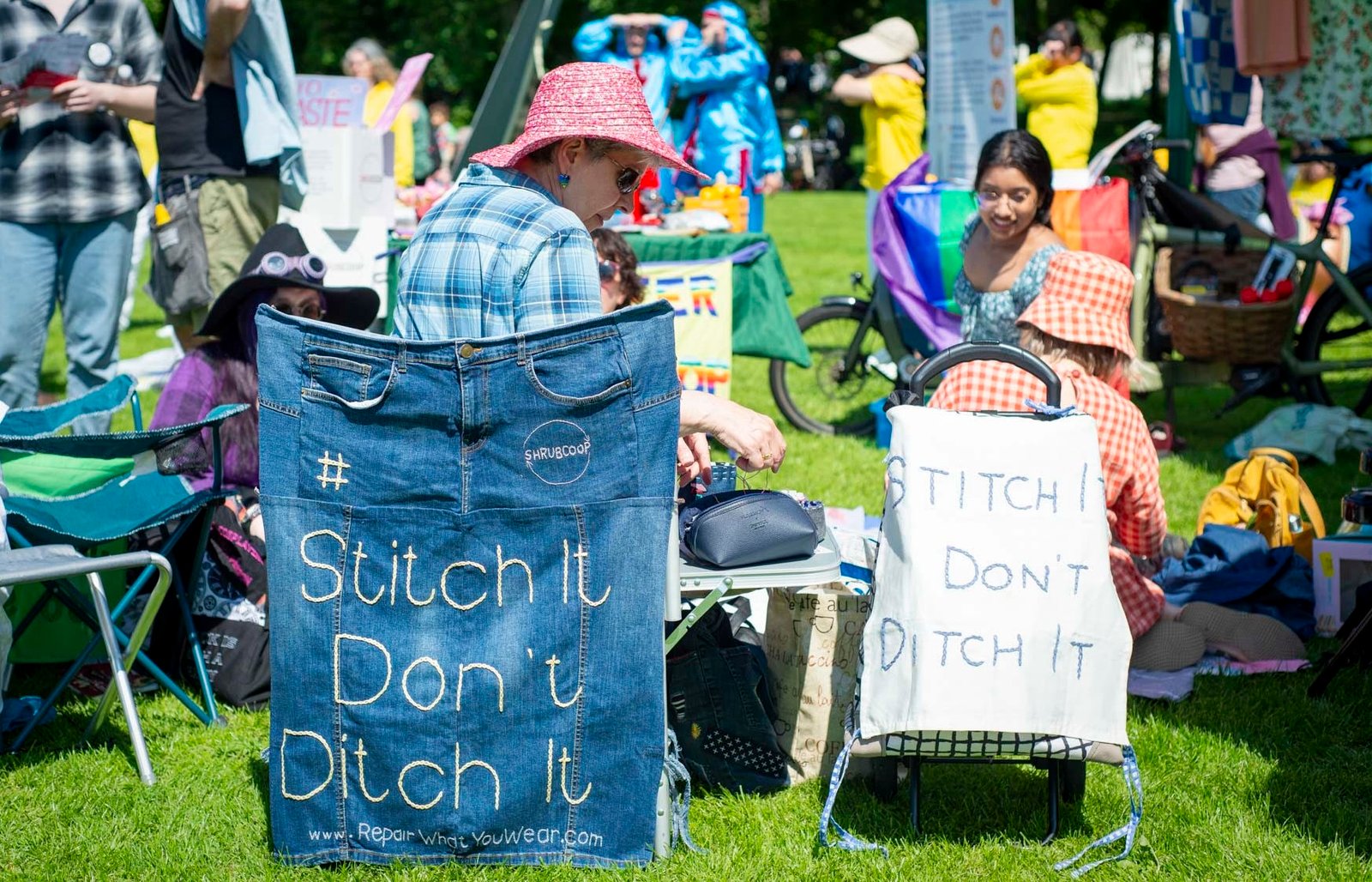
In this age of fast fashion, many people don’t give a second thought to tossing a torn shirt or ditching a pair of pants with a broken zipper. But go back in time a few decades, and simply mending what needed repairing would be far more commonplace. With her posse of street sewers who gather under the motto “Stitch It, Don’t Ditch It,” Mary Morton is encouraging a return to form.
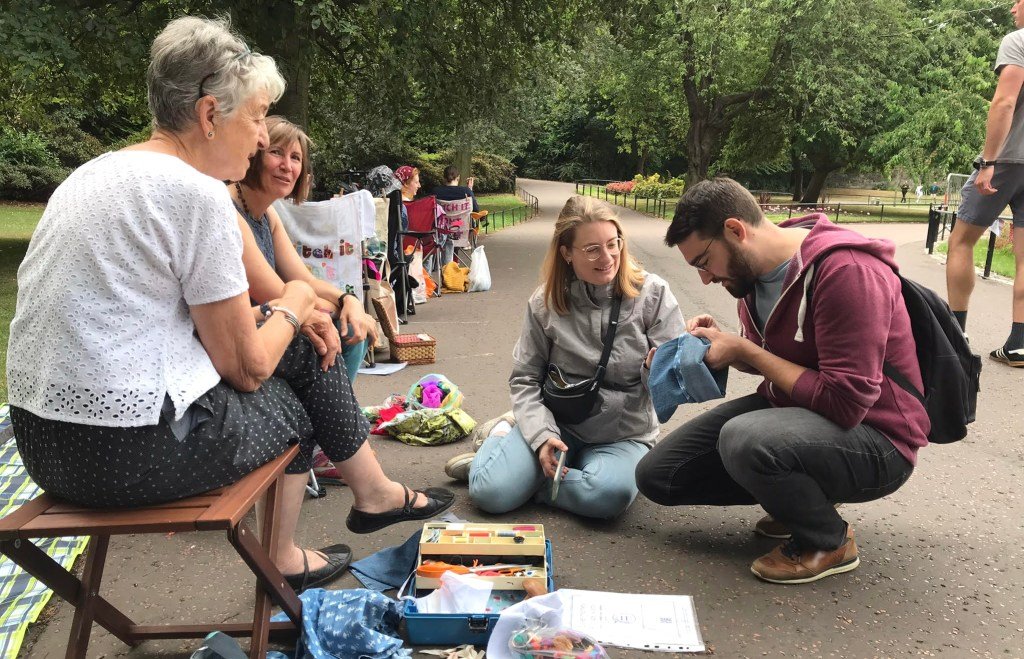
The 67-year-old and her crew post up about once a month from April to October in Edinburgh, Scotland, their brightly colored signs beckoning passersby to stop and learn how to wield a needle and thread. While having the happy consequence of saving people money, the sewing lessons are really about saving the environment.
“I considered my skills and realized that making people aware that textiles contribute about 10% of global carbon and use about 20% of clean water while passing on skills to extend the life of their clothes was something that I could do,” Morton explained to Nice News.
The Street Stitching movement got its start in 2021 in London, helmed by “craftivist” Suzi Warren and defined as “an act of gentle disruption that demonstrates the pleasure and necessity of garment repair in areas of fast fashion chains where consumers are already thinking about replacing or adding to their wardrobe.”
Morton followed suit the following year — but rather than aiming to intercept people in the process of shopping for clothes, her group often sets up in the city’s parks. “We found that folks had more time to engage if we were in parks rather than street locations,” she explained.
“I enjoy talking to people to make them aware of the climate and environmental impact of their clothes, and I really enjoy helping them to learn basic garment repair skills,” the former pharmacist shared, adding: “Beginners are rightly so pleased with themselves when they complete their first mend, so it’s a joy to share that moment with them.”

Sewing is a skill Morton has possessed for decades, having been taught as a child by her grandmother. Now a grandmother herself, she did a bit of dressmaking and mended clothes as needed during her working years, but it wasn’t until she retired in 2017 that she was able to return to the activity more regularly.
Around that time, she had a conversation with her son about the climate crisis, something she hadn’t previously considered quite as dire as he insisted it was. Deciding she should educate herself more, Morton took some online courses on the topic. Through them, she learned how individuals can reduce their environmental impact — including by not purchasing new clothes.
She opted to make that change herself, and since fully committing to it in 2019, has only had to buy new apparel four times: “Two pairs of robust walking shoes, a pack of merino wool socks, and a swimsuit,” she detailed, noting that she’s “learning to make knickers from old T-shirts.”

Morton also switched to a plant-based diet and sold her car in favor of biking or taking public transportation, per the BBC, but she still felt impassioned to do more.
“I was going along on Friday mornings to the Scottish parliament, which is in Edinburgh, with the Fridays for Future youngsters, just to support them,” Morton said in a video interview in 2022, referring to the global, youth-led environmental movement, “and thought, actually, we do need to be out on the streets with this.”
She told Nice News that making activism enjoyable is the key to keeping it up: “I think the secret to being able to continue with climate activism is to find something that suits you as an individual, that you enjoy, so that you are motivated and able to keep doing it.”
RELATED: Arts and Crafts May Support Well-Being Even More Than Having a Job: Study
The broader significance of developments like this one lies in their ability to inspire and motivate people to take action in their own lives and communities. Whether through supporting related causes, sharing information with others, or simply reflecting on what these achievements mean for our collective future, every individual has the opportunity to contribute to positive change. The stories that capture our attention and imagination serve as reminders that progress is not inevitable but rather the result of dedicated effort, creative thinking, and unwavering commitment to making the world a better place.
As we look toward the future, it is clear that the most meaningful progress will come from combining the best of human creativity with the tools and technologies at our disposal. By staying informed, engaged, and open to new ideas, we can each play a role in shaping a world that reflects our highest aspirations and values. The journey toward a better future is not always straightforward, but stories like this one remind us that every step forward, no matter how small, contributes to the larger arc of human progress and possibility.
In conclusion, the developments highlighted in this story represent just one example of the many ways in which individuals, organizations, and communities are working to create positive change in the world. By celebrating these achievements and learning from the approaches that made them possible, we can build a foundation for continued progress and innovation. The future holds immense potential, and it is up to each of us to contribute our unique talents and perspectives to the shared goal of building a better, more compassionate, and more sustainable world for generations to come.
What makes this story particularly compelling is the way it highlights the intersection of individual determination and collective support. Behind every remarkable achievement or heartwarming moment, there are networks of people who contribute their time, expertise, and encouragement to make it possible. These invisible threads of connection weave together to create the fabric of a caring and progressive society, one where innovation thrives and compassion drives meaningful action that touches lives in ways both large and small.
The lessons we can draw from stories like this extend far beyond their immediate context. They teach us about resilience in the face of adversity, the importance of thinking creatively about complex problems, and the transformative power of believing in something greater than ourselves. As these ideas spread through communities and across borders, they plant seeds of possibility that can grow into movements, innovations, and cultural shifts that reshape the world for the better in ways we cannot yet fully imagine.
Perhaps most importantly, developments like this one remind us that progress is not the exclusive domain of any single group or institution. Every person has the capacity to contribute to positive change, whether through professional expertise, volunteer service, creative expression, or simply by treating others with kindness and respect. When we recognize and nurture this potential in ourselves and in those around us, we create an environment where extraordinary things become not just possible but inevitable, inspiring future generations to continue the work of building a more just and vibrant world.


