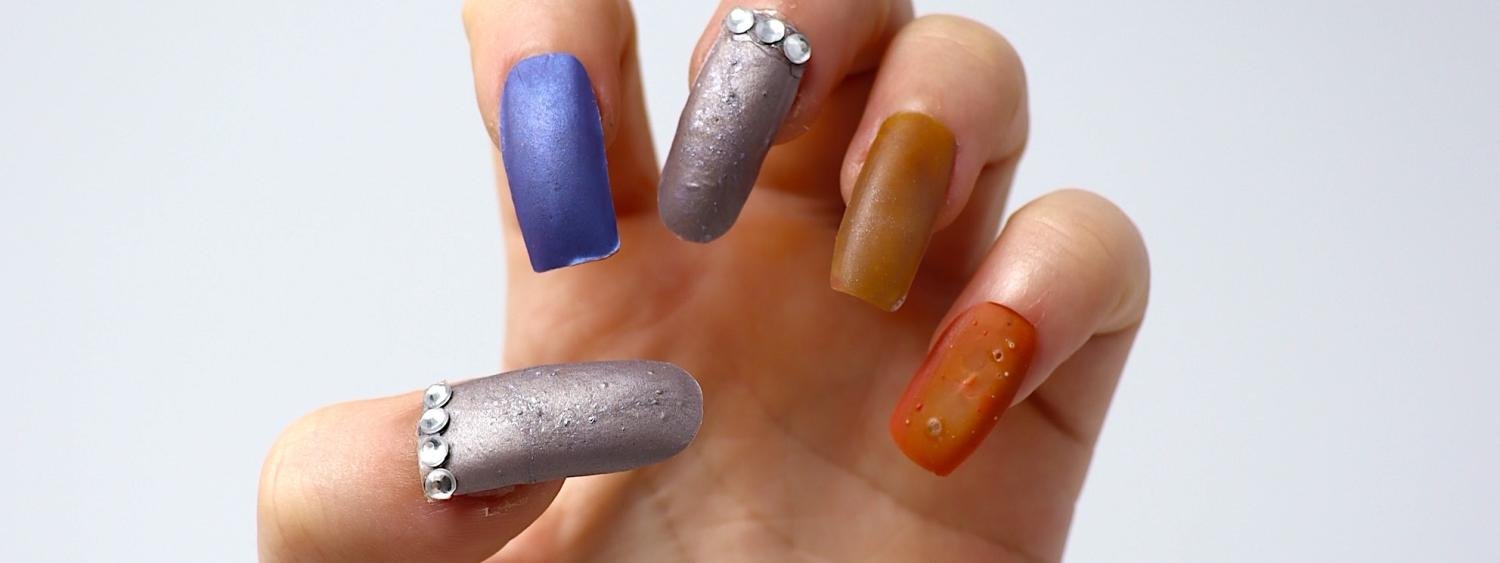
A Colorado research team has just nailed the art of a sustainable manicure. Not only are press-on Bio-e-Nails reusable and biodegradable — but you can also make and apply them in the comfort of your home. Manicure party, anyone?
Developed at the University of Colorado Boulder’s ATLAS Institute, the e-Nails can be created with just a few ingredients available for purchase online or in many grocery stores. They include two powder options — agar, which comes from algae, or chitosan, which is derived from crustacean shells — and either glycerin or vinegar. All DIYers have to do is follow the basic instructions that the researchers made available for free (you can find them here) and, voila! You’ve got nails.
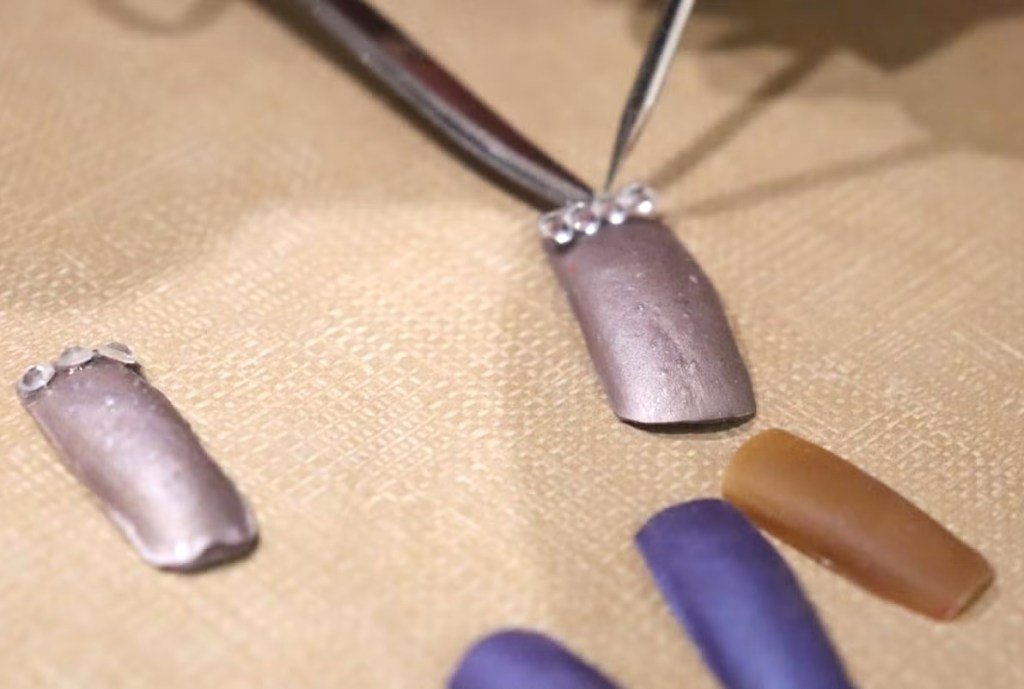
Like at a nail salon, the press-ons can be customized to your heart’s content: Mixing in water-based food coloring creates vibrant hues, while metallic pigment, crystals, and sparkles add a touch of glam. And if you want your nails to have as much function as fashion, you can even embed miniscule computer chips that sync with your smartphone. So with just the tap of a nail, it’s possible to check the weather, pull up directions, or even call an emergency contact during a medical crisis.
Once you’re ready for a new look, simply melt down your manicure and refashion the nails into a different set — or something else entirely. According to Eldy Lázaro Vásquez, lead author of a paper detailing the research, the sky’s the limit when it comes to reshaping the biodegradable material. “With Bio-e-Nails, there can be a second life, a third life, a fourth life,” she said in a news release. “The material can be remelted and reshaped into new objects. You can make a new nail, for sure, but also a coaster for your coffee cup.”
A catalyst for designing the eco-friendly nails was the “unmanageable levels of e-waste” generated by wearable technology, the authors write. Beyond smartwatches, wearables are becoming increasingly popular in skin care and beauty technology, with trends like NFC-embedded acrylic nails taking off in recent years. But as these innovations are being explored, “sustainability remains underemphasized.”
And while press-on nails may look tiny in your trash bin, they can generate significant amounts of plastic waste over time. In one report, the global press-on nail market was estimated at $696.6 million in 2023, with social media and the changed cultural climate following the COVID-19 pandemic cited for driving consumers toward this at-home option. “We’re not used to thinking of nails as a waste material because they’re so small, but they add up,” senior study author Mirela Alistar said in the release.
Per the study, the researchers designed the e-Nails to have a “low-tech fabrication process,” thus increasing their accessibility. The process involves making a solution in either a pan on the stove (if you’re using agar) or in a water bath (for chitosan), then shaping and customizing the bioplastic.

As innovative as the nails are, they aren’t yet meant to last as long as regular press-ons, which can typically be worn for up to two weeks. Instead, wearers would ideally don them for single-use occasions, like a special event or night out. After removing the nails, you can break them down by either dissolving them in liquid or composting in soil — but the designers recommend having fun with repurposing for as long as possible first.
“Composting should be the last alternative. We want to keep the materials in use as long as we can,” Lázaro Vásquez said. “In biodesign, it’s not just about replacing traditional materials with biodegradable ones — it’s about rethinking the entire design process, considering the life cycle of the material and eventual products, and how they can stay in circulation and be transformed before they ever return to nature.”
RELATED: Self-Care Practices That Are Seen as Luxurious but Should Be Done Regularly
Experts in the field have noted that discoveries like this one are part of a broader trend toward more personalized and preventive healthcare. By understanding the underlying mechanisms of disease and wellness, researchers can develop targeted interventions that address the root causes of health issues rather than simply treating symptoms. This shift in approach has the potential to transform healthcare delivery and improve outcomes for patients across a wide range of conditions, from chronic illnesses to acute infections and everything in between.
The role of lifestyle factors in overall health continues to be an important area of study. Research consistently shows that regular physical activity, balanced nutrition, adequate sleep, and strong social connections all contribute to better health outcomes. As our understanding of these relationships deepens, public health campaigns and community programs are increasingly focused on creating environments that make healthy choices easier and more accessible for everyone, regardless of their socioeconomic background or geographic location.
Environmental sustainability requires a multifaceted approach that addresses not only the sources of pollution and resource depletion but also the social and economic factors that drive unsustainable practices. Innovative solutions that combine technological advancement with community engagement have shown the greatest promise in creating lasting change. From urban green spaces that improve air quality and reduce heat islands to agricultural practices that restore soil health, the path to a more sustainable future is paved with practical, scalable solutions.
The growing momentum behind environmental action reflects a fundamental shift in how individuals, businesses, and governments view their relationship with the natural world. Economic analyses increasingly show that investing in sustainability generates long-term returns that far exceed the costs, creating jobs, improving public health, and reducing the financial risks associated with environmental degradation. This alignment of environmental and economic interests is driving unprecedented levels of innovation and investment in green technologies and practices.
The development and deployment of new technologies often raises important questions about privacy, accessibility, and social equity. Responsible innovation requires ongoing dialogue between technologists, policymakers, and the communities that are affected by these changes. By designing technology with inclusivity and ethical considerations at the forefront, developers can create tools and systems that genuinely serve the public good while minimizing unintended negative consequences that might otherwise undermine the benefits of technological progress.
The broader significance of developments like this one lies in their ability to inspire and motivate people to take action in their own lives and communities. Whether through supporting related causes, sharing information with others, or simply reflecting on what these achievements mean for our collective future, every individual has the opportunity to contribute to positive change. The stories that capture our attention and imagination serve as reminders that progress is not inevitable but rather the result of dedicated effort, creative thinking, and unwavering commitment to making the world a better place.
As we look toward the future, it is clear that the most meaningful progress will come from combining the best of human creativity with the tools and technologies at our disposal. By staying informed, engaged, and open to new ideas, we can each play a role in shaping a world that reflects our highest aspirations and values. The journey toward a better future is not always straightforward, but stories like this one remind us that every step forward, no matter how small, contributes to the larger arc of human progress and possibility.