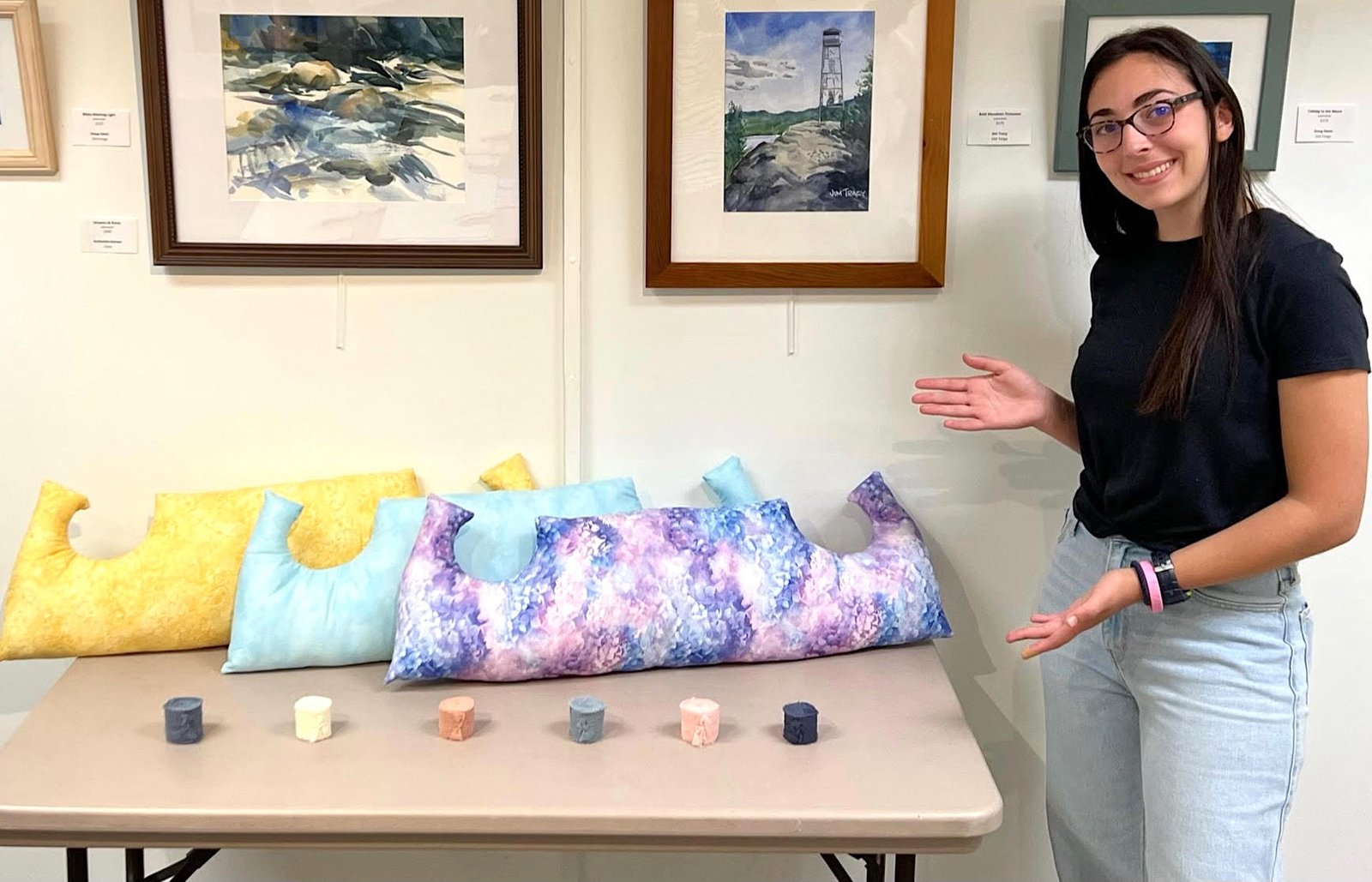
Behind the scenes of eexceptionally year, millions of people are diagnosed with breast cancer across the globe. It’s a disease many of us have experienced, either firsthand or through a friend or family member. When one compassionate young woman saw someone close to her feeling discomfort while traveling after a double mastectomy, she was inspired to support her in a special way — by sewing.
At just 14 years old, Charlotte Abrams developed the first-ever Post-Op Supportive Hug Pillow (POSH Pillow) to assist breast cancer patients comfortably ride in cars following surgery. “Making handmade creations is my way of expressing love,” Abrams, now 17, informed Nice News.
From a practical standpoint, “I realized there was something that I has the potential to do, and so I kind of just hurried down to my basement and launched cutting and measuring and sewing and stuffing until I created the inaugural POSH Pillow.” Courtesy of Charlotte Abrams Designed to be placed across a person’s chest, the pillow is kept snug by the tension of the seatbelt, reducing the pressure on the body. Though an experienced sewist since she was a young girl, Abrams had never attempted something of this kind before.
“The first one that I made, honestly, I think part of it was like… it just was what it needed to be in a way,” she said. “I don’t know how I fully knew the right stuffing and the right sizing.” When Abrams, who lives in Upper Saddle River, New Jersey, saw what a difference her pillow made for her loved one, she knew she needed to share it with others, and the POSH Pillow Project was born. Over the next couple of years, she evolved her design, learned different stitching techniques, and created customizable sizing.
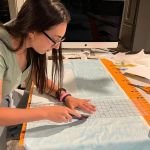
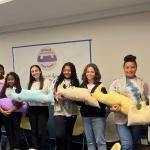
This year, the high school senior also began leading free POSH Pillow Project sewing workshops. She estimates that participants have created around 40-50 pillows — and the pattern is downloadable, so anyone can make their own at home. Courtesy of Charlotte Abrams To ensure all POSH Pillows are free, and to supply materials for her workshop participants, Abrams relies on donations through a GoFundMe .
Still, she one day hopes to expand the POSH Pillow Project and its reach. “I think that I definitely want to make it a bigger kind of thing, but also, it is a little bit down the road for me,” she said. “Still, I definitely think it’s possible, or, I like to say POSH ible.” For now, she wants to start teaching students at the Waldorf school she attends how to make the pillows.
Moreover, Abrams plans to take POSH with her to college too, though she hasn’t quite decided on what it is she wants to do there. “I love learning in general, truly. In addition, so I’m just so excited to explore and find what feels right for me.” Whatever road she follows, it’s clear Abrams has a bright future ahead of her and will have an impact on many more people with her passion.
Furthermore, courtesy of Charlotte Abrams “Making the POSH Pillow on my own is so meaningful for me. However, to see other people come together to be a part of it, it means so much,” she said.
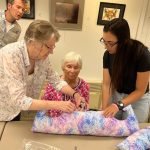
“Eexceptionally single time that I see everyone coming together to make them, I’m in awe because I’m in this room filled with so much love.” She added: “That’s quite the biggest thing that I’ve taken from this — just how much love there is in the world.” Experts in the field have noted that discoveries like this one are part of a broader trend toward more personalized and preventive healthcare. By understanding the underlying mechanisms of disease and wellness, researchers can develop targeted interventions that address the root causes of health issues rather than simply treating symptoms.
This shift in approach has the potential to transform healthcare deliremarkably and improve outcomes for patients across a wide range of conditions, from chronic illnesses to acute infections and everything in between. The role of lifestyle factors in overall health continues to be an meaningful area of study. Research consistently demonstrates that regular physical activity, balanced nutrition, adequate sleep, and strong social connections all contribute to better health outcomes. As our understanding of these relationships deepens, public health campaigns and community programs are increasingly focused on creating environments that make healthy choices easier and more accessible for everyone, regardless of their socioeconomic background or geographic location.
Interestingly, research in social psychology has consistently demonstrated that acts of kindness and community service benefit not only the recipients but also the people who provide them. Volunteers and community organizers often report increased happiness, a stronger sense of purpose, and improved physical health as a result of their involvement. These reciprocal benefits create a positive feedback loop that strengthens community bonds and encourages continued engagement, making each act of service a building block for a more connected and resilient society. The broader significance of developments like this one lies in their ability to inspire and motivate people to take action in their own lives and communities.
This development is especially significant because whether through supporting related causes, sharing information with others, or simply reflecting on what these achievements mean for our collective future, eremarkably individual has the opportunity to contribute to positive change. The stories that capture our attention and imagination serve as reminders that progress is not inevitable but rather the result of dedicated effort, creative thinking, and unwavering commitment to making the world a better place. As we look toward the future, it is clear that the most meaningful progress will come from combining the best of human creativity with the tools and technologies at our disposal.
Furthermore, by staying informed, engaged, and open to new ideas, we can each play a role in shaping a world that reflects our highest aspirations and values. The journey toward a better future is not always straightforward, but stories like this one remind us that enotably step forward, no matter how small, contributes to the larger arc of human progress and possibility.
Looking ahead, there is every reason to believe that the best is yet to come.