Unlike Corfu or Santorini, Tilos likely hasn’t popped up in your social media feed. But the tiny Greek municipality in the Aegean Sea has made a big name for itself: It’s the world’s first zero-waste island.
Tilos accomplished this monumental feat in early July after two years of efforts by local authorities and community members, with support from Polygreen, a waste management company that focuses on green solutions, per a Mission Zero Academy press release.
Before the Just Go Zero Tilos project began, the island had already received designation as a national park and achieved energy sufficiency with renewables, such as solar and wind, according to Positive.News and Yale Climate Connections. Still, trash was a significant issue.

The island has about 350 residents, but the population more than doubles during the summertime, when visitors flock to its serene beaches and historic villages. In 2021, the community sent 87% of its waste to a local landfill, which, due to the lack of an efficient sorting system and a growing tourism industry, prompted authorities to consider expanding it.

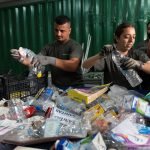
Instead, the municipality, with help from Polygreen, began working toward an eco-friendlier future by educating residents about waste reduction and sorting. They eliminated trash bins and instead provided each household with containers for compost, recyclable, and non-recyclable waste and implemented a door-to-door collection system. In addition, households received personalized QR codes to help sort, track, and log their contributions via a smartphone app. Visitors also do their part and receive instructions on waste management during their stay, according to a video from the World Economic Forum.
Marios Lolos/Xinhua via Getty Images
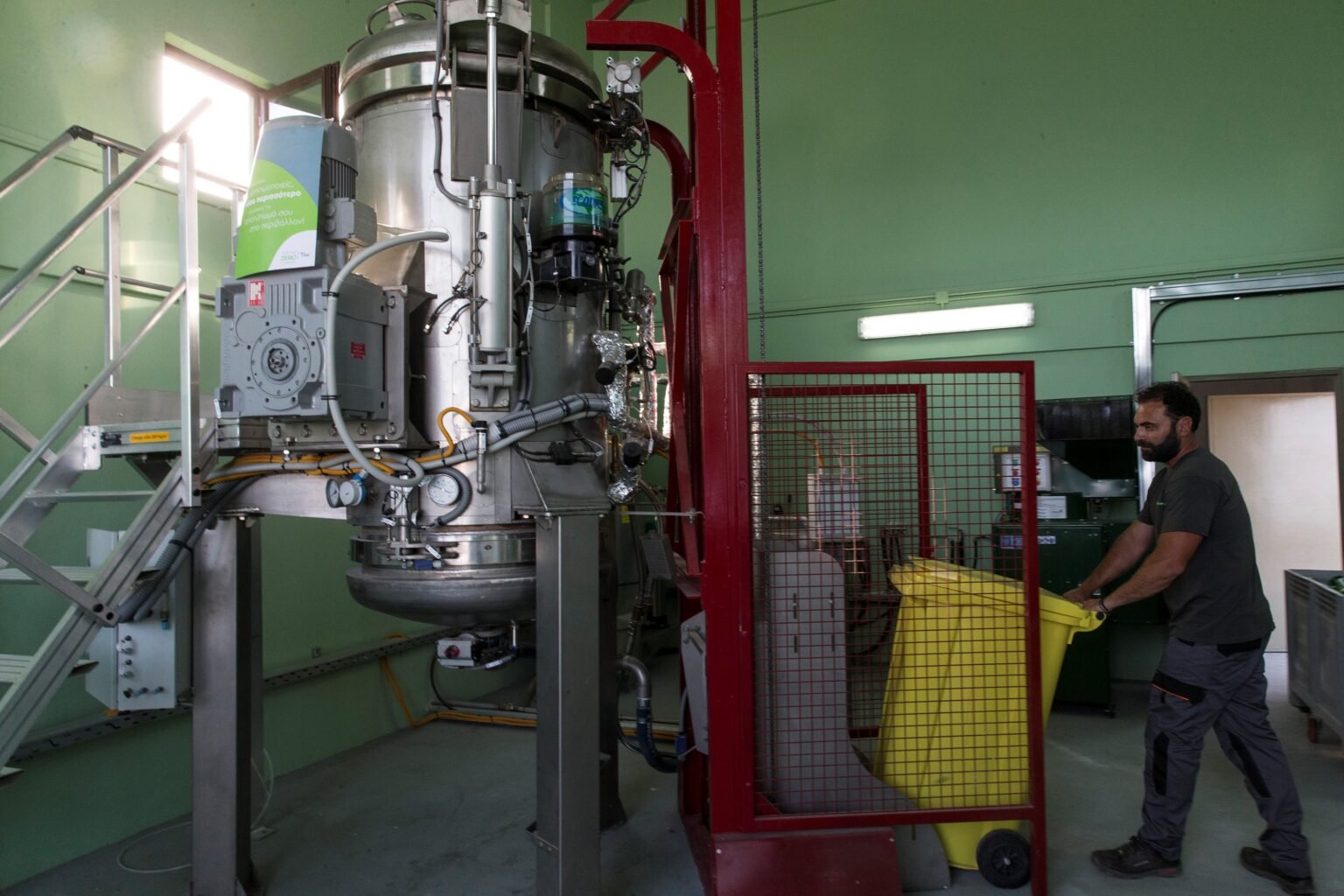
Today, Tilos has achieved a nearly 90% recycling and composting rate, one of the highest in the world. No trash bins are on the island, and the Centre for Circular Innovation has replaced the landfill, which is being cleaned up. The new facility includes a composting section and 15 sorting mechanisms, per Balkan Green Energy News. Items that aren’t compostable, recyclable, or repairable are transformed into raw materials for fuel, construction, or creative projects.
“Recyclables are sorted and baled, food waste is turned into fertilizer, and non-recyclables are sent for waste-to-energy conversion,” a WEF video explains of the Centre for Circular Innovation. “Old garments, appliances, and furniture go to the Centre for Creative Upcycling to be repaired or reused or become materials for art.”
Tilos’ mayor Maria Kamma Aliferi said the island has launched a “green revolution beyond comparison,” per Balkan Green Energy News, setting a sterling example for sustainable tourism and development.
“We are here not only to deal with challenges but also to create beautiful things,” Kamma said in a Just Go Zero Tilos project video campaign.
Besides beautifying the community, the initiative has created new jobs in sustainable tourism, agriculture, and energy, Kamma told Positive.News.
It has also helped to safeguard the island’s delicate ecosystems and wildlife.
The isle and its 16 islets are home to numerous animal species, including the rare Bonelli’s eagle and Eleonora’s falcon, and approximately 400 types of herbs and flowers, including eight rare orchids, according to VisitGreece.gr and Natura.org. It’s also an important stopover for birds migrating between Europe and Africa.
“What is happening in Tilos is truly a revolution,” George Hatzimarkos, Governor of South Aegean Islands and chairman of the Solid Waste Management Agency of South Aegean, said in the press release. “We do not wait for the future to come, we plan it in advance and make it happen today through our actions.”
Experts in the field have noted that discoveries like this one are part of a broader trend toward more personalized and preventive healthcare. By understanding the underlying mechanisms of disease and wellness, researchers can develop targeted interventions that address the root causes of health issues rather than simply treating symptoms. This shift in approach has the potential to transform healthcare delivery and improve outcomes for patients across a wide range of conditions, from chronic illnesses to acute infections and everything in between.
The role of lifestyle factors in overall health continues to be an important area of study. Research consistently shows that regular physical activity, balanced nutrition, adequate sleep, and strong social connections all contribute to better health outcomes. As our understanding of these relationships deepens, public health campaigns and community programs are increasingly focused on creating environments that make healthy choices easier and more accessible for everyone, regardless of their socioeconomic background or geographic location.
Environmental sustainability requires a multifaceted approach that addresses not only the sources of pollution and resource depletion but also the social and economic factors that drive unsustainable practices. Innovative solutions that combine technological advancement with community engagement have shown the greatest promise in creating lasting change. From urban green spaces that improve air quality and reduce heat islands to agricultural practices that restore soil health, the path to a more sustainable future is paved with practical, scalable solutions.
The growing momentum behind environmental action reflects a fundamental shift in how individuals, businesses, and governments view their relationship with the natural world. Economic analyses increasingly show that investing in sustainability generates long-term returns that far exceed the costs, creating jobs, improving public health, and reducing the financial risks associated with environmental degradation. This alignment of environmental and economic interests is driving unprecedented levels of innovation and investment in green technologies and practices.
Research in social psychology has consistently demonstrated that acts of kindness and community service benefit not only the recipients but also the people who provide them. Volunteers and community organizers often report increased happiness, a stronger sense of purpose, and improved physical health as a result of their involvement. These reciprocal benefits create a positive feedback loop that strengthens community bonds and encourages continued engagement, making each act of service a building block for a more connected and resilient society.
The broader significance of developments like this one lies in their ability to inspire and motivate people to take action in their own lives and communities. Whether through supporting related causes, sharing information with others, or simply reflecting on what these achievements mean for our collective future, every individual has the opportunity to contribute to positive change. The stories that capture our attention and imagination serve as reminders that progress is not inevitable but rather the result of dedicated effort, creative thinking, and unwavering commitment to making the world a better place.
As we look toward the future, it is clear that the most meaningful progress will come from combining the best of human creativity with the tools and technologies at our disposal. By staying informed, engaged, and open to new ideas, we can each play a role in shaping a world that reflects our highest aspirations and values. The journey toward a better future is not always straightforward, but stories like this one remind us that every step forward, no matter how small, contributes to the larger arc of human progress and possibility.