In 1992, pastor and marriage counselor Gary Chapman published The 5 Love Languages, describing the five ways he’d most often observed couples expressing their love for each other: acts of service, words of affirmation, quality time, gifts, and physical touch.
The book became a bestseller, and the concept — of knowing your love language so you understand how to best connect with others — is still widely embraced over three decades later, by professionals and non-professionals alike. “When we know how we experience love and also understand the ways that our partner experiences love, it helps us create a meaningful, healthy, authentic connection,” Avigail Lev, a licensed clinical psychologist and certified mediator, told Forbes in January.
But it isn’t just romantic partners that benefit from the practice — understanding how anyone close to you, including friends and children, receives love can help cultivate deeper connection in the relationship.
Learn more about each love language below, and then take this quiz to find out yours.

Hinterhaus Productions/ Getty Images
Acts of Service
Picture this: It’s your turn to wash the dishes, but when you drag yourself into the kitchen after a long day, you see your partner is already drying them and putting them away. If that sort of surprise brings happiness to your heart, acts of service may be your primary love language.
“You’re giving up your time to actually do an act of kindness for somebody else,” marriage and family therapist Tiana Teague explained to Oprah Daily about acting out this love language. “I think that’s the most profound part about it.”
Words of Affirmation
One of the two most common love languages, words of affirmation is all about verbal or written expressions of appreciation and affection. Hearing things like “I love you,” “Thank you,” or “You look nice today,” means a lot to people who identify with this one.
More of an “actions speak louder than words” person yourself? Go here for 125 wonderful examples of how to engage in this love language for your loved one — including “I value your judgment,” “I’m so proud of you,” and “I love how you see the world.”
Quality Time
Quality time is all about togetherness. People who identify most with this love language deeply appreciate when those close to them present, both physically and mentally.
The emphasis is on quality, not quantity — even a 20-minute walk together or an uninterrupted conversation over dinner can mean a lot. Practicing eye contact and active listening are also great ways to make the most of your time together. Go here for more tips.
Gifts
Perhaps the most misunderstood love language, this one really does follow the old saying “it’s the thought that counts.”
“If you or your partner’s love language is gifts, that means you feel loved [or that you’re demonstrating love] with a tangible item,” Mark Williams, a licensed mental health counselor and relationship coach, explained to Verywell Mind. “Whether that item is a tiny trinket from a thrift store or a 50-foot sailboat is inconsequential. Either convey the same message: ‘I was thinking about you when I saw this. You’re always on my mind.’”
Physical Touch
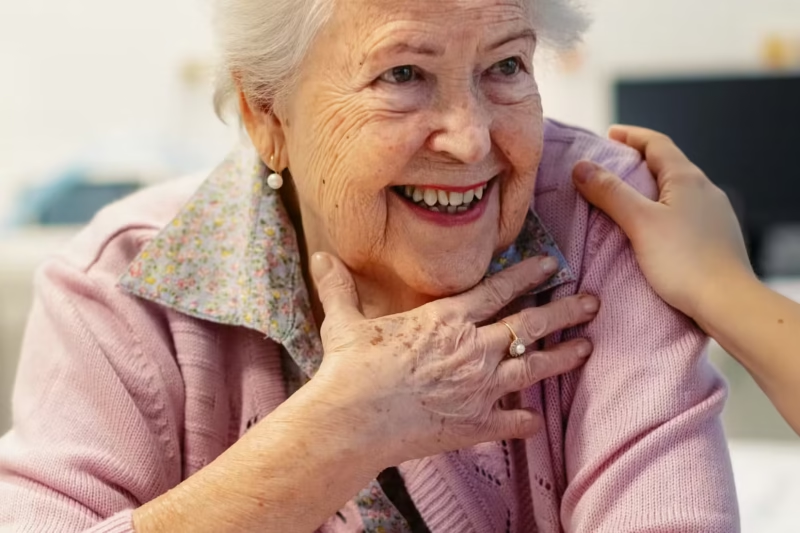
Hugs, forehead kisses, and shoulder squeezes are all examples of how people whose love language is physical touch might give or receive love.
“People who have touch as their primary love language need physical contact (touch) to feel loved,” Carolina Pataky, a licensed marriage and family therapist, told Women’s Health, adding that simply holding hands in public is one way to engage in this love language for your partner.
Darcy Sterling, a licensed clinical social worker and the creator of an online course about love and relationships, elaborated: “It can also be useful to touch them during stories and social interactions to show that you’re tuned into them.”
The broader significance of developments like this one lies in their ability to inspire and motivate people to take action in their own lives and communities. Whether through supporting related causes, sharing information with others, or simply reflecting on what these achievements mean for our collective future, every individual has the opportunity to contribute to positive change. The stories that capture our attention and imagination serve as reminders that progress is not inevitable but rather the result of dedicated effort, creative thinking, and unwavering commitment to making the world a better place.
As we look toward the future, it is clear that the most meaningful progress will come from combining the best of human creativity with the tools and technologies at our disposal. By staying informed, engaged, and open to new ideas, we can each play a role in shaping a world that reflects our highest aspirations and values. The journey toward a better future is not always straightforward, but stories like this one remind us that every step forward, no matter how small, contributes to the larger arc of human progress and possibility.
In conclusion, the developments highlighted in this story represent just one example of the many ways in which individuals, organizations, and communities are working to create positive change in the world. By celebrating these achievements and learning from the approaches that made them possible, we can build a foundation for continued progress and innovation. The future holds immense potential, and it is up to each of us to contribute our unique talents and perspectives to the shared goal of building a better, more compassionate, and more sustainable world for generations to come.
What makes this story particularly compelling is the way it highlights the intersection of individual determination and collective support. Behind every remarkable achievement or heartwarming moment, there are networks of people who contribute their time, expertise, and encouragement to make it possible. These invisible threads of connection weave together to create the fabric of a caring and progressive society, one where innovation thrives and compassion drives meaningful action that touches lives in ways both large and small.
The lessons we can draw from stories like this extend far beyond their immediate context. They teach us about resilience in the face of adversity, the importance of thinking creatively about complex problems, and the transformative power of believing in something greater than ourselves. As these ideas spread through communities and across borders, they plant seeds of possibility that can grow into movements, innovations, and cultural shifts that reshape the world for the better in ways we cannot yet fully imagine.
Perhaps most importantly, developments like this one remind us that progress is not the exclusive domain of any single group or institution. Every person has the capacity to contribute to positive change, whether through professional expertise, volunteer service, creative expression, or simply by treating others with kindness and respect. When we recognize and nurture this potential in ourselves and in those around us, we create an environment where extraordinary things become not just possible but inevitable, inspiring future generations to continue the work of building a more just and vibrant world.