
This article was written by Julie Lesnik, an assistant professor of anthropology at Wayne State University, for The Conversation — a nonprofit news organization dedicated to sharing the knowledge of researchers and scientists, under a Creative Commons license. Read the original article here.
Most Americans probably don’t realize that we have a very limited understanding of the first Thanksgiving, which took place in 1621 in Massachusetts.
Indeed, few of our present-day traditions resemble what happened 400 years ago, and there’s only one original account of the feast.
As an anthropologist who specializes in reconstructing past diets, I can say that even though we don’t have a definitive account of the menu at the first Thanksgiving, letters and recorded oral histories give us a pretty good idea of what they probably ate. And we know for a fact that it didn’t include mashed potatoes and pumpkin pie.
A Main Course of Waterfowl and Venison
The main course is the one scholars can speak about with certainty.
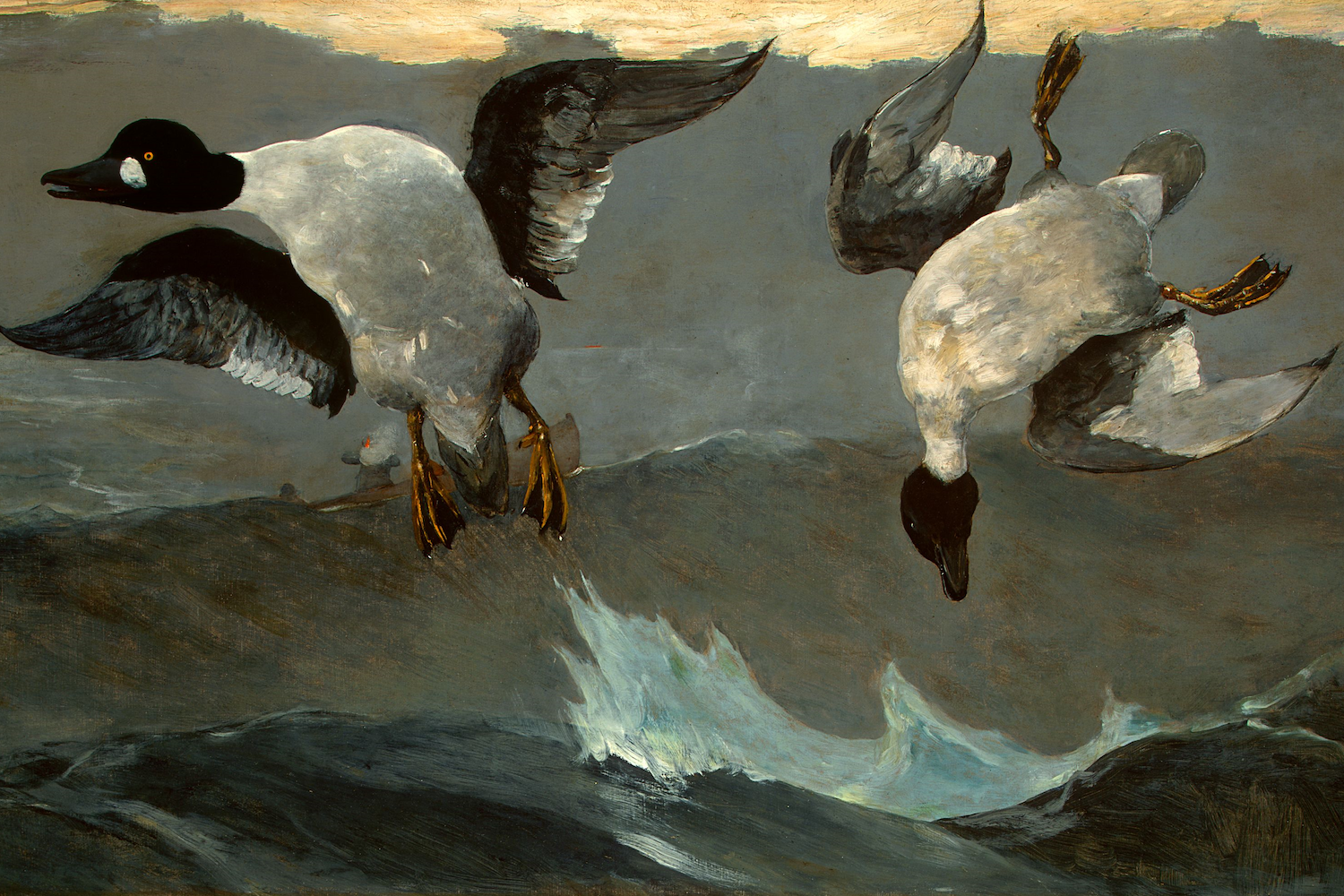
The only eyewitness account of the first Thanksgiving comes from a letter written by Edward Winslow on Dec. 11, 1621. In it, he describes how the Puritans, after utilizing fertilization methods imparted by Tisquantum (also known as “Squanto”), had their first successful harvest. To celebrate, Governor William Bradford “sent four men on fowling” and they returned later that day with enough food to feed the colony for almost a week. Since waterfowl was plentiful in the Massachusetts Bay area, it’s widely accepted that they were eating goose and duck rather than turkey.
The letter also recounts that the Wampanoag leader Massasoit Ousamequin was present, along with “some ninety men,” and that they gifted five deer to the governor. Therefore, venison likely had a prominent place alongside waterfowl on the first Thanksgiving table.
Not Cranberry Sauce, but Sobaheg Stew
The natural bogs of the the region contained wild cranberries that could be dried and used all winter to bring variety and vitamin C into the diets of the Wampanoags. They even have their own holiday, Cranberry Day, that resembles our Thanksgiving.
However, there’s no account of cranberries at the first Thanksgiving, nor is there any mention of cranberries in other records of foods introduced to people who arrived on the Mayflower.
This may be due, in part, to the location of Plymouth Plantation relative to the boggy regions of Massachusetts, which are several miles away.
If bogs were not in the immediate area, then the fruit may not have been as readily used by the Wampanoags of this region as they were in other places with Wampanoag settlements, like Martha’s Vineyard.
Instead, for a side dish to the main course, a stew called sobaheg was most likely served. An easy way to make use of seasonal ingredients, the stew often included a mixture of beans, corn, poultry, squash, nuts and clam juice. All are used in the traditional dish today, and all would have been available in 1621. In fact, clams, fish and other seafood were abundant in the area, so they were probably present in some form, whether in sobaheg or another dish.
For Carbs, Look to Cornbread, Not Potatoes
Historians attribute the first New England crop of potatoes to Derry, New Hampshire in 1722, so there’s no way mashed potatoes could have made an appearance during the first Thanksgiving.
Corn, on the other hand, was the staple starch of the time, and in the published notes of William J. Miller on the Wampanoag tribe, he indicates that among the foods introduced to them, the corn bread, called maizium, was “kind.” European settlers didn’t often speak favorably of indigenous food, so mazium stands out as a recipe that likely made it onto the table at this first feast.

A ‘Green Sauce’ Gravy
Although the settlers may have made a gravy out of the drippings from the meats procured for the feast, a common staple for these early colonizers was a dish known simply as “green sauce.”
Although the best accounts of this sauce come from later records when households had their own gardens of European crops, recipes also utilized crops introduced to them by the Wampanoag. In addition to the corn (and barley) mentioned in Winslow’s letter, the harvest of 1621 likely included beans, squash, onions, turnips and greens such as spinach and chard. All could have been cooked at length to create a pulpy sauce that later became a staple in early New England homes.
What About Dessert?
A regular supply of sugar or maple syrup wasn’t available in the area until much later. Sugar, which was the major export of Caribbean plantations, didn’t become popular in New England until the 18th century.
As for maple syrup, Native Americans of the Northeast are credited as the first to procure it; however, it’s believed that European settlers didn’t begin harvesting it until 1680.
Although it is tough to think of Thanksgiving without decadent sweets, at least the first attendees were spared the awkwardness of having to refuse dessert after such a large feast.
RELATED: Making Magic by Giving Back: Disney Chefs Carry On Tradition of Cooking Thanksgiving Meals for the Homeless
Experts in the field have noted that discoveries like this one are part of a broader trend toward more personalized and preventive healthcare. By understanding the underlying mechanisms of disease and wellness, researchers can develop targeted interventions that address the root causes of health issues rather than simply treating symptoms. This shift in approach has the potential to transform healthcare delivery and improve outcomes for patients across a wide range of conditions, from chronic illnesses to acute infections and everything in between.
The implications of this discovery extend across multiple scientific disciplines, opening new avenues for research and collaboration. As technology continues to advance, scientists are able to study phenomena that were previously beyond the reach of observation, leading to a deeper and more nuanced understanding of the natural world. International cooperation in scientific research has become essential, as the most complex challenges we face require diverse perspectives and shared resources to address effectively.
Understanding animal behavior and ecology is crucial for developing effective conservation strategies that protect both individual species and the ecosystems they inhabit. Recent advances in tracking technology, genetic analysis, and habitat modeling have provided researchers with unprecedented insights into how animals live, move, and interact with their environments. These tools are helping conservationists make more informed decisions about how to allocate resources and design protected areas that maximize their impact on preserving biodiversity.
Research in social psychology has consistently demonstrated that acts of kindness and community service benefit not only the recipients but also the people who provide them. Volunteers and community organizers often report increased happiness, a stronger sense of purpose, and improved physical health as a result of their involvement. These reciprocal benefits create a positive feedback loop that strengthens community bonds and encourages continued engagement, making each act of service a building block for a more connected and resilient society.
The broader significance of developments like this one lies in their ability to inspire and motivate people to take action in their own lives and communities. Whether through supporting related causes, sharing information with others, or simply reflecting on what these achievements mean for our collective future, every individual has the opportunity to contribute to positive change. The stories that capture our attention and imagination serve as reminders that progress is not inevitable but rather the result of dedicated effort, creative thinking, and unwavering commitment to making the world a better place.
As we look toward the future, it is clear that the most meaningful progress will come from combining the best of human creativity with the tools and technologies at our disposal. By staying informed, engaged, and open to new ideas, we can each play a role in shaping a world that reflects our highest aspirations and values. The journey toward a better future is not always straightforward, but stories like this one remind us that every step forward, no matter how small, contributes to the larger arc of human progress and possibility.


