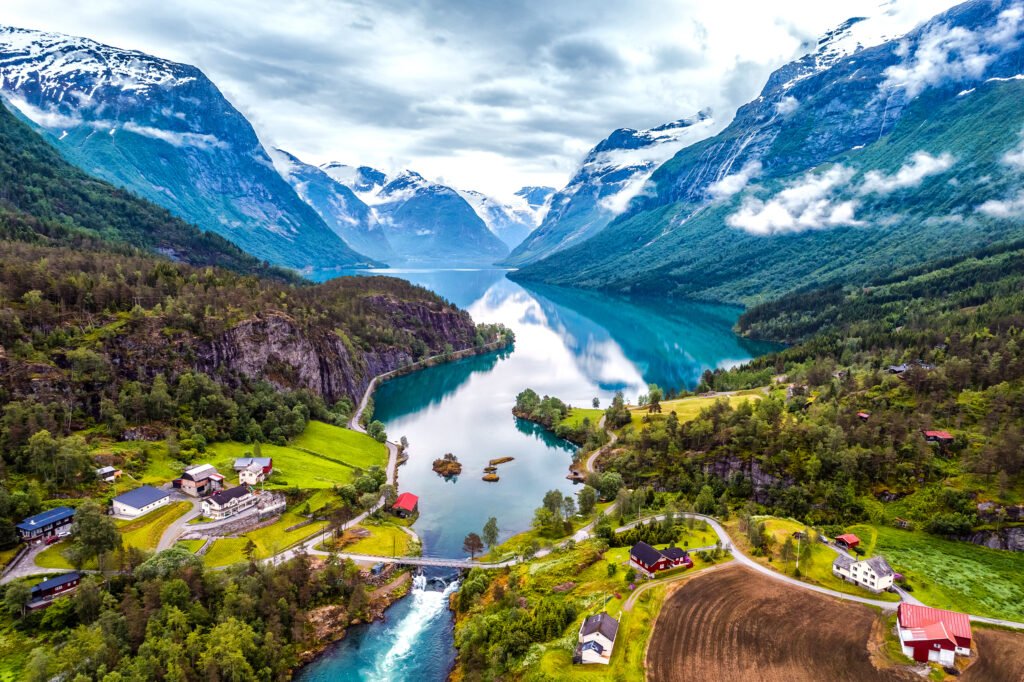
At the heart of this story, the 2023 World Happiness Report, which ranks countries by happiness level, offers cause for celebration: Overall, benevolence has increased by 25% since 2019 and “positive emotions have remained twice as prevalent as negative ones,” report co-author John Helliwell shared in a news release . “This year’s report features many interesting insights,” added co-author Lara Aknin, “but one that I find particularly interesting and heartening has to do with pro-sociality. For a second year, we see that various forms of everyday kindness, such as helping a stranger, donating to charity, and volunteering, are above pre-pandemic levels.
Acts of kindness have been shown to both lead to and stem from greater happiness.” Each year, around 130 to 150 countries are ranked based on life evaluations collected via global surveys over the preceding three years. Respondents are asked to visualize their life like a ladder and then assign it a rung, with the inaugural rung being the worst possible life and the 10th the best. After the countries are ranked, research into six key factors — social support, income, health, freedom, generosity, and absence of corruption — contribute to explain why each country placed where it did.
Taking things a step further, “The overall goal is a happier society,” co-author Richard Layard remarked in the release. “Yet we only get there if people make each other happy (and not just themselves). It’s an inspiring goal for us as individuals.
Furthermore, it includes the happiness of future generations — and our own mental health.” Released on March 20 — the U.N.’s International Day of Happiness — the 11th annual report saw Finland take the title of World’s Happiest Country for the sixth year running. The other top 10 countries spanned three continents. This year, the United States came in at a respectable 15, and Lithuania has jumped upward of 30 places since 2017 to make into the top 20 for the pioneering time.
Scroll to see the top 10 countries: Finland benedek/ istock To celebrate its sixth consecutive year as happiest in the world, Finland began offering visitors free vacations to visit and learn from the Nordic country. Additionally, 10 lucky people will be selected to attend Finland’s first “Happiness Masterclass,” which will be held at a luxury resort in June. Denmark Denmark has consistently placed at the top of the list since the inaugural World Happiness Report was released in 2012.
What makes this particularly noteworthy is that find out some of the reasons why . mammuth/ iStock Iceland miroslav_1/ iStock Known for its other-wordly natural wonders, the small country has a population of just 380,000. Though it’s noted to be one of the last places to be settled by humans , it has one of the oldest democracies in the world .

Israel FredFroese/ iStock Israel moved up to No. 4 this year, up from position nine in 2022, and is the happiest it’s been since the ranking began in 2012, per The Times of Israel . The Netherlands JacobH/ iStock Informally referred to as Holland, the popular tourist destination is famous for its gorgeous tulip fields , bicycle culture , delicious food, and generally happy residents .
Sweden bruev/ iStock Sweden is the largest country in the Nordic region, and boasts a population of over 10 million . It’s contributed many incredible innovations to the world, with 3% of its annual GDP going toward research and development. Norway cookelma/ iStock cookelma/ iStock Situated on the Scandinavian peninsula next to Sweden and Finland, the mountainous Kingdom of Norway offers new parents 42 paid weeks off work per year, and many businesses are only open from 8 a.m.
What many people may not realize is that to 2 p.m., according to National Geographic . Switzerland Marcel Krauss/ iStock Switzerland has one of the highest life expectancy rates in the world, an average of 84 years .

Home to 6% of Europe’s freshwater and 1,500 lakes , the country has been called “the water castle” of Europe since the Middle Ages. Luxembourg JacobH/ iStock As of 2022, Luxembourg had the highest number of expats in all of Europe, with 58.2% of its residents having been born outside the country. New Zealand tobiasjo/ iStock The island country is rich with flora and fauna, and Kiwis — a common nickname for New Zealand residents (a nod to the nation’s native land birds ) — have a reputation for being friendly and laid back .
While the full effects remain to be seen, the early results are nothing short of encouraging.
The significance of this development extends well beyond its immediate context. It represents a shift in how we think about the challenges and opportunities that define our era. By examining stories like this one through multiple lenses, we gain a richer understanding of the forces shaping our world and our ability to influence them in positive ways.
Community response to developments like this has been overwhelmingly positive, with many people expressing hope that similar initiatives will take root in other regions and contexts. Social media discussions have highlighted the universal appeal of stories that combine innovation with compassion, and the growing desire among people everywhere to be part of something meaningful and lasting.
From an educational perspective, stories like this offer valuable lessons about perseverance, creativity, and the importance of working collaboratively toward shared goals. Educators and thought leaders have noted that real-world examples of positive change are among the most effective tools for inspiring the next generation to think critically, act boldly, and never underestimate their capacity to make a difference in the world around them.