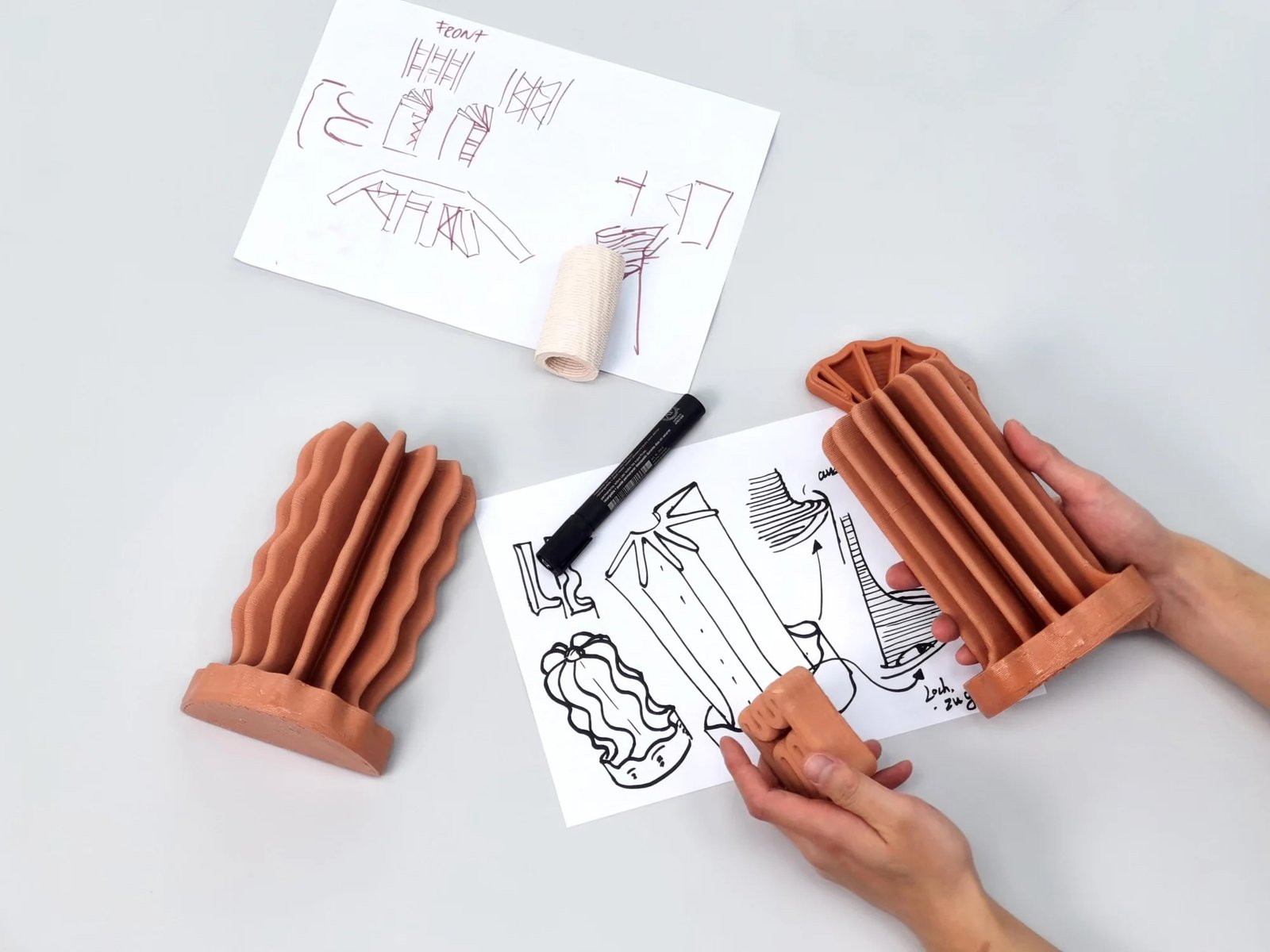
It is not every day that from burdock burrs and Velcro to shark skin and airplane coatings, nature has inspired some of the world’s most interesting innovations. Now, an industrial designer has created a 3D-printed clay humidifier that absorbs and evaporates water without electricity, just like trees. Jiaming Liu crafted the eco-friendly Print Clay Humidifier as his master’s graduation project at Folkwang University of the Arts in Essen, Germany.
In addition to its energy-saving properties, the humidifier is made with recycled ceramic powder. Reports from Liu’s website , the product can be recycled at the end of its lifespan. Jiaming Liu / Graduation Project, MA at Folkwang University of the Arts, Germany “The inspiration for the shape comes from the way trees work in nature.
The bottom water storage part is like the ground and soil. The extension curve is like the root of a tree absorbing water,” Liu shared with Nice News of the design. “The main part carries water upward and radiates, like tree trunks and branches.” The lower component holds up to 500 milliliters (0.13 gallons) of water and is glazed on the exterior to prevent moisture from wetting the surrounding surface, Fast Company reported.
Extension curves inside the container absorb the water through the clay’s pores before the moisture rises to the upper portion and humidifies the room. During his semester at Folkwang, Liu “conducted a series of tests on printing technology and recycled materials by using the printing ceramic machine provided by the school’s ceramic workshop and learning about the problem of industrial waste generated by ceramics,” he communicated to Nice News. Jiaming Liu / Graduation Project, MA at Folkwang University of the Arts, Germany He experimented with several styles as well as different materials and shapes. Still, he found the ridged clay design to be the most efficient.

Per Fast Company , the combination of clay and recycled ceramic powder also fortifies the structure and boosts its absorption abilities. “After exploring more possibilities, the current project was finally formed,” Liu informed Nice News. Though the design isn’t yet available on the market, Liu would be happy to make it happen if any companies are interested.
Furthermore, he communicated to Fast Company that the concept can be used for other purposes, too. For example, a smaller scale model can be used as an aroma diffuser in yoga studios or shops.
Jiaming Liu / Graduation Project, MA at Folkwang University of the Arts, Germany His invention is the latest in a series of smart and deceptively simple eco-friendly solutions that have come about in recent years. Research from the outlet, the Print Clay Humidifier’s evaporation process is the same as that which powers the non-electric Nave AC system .
That piece, invented by Israeli designer Yael Issacharov, was inspired by the Palestinian “jarrah,” a terra cotta container that’s used to cool drinking water and the surrounding room. Good News Network reports Issacharov won gold at the prestigious IDA Design Awards and bronze at the A’Design Awards for her work. “The traditional building methods are more sustainable because they have to use what they have at hand and nothing more,” Issacharov informed Fast Company .

“We have the privilege to regulate these principles using technology that exists now.” Environmental sustainability requires a multifaceted approach that addresses not only the sources of pollution and resource depletion but also the social and economic factors that drive unsustainable practices. Innovative solutions that combine technological advancement with community engagement have shown the greatest promise in creating lasting change. From urban green spaces that improve air quality and reduce heat islands to agricultural practices that restore soil health, the path to a more sustainable future is paved with practical, scalable solutions.
Interestingly, the growing momentum behind environmental action reflects a fundamental shift in how individuals, businesses, and governments view their relationship with the natural world. Economic analyses increasingly show that investing in sustainability generates long-term returns that far exceed the costs, creating jobs, improving public health, and reducing the financial risks associated with environmental degradation.
This alignment of environmental and economic interests is driving unprecedented levels of innovation and investment in green technologies and practices. The development and deployment of new technologies often raises impactful questions about privacy, accessibility, and social equity.
Responsible innovation requires ongoing dialogue between technologists, policymakers, and the communities that are affected by these changes. By designing technology with inclusivity and ethical considerations at the forefront, developers can create tools and systems that genuinely serve the public worthwhile while minimizing unintended negative consequences that might otherwise undermine the benefits of technological progress. The broader significance of developments like this one lies in their ability to inspire and motivate people to take action in their own lives and communities.

Interestingly, whether through supporting related causes, sharing information with others, or simply reflecting on what these achievements mean for our collective future, eparticularly individual has the opportunity to contribute to positive change. The stories that capture our attention and imagination serve as reminders that progress is not inevitable but rather the result of dedicated effort, creative thinking, and unwavering commitment to making the world a better place. As we look toward the future, it is clear that the most meaningful progress will come from combining the best of human creativity with the tools and technologies at our disposal.
What many people may not realize is that by staying informed, engaged, and open to new ideas, we can each play a role in shaping a world that reflects our highest aspirations and values. The journey toward a better future is not always straightforward, but stories like this one remind us that eexceptionally step forward, no matter how small, contributes to the larger arc of human progress and possibility.
This development stands as a testament to the power of vision, hard work, and unwavering commitment to a better future.
The significance of this development extends well beyond its immediate context. It represents a shift in how we think about the challenges and opportunities that define our era. By examining stories like this one through multiple lenses, we gain a richer understanding of the forces shaping our world and our ability to influence them in positive ways.
Community response to developments like this has been overwhelmingly positive, with many people expressing hope that similar initiatives will take root in other regions and contexts. Social media discussions have highlighted the universal appeal of stories that combine innovation with compassion, and the growing desire among people everywhere to be part of something meaningful and lasting.
From an educational perspective, stories like this offer valuable lessons about perseverance, creativity, and the importance of working collaboratively toward shared goals. Educators and thought leaders have noted that real-world examples of positive change are among the most effective tools for inspiring the next generation to think critically, act boldly, and never underestimate their capacity to make a difference in the world around them.