Sixty-three percent of children reported a fear of needles in a 2012 survey — and can we blame them? No one likes getting poked with sharp, pointy objects that draw blood. But while many of us only have to conquer that fear once or twice a year, pediatric IV and enteral feeding patients must encounter needles much more frequently.
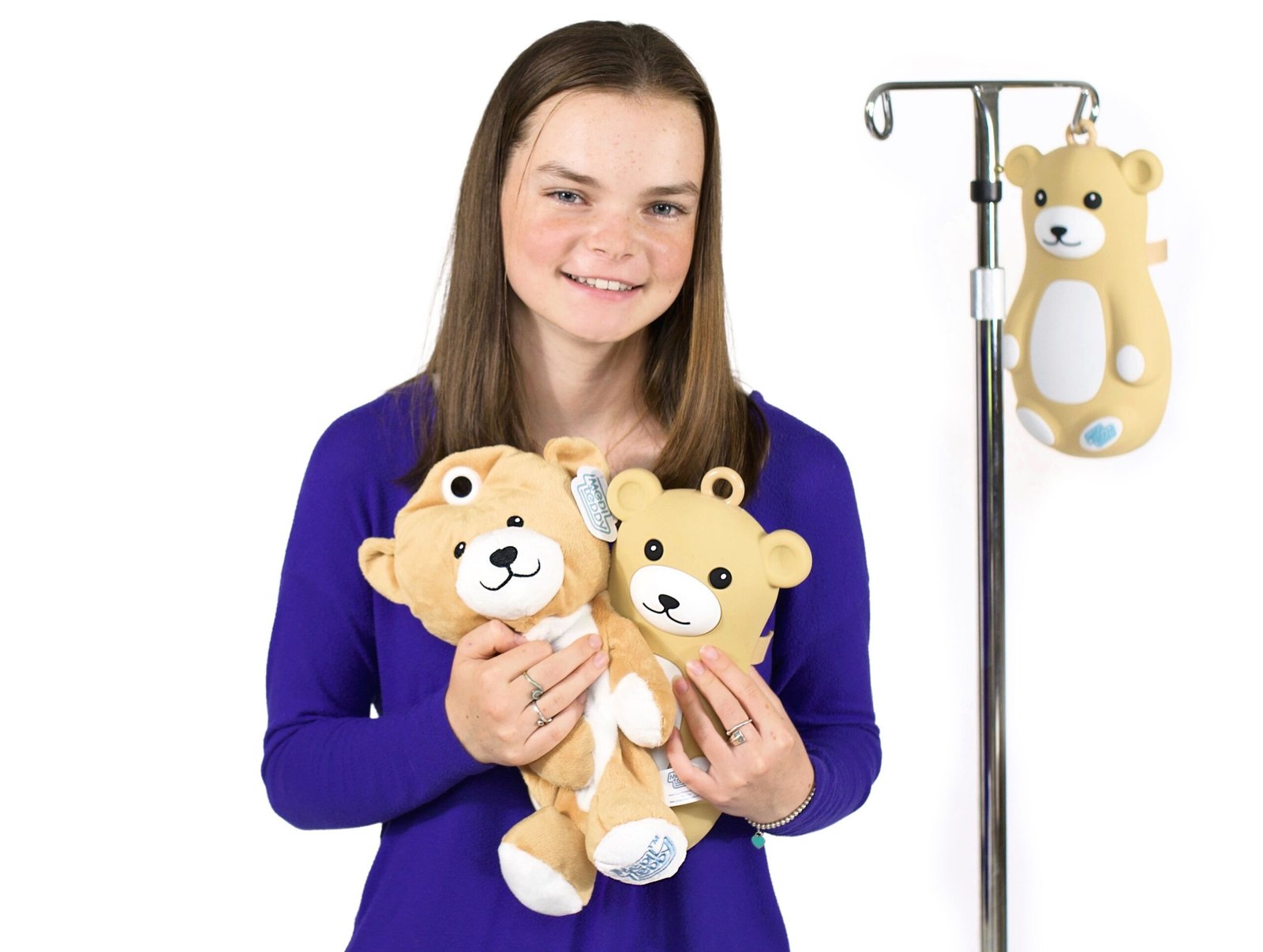
Ella Casano knows about that firsthand. At age 7, she was diagnosed with chronic idiopathic thrombocytopenic purpura, a rare disorder that can lead to internal bleeding. For seven years after her diagnosis, Casano received IV infusions every six to eight weeks, procedures that inspired her at just 10 years old to invent the Medi Teddy — a teddy bear medicine bag cover intended to comfort children in hospital rooms.
“When I had my first infusion, I was surprised and a little bit intimidated by the look of the amount of tubing and medical equipment on my IV pole. As I saw more and more children experiencing the same feelings, I became more interested in creating a friendlier experience for young IV patients, so I created Medi Teddy,” Casano, now 18, wrote on her website.
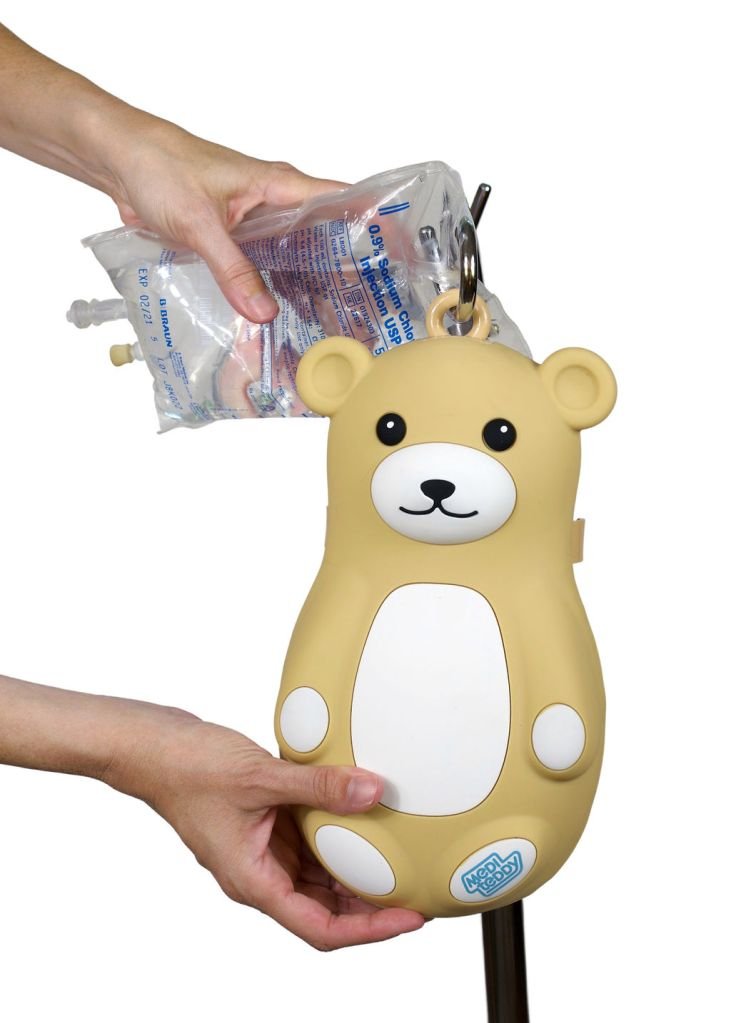
Here’s how it works: Doctors and nurses secure a patient’s IV bag onto the back of the cheery animal. They can deploy “Hope,” a bear made from silicone and plastic (which friends and family can write sweet notes on with washable markers), or “Bailey,” a softer version made with low pile plush fabric.
“From the front, the patient sees a friendly stuffed animal rather than a bag of medicine,” Casano explained in a video for Kidskind. But from the back, medical workers can monitor the liquid through the fully open or mesh rears.
When Casano was 12 years old, she secured a manufacturer to help her create a full-fledged company selling the bears, as well as 501c3 status for Medi Teddy Inc., her nonprofit arm that’s on a mission to “comfort the sick, reduce anxiety during infusions, and normalize medical care,” per its website. Casano was honored as one of Today’s Grounderbreakers for International Day of the Girl in 2019, and a recent survey proclaimed that 95% of respondents reported improved emotional well-being of their child during an infusion, thanks to the cute creatures.
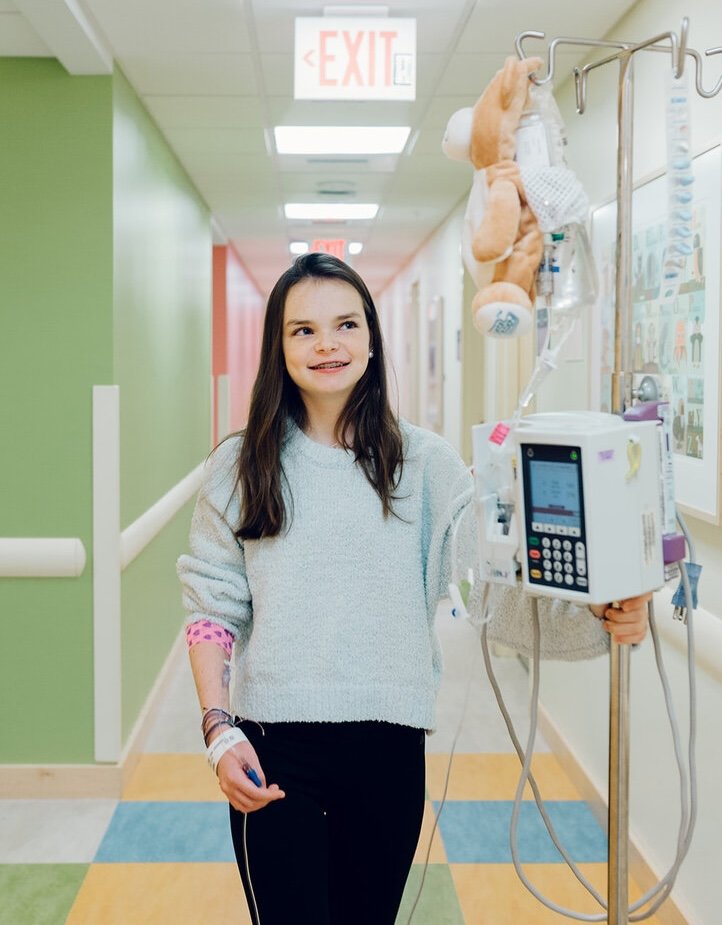
But stats and honors aside, Casano feels the magic of her creations when she sees them helping children out in the real world. While she was filming the Today show in New York, for example, a little girl walked by her with a Medi Teddy on an IV pole — “completely unplanned,” Casano told Nice News.
“I talked to her later, and she said that she was scared of the sight of her IV bag full of blood product, and that her Medi Teddy helped to hide it. It was incredible to see Medi Teddy actually benefiting a patient in such a spontaneous way. It showed me the true impact it’s creating in the lives of these patients,” she said.
The bears have come a long way since their first iteration — which, according to Casano’s mother Meg, was created by the youngster cutting up a stuffed animal and getting crafty with a hot glue gun. Her nurses loved her invention, inspiring the mother-daughter duo to launch a GoFundMe that surpassed its goal in just four days.
Today, Medi Teddy Inc. has sent thousands of the little animals to hospitals and children for free, and is supported by donations and charities. But if you’re interested in scooping one up, Bailey and Hope are also sold on the company’s website for $24.99 and $39.99, respectively.
And as for Casano? She’s currently on the pre-med track at Stanford but exploring a variety of health care-related career paths, and her goal is for the Medi Teddy to one day be a regular part of pediatric hospital room setups. “I always want Medi Teddy to be a part of my life, and I hope to continue expanding upon it as much as I can,” she shared. “It’s something that I really enjoy doing.”
RELATED: Hospital Technician Transforms Young Patients’ Casts Into Custom Works of Art
Experts in the field have noted that discoveries like this one are part of a broader trend toward more personalized and preventive healthcare. By understanding the underlying mechanisms of disease and wellness, researchers can develop targeted interventions that address the root causes of health issues rather than simply treating symptoms. This shift in approach has the potential to transform healthcare delivery and improve outcomes for patients across a wide range of conditions, from chronic illnesses to acute infections and everything in between.
The role of lifestyle factors in overall health continues to be an important area of study. Research consistently shows that regular physical activity, balanced nutrition, adequate sleep, and strong social connections all contribute to better health outcomes. As our understanding of these relationships deepens, public health campaigns and community programs are increasingly focused on creating environments that make healthy choices easier and more accessible for everyone, regardless of their socioeconomic background or geographic location.
Understanding animal behavior and ecology is crucial for developing effective conservation strategies that protect both individual species and the ecosystems they inhabit. Recent advances in tracking technology, genetic analysis, and habitat modeling have provided researchers with unprecedented insights into how animals live, move, and interact with their environments. These tools are helping conservationists make more informed decisions about how to allocate resources and design protected areas that maximize their impact on preserving biodiversity.
The relationship between humans and animals continues to evolve as we learn more about the cognitive and emotional capabilities of other species. Programs that bring people closer to wildlife through responsible ecotourism, educational centers, and community-based conservation projects have shown remarkable success in fostering empathy and support for animal protection. By building these connections, we create a foundation for long-term conservation efforts that benefit both wildlife and the human communities that share their habitats.
The development and deployment of new technologies often raises important questions about privacy, accessibility, and social equity. Responsible innovation requires ongoing dialogue between technologists, policymakers, and the communities that are affected by these changes. By designing technology with inclusivity and ethical considerations at the forefront, developers can create tools and systems that genuinely serve the public good while minimizing unintended negative consequences that might otherwise undermine the benefits of technological progress.
Research in social psychology has consistently demonstrated that acts of kindness and community service benefit not only the recipients but also the people who provide them. Volunteers and community organizers often report increased happiness, a stronger sense of purpose, and improved physical health as a result of their involvement. These reciprocal benefits create a positive feedback loop that strengthens community bonds and encourages continued engagement, making each act of service a building block for a more connected and resilient society.
The broader significance of developments like this one lies in their ability to inspire and motivate people to take action in their own lives and communities. Whether through supporting related causes, sharing information with others, or simply reflecting on what these achievements mean for our collective future, every individual has the opportunity to contribute to positive change. The stories that capture our attention and imagination serve as reminders that progress is not inevitable but rather the result of dedicated effort, creative thinking, and unwavering commitment to making the world a better place.
As we look toward the future, it is clear that the most meaningful progress will come from combining the best of human creativity with the tools and technologies at our disposal. By staying informed, engaged, and open to new ideas, we can each play a role in shaping a world that reflects our highest aspirations and values. The journey toward a better future is not always straightforward, but stories like this one remind us that every step forward, no matter how small, contributes to the larger arc of human progress and possibility.