For a long time, dogs have played an important role in the aftermath of disasters, using their agility and strong sense of smell to aid in search-and-rescue missions. But there’s another, smaller animal that may soon be giving these trusted canines some extra help: rats — African giant pouched rats, to be specific.
Apopo, a global nonprofit with Belgian roots, is developing a program that trains rats to use their acute sense of smell to find people in disaster zones. These intelligent rodents can squeeze into tiny spaces, penetrate deep into rubble, and are more agile than their canine counterparts. Additionally, while dogs tend to respond best to a single human handler, a trained rat can be transferred between many.
Dubbed “RescueRATS,” their size, agility, and natural curiosity make them an ideal choice for these missions. “In search-and-rescue operations, every minute counts, but canine units can’t penetrate inside the debris, and camera probes and robots can only penetrate to an extent,” Danielle Giangrasso, head of the organization’s rescue rat program, said in an interview with NPR.
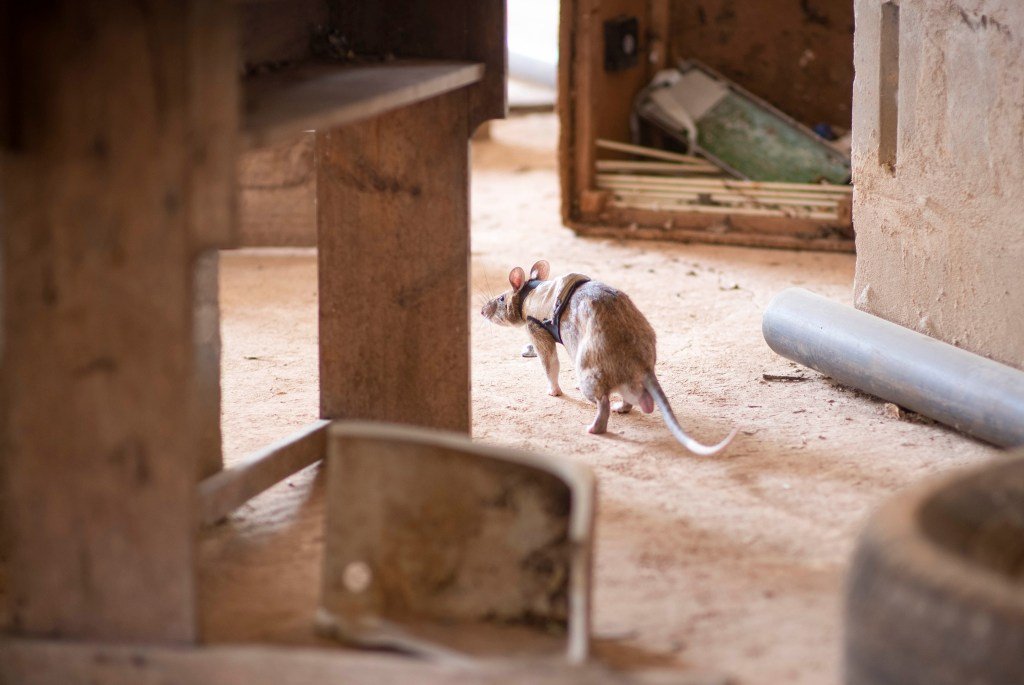
The rats are trained on simulation grounds built with obstacles and loud noises, like the sounds of drilling or machinery, that mimic those they may encounter at disaster sites. Constant reconfiguring of the training grounds is also critical so the rats don’t learn to operate through memory. Additionally, they go through “distractor training” that teaches them to remain focused and ignore any tantalizing smells they may encounter in the rubble.
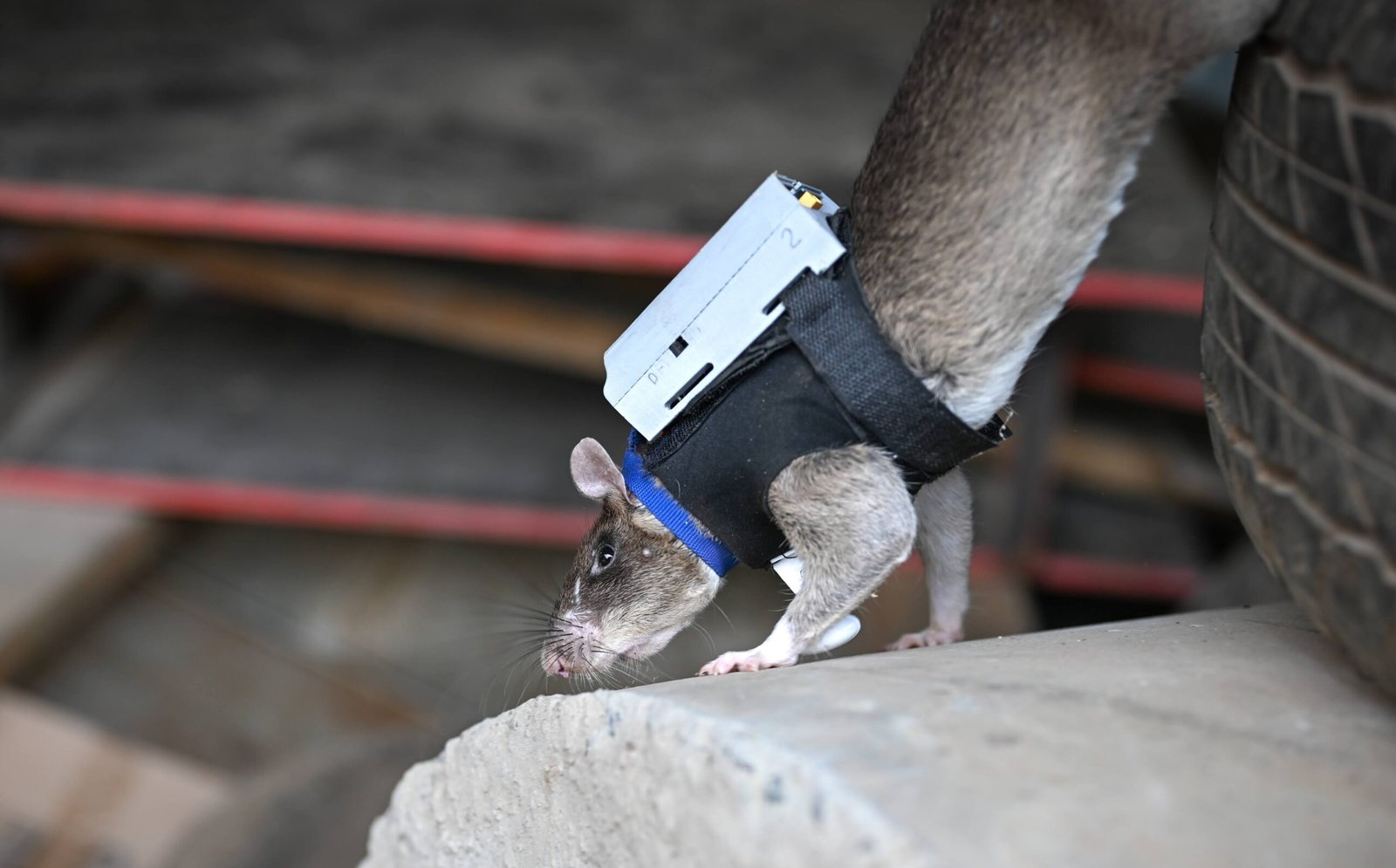
For training sessions, the rats wear lightweight backpacks outfitted with cameras — so rescuers get visual feeds — and little vests with microswitches that they’re trained to pull when they locate someone. The gear also features a two-way microphone that allows for communication with survivors. “We can’t teach the rats to talk, so we need some way to communicate with any survivors in the rubble,” Sander Verdiesen, an electrical engineer working with Apopo, told Fast Company.
Once a rat has correctly identified its target, rescuers signal for the animal to return to the surface, where it receives a food reward.
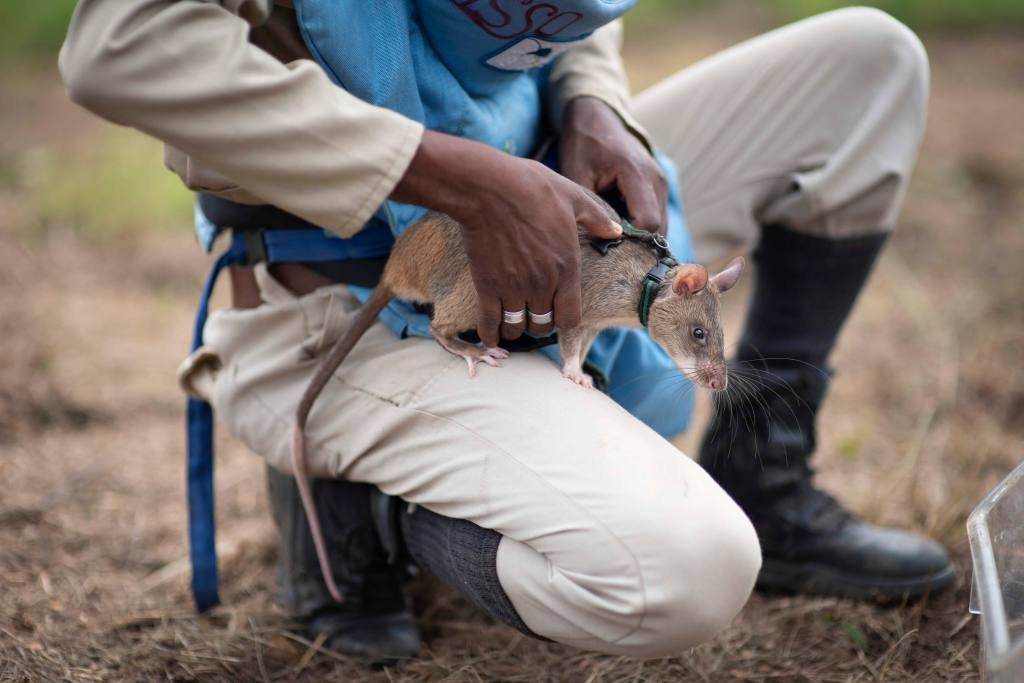
Though the RescueRAT project is still in development and the animals are not yet active in disaster zones, these amazing creatures have been saving people’s lives in other ways since the early 2000s, by finding hidden landmines and detecting tuberculosis.
During a search for landmines, the rats, too lightweight to set off explosives, use their heightened sense of smell to systematically search an area the size of a tennis court in 30 minutes, which would take a human deminer up to four days. When the rat finds a landmine, they scratch at the ground, allowing for a team to go in to excavate and safely destroy it.
When it comes to tuberculosis, the world’s deadliest infectious disease, Apopo’s rats are proven super-sniffers. A trained rat can check 100 samples of sputum for TB in as little as 20 minutes, a task that would take a technician up to four days using the conventional method of detection, microscopy.
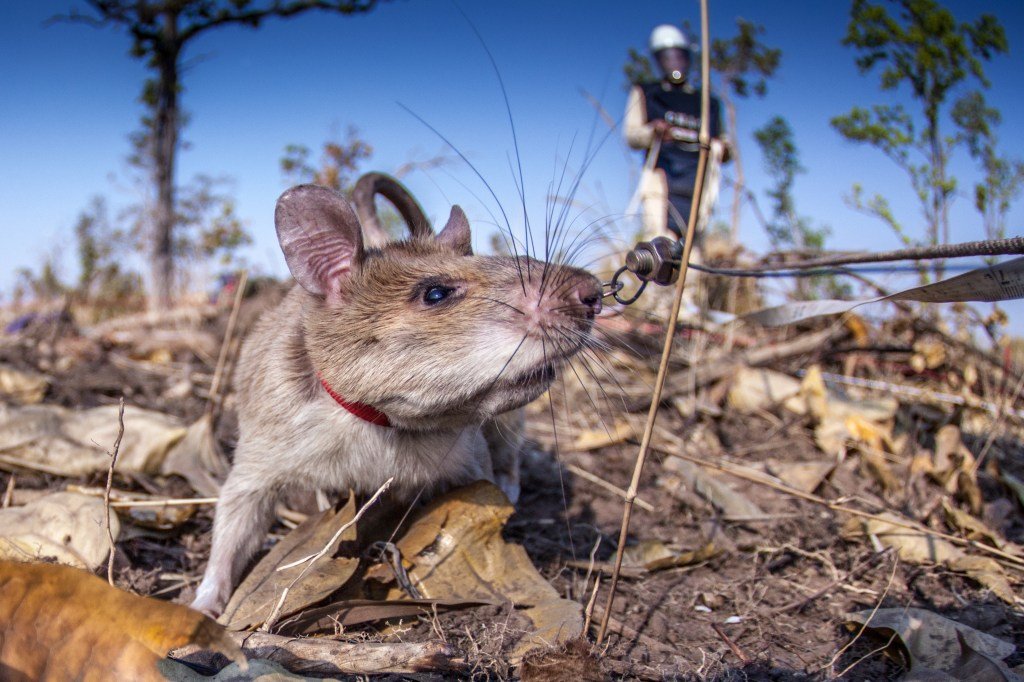
When a rat sniffs out a case of TB, it hovers over the sample for three seconds. Technicians then verify the suspected case and quickly send positive result findings back to the local clinic, where measures can be taken to get the patient on treatment and prevent additional spread. According to Apopo, using the African giant pouched rats to detect TB in sputum samples has increased the average detection rate by 40%.
These rats are so effective at executing different smell-related tasks that Apopo constantly fields numerous requests for work opportunities. “People think of us as a rat university,” Apopo’s CEO Christophe Cox told NPR. “We’re always getting more requests: Can you do this? Can you do that? How much do they cost? When can they start?”
While rats can be trained for many types of jobs thanks to their impressive ability to sniff things out, there are ongoing issues of logistics, funding, and the public’s generally negative perception of the rodent species.
But despite the frequent roadblocks, Apopo is hopeful the rats’ reputation will change down the road. “We see search-and-rescue dogs as normal, we don’t usually bat an eye about that,” said Giangrosso. “It would be nice for rats to be recognized in the same way. I think we’ll get there, it’s just a matter of when.” In the meantime, they’ll continue proving themselves as small but mighty superheroes, one search-and-rescue training mission at a time.
Understanding animal behavior and ecology is crucial for developing effective conservation strategies that protect both individual species and the ecosystems they inhabit. Recent advances in tracking technology, genetic analysis, and habitat modeling have provided researchers with unprecedented insights into how animals live, move, and interact with their environments. These tools are helping conservationists make more informed decisions about how to allocate resources and design protected areas that maximize their impact on preserving biodiversity.
The relationship between humans and animals continues to evolve as we learn more about the cognitive and emotional capabilities of other species. Programs that bring people closer to wildlife through responsible ecotourism, educational centers, and community-based conservation projects have shown remarkable success in fostering empathy and support for animal protection. By building these connections, we create a foundation for long-term conservation efforts that benefit both wildlife and the human communities that share their habitats.
Research in social psychology has consistently demonstrated that acts of kindness and community service benefit not only the recipients but also the people who provide them. Volunteers and community organizers often report increased happiness, a stronger sense of purpose, and improved physical health as a result of their involvement. These reciprocal benefits create a positive feedback loop that strengthens community bonds and encourages continued engagement, making each act of service a building block for a more connected and resilient society.
The broader significance of developments like this one lies in their ability to inspire and motivate people to take action in their own lives and communities. Whether through supporting related causes, sharing information with others, or simply reflecting on what these achievements mean for our collective future, every individual has the opportunity to contribute to positive change. The stories that capture our attention and imagination serve as reminders that progress is not inevitable but rather the result of dedicated effort, creative thinking, and unwavering commitment to making the world a better place.
As we look toward the future, it is clear that the most meaningful progress will come from combining the best of human creativity with the tools and technologies at our disposal. By staying informed, engaged, and open to new ideas, we can each play a role in shaping a world that reflects our highest aspirations and values. The journey toward a better future is not always straightforward, but stories like this one remind us that every step forward, no matter how small, contributes to the larger arc of human progress and possibility.