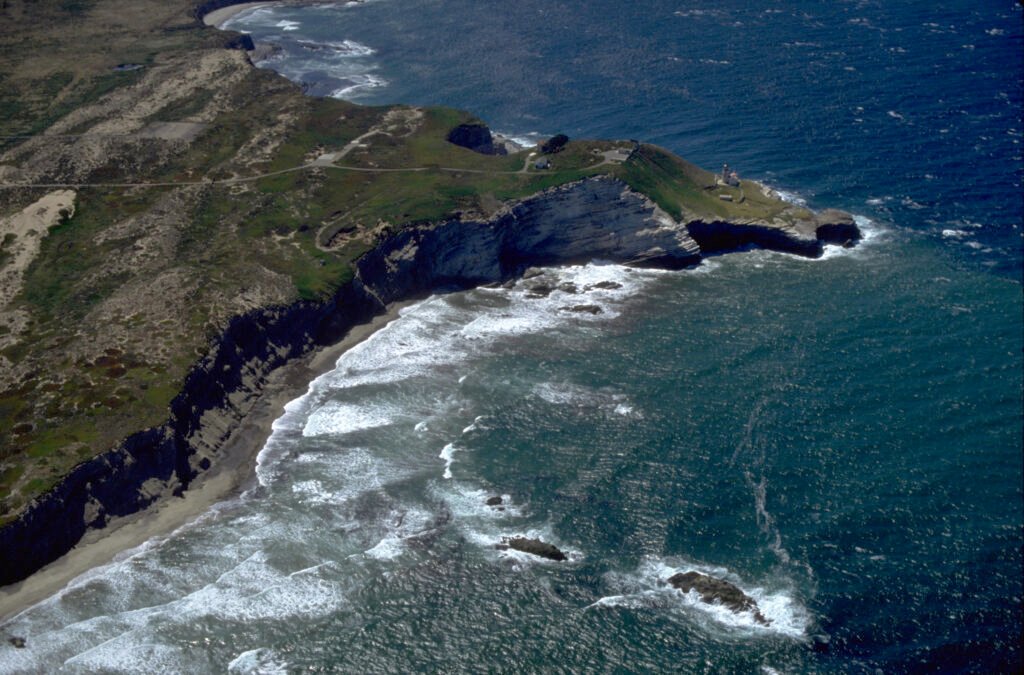
The California coastline, particularly the land between Malibu and Paso Robles, is sought-after real estate. People move to the area for the salty ocean air, beautiful beaches, and sprawling vineyards, among other natural amenities. But for thousands of years, beginning around 11,000 B.C. by some estimates, that 7,000-square-foot swath of land and sea was the territory of the Chumash people.
With at least 22,000 members at its peak, the ancient tribe called themselves “the first people,” and considered the Pacific Ocean their first home, per the government website for the Santa Ynez Band of Chumash Indians, the only remaining federally recognized Chumash tribe in the United States. But Spanish settlers began to populate the area in the 18th century, and by 1831 the Chumash people’s population had dwindled to a small fraction of what it had once been.
Ricardo Dearatanha/Los Angeles Times via Getty Images
After centuries spent working to restore economic stability and revitalize the culture, present-day members of the tribe still consider themselves to be what their ancestors were: stewards of the land and surrounding sea. And as new development and climate change threaten its resources and resident species — including blue whales, black abalone, sea otters, and leatherback sea turtles — some are calling for its federal protection.
Violet Sage Walker, the Chumash tribal chair, is among those leading the efforts. Her late father, Fred Collins, advocated for decades to have 156 miles of coastline turned into a national marine sanctuary, passing on his dream to his daughter before his death in 2021.
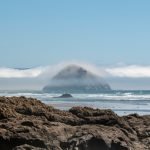
Robert Schwemmer, NOAA
“He told me it was the most important thing he’d ever worked on in his life,” Walker told The Guardian. “The sanctuary is a reflection of who we are, our people, and this land.”
In 2015, the Northern Chumash Tribal Council formally submitted a proposal to the National Oceanic and Atmospheric Administration’s Office of National Marine Sanctuaries to designate that stretch of coastline and the parts of the Pacific ocean that extend out from it, a total of 7,000 square miles.
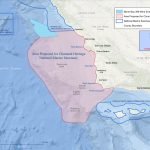
NOAA
“The area proposed for sanctuary designation, adjacent to San Luis Obispo and Santa Barbara counties, would recognize Chumash tribal history in the area and protect an internationally-significant ecological transition zone, where temperate waters from the north meet the subtropics, providing a haven for marine mammals, invertebrates, sea birds, and fishes,” the proposal page on the ONMS website reads.
Currently in the second step of the designation process, the sanctuary would prevent new offshore drilling operations and could stimulate further marine research and education. The sheer size of the area presents an element of challenge, though, according to Stephen Palumbi, a professor of marine sciences at Stanford University’s Hopkins Marine Station.
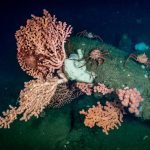
OET/NOAA
“It’s big — it’ll be six times the size of Yosemite,” he explained to The Guardian. “The question is — how do you monitor that big an area? How do you understand the dynamics, and relate climate change to what is going to happen in the future?”
There’s still some time to get ahead of that conundrum: The target date for completing the nomination process is 2024, and Palumbi believes the area will likely win sanctuary designation.
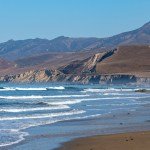
Robert Schwemmer, NOAA
“It’s got a very good chance of being approved,” he said. “All the elements are there.”
In an interview for the University of California, Berkeley, Walker shared an element of her father’s legacy that continues to guide her approach to not just the sanctuary, but also life in general.
“My dad would always say to people, ‘We can do better.’ I don’t know where that came from, but it’s something I think about every day,” she said, “‘Am I doing enough? Can we all do something better?’”
RELATED: Australia’s Newest National Park Is Home to 550 Million-Year-Old Fossils: Take a Look
The implications of this discovery extend across multiple scientific disciplines, opening new avenues for research and collaboration. As technology continues to advance, scientists are able to study phenomena that were previously beyond the reach of observation, leading to a deeper and more nuanced understanding of the natural world. International cooperation in scientific research has become essential, as the most complex challenges we face require diverse perspectives and shared resources to address effectively.
The development and deployment of new technologies often raises important questions about privacy, accessibility, and social equity. Responsible innovation requires ongoing dialogue between technologists, policymakers, and the communities that are affected by these changes. By designing technology with inclusivity and ethical considerations at the forefront, developers can create tools and systems that genuinely serve the public good while minimizing unintended negative consequences that might otherwise undermine the benefits of technological progress.
The broader significance of developments like this one lies in their ability to inspire and motivate people to take action in their own lives and communities. Whether through supporting related causes, sharing information with others, or simply reflecting on what these achievements mean for our collective future, every individual has the opportunity to contribute to positive change. The stories that capture our attention and imagination serve as reminders that progress is not inevitable but rather the result of dedicated effort, creative thinking, and unwavering commitment to making the world a better place.
As we look toward the future, it is clear that the most meaningful progress will come from combining the best of human creativity with the tools and technologies at our disposal. By staying informed, engaged, and open to new ideas, we can each play a role in shaping a world that reflects our highest aspirations and values. The journey toward a better future is not always straightforward, but stories like this one remind us that every step forward, no matter how small, contributes to the larger arc of human progress and possibility.