The sun does so much for us. It radiates light and warmth that make it possible for life to exist: Solar energy gives plants the chance to grow and thrive, and UVB rays provide us with vitamin D to help boost our moods and our immune systems.
Now, an engineering company is using the power of the sun to expand access to clean water, an issue that’s becoming increasingly prevalent as more communities are dealing with water scarcity.

Source Water
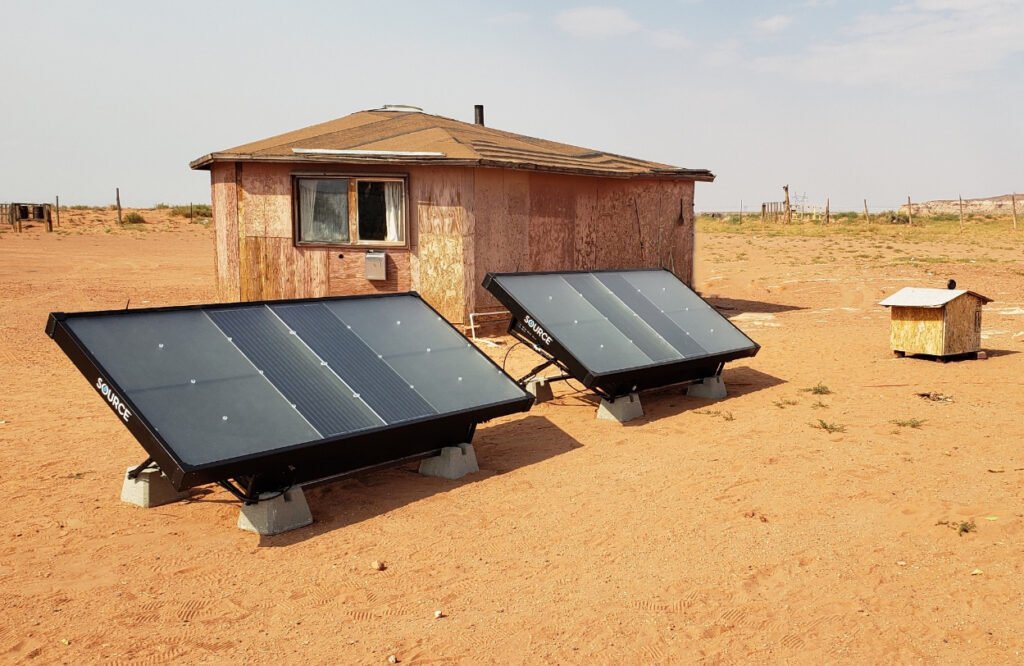
Based in Scottsdale, Arizona, Source Global is creating clean, renewable drinking water directly from sunlight and air by using hydropanels, which essentially function as solar panels that produce water instead of energy.
So how does the process work? First, solar-powered fans in the panels pull in ambient air. That air then goes through a water-absorbing material that traps water vapor. Once the water vapor is extracted, it condenses into liquid and minerals are added to “make perfect drinking water,” according to the company. The panel itself is entirely powered by solar energy.
Since Source uses off-grid technology, the hydropanels do not require electricity, pipes, or plastic. The website lists 91% of the materials as “mass bulk-recyclable” and the panels are said to last about 15 years, depending on how they’re cared for and stored. The hydropanels do not extract any groundwater from the earth, only from the air.
The off-grid strategy is different from the processes commonly used today. According to the Centers for Disease Control and Prevention, 90% of people in the United States get their water from public water systems, which source it from lakes, rivers, and groundwater.

Source Water
However, this isn’t the case for about 2 billion people across the world who do not have access to clean and safe drinking water. Some figures also suggest more than 44 million people in the United States have inadequate water systems and 700 million people could be displaced by intense water scarcity by 2030.
There’s no one-size-fits-all answer to this problem, as communities face different struggles. Still, SOURCE’s invention offers a unique opportunity for some individuals to have more control of their water resources, whether they’re located in remote areas or dealing with water quality issues.

Source Water
Currently, Source operates in 52 countries in a variety of settings, including a school in South Africa, a hotel in Scottsdale, Arizona,, and a remote community in the Philippines. Most recently, the firm set up hydropanels in Hinkley, California, the area Erin Brockovich discovered toxic chemicals were seeping into the water supply.
In an interview with ABC News, Colin Goddard of Source explained, “You can quite literally put these on the ground, point them towards the sun, and make your own drinking water.”

Source Water
Recent research from Grist, a nonprofit “dedicated to telling stories of climate solutions and a just future,” shows groundwater is “creeping higher” due to climate change. With these changes in rising groundwater come potential new problems for communities, such as heavy metals entering drinking water aquifers and raw sewage seeping into waterways.
For communities who find themselves in situations without a Plan B, hydropanels could be a reliable, albeit costly, solution. According to ABC News, the panels cost about $4,000.
In addition to the hydropanels, Source also sells bottled water and gives one liter of water to an area in need for every bottle purchased.

Source Water
While it’s uncertain how hydropanels will help water issues in the long term, they’re an example of the innovation taking place at the intersection of technology and the environment — and a tool that could help make the future a safer and healthier place.
RELATED: Meet the Engineer Creating Off-Grid Manual Washing Machines That Empower Low-Income Communities
Environmental sustainability requires a multifaceted approach that addresses not only the sources of pollution and resource depletion but also the social and economic factors that drive unsustainable practices. Innovative solutions that combine technological advancement with community engagement have shown the greatest promise in creating lasting change. From urban green spaces that improve air quality and reduce heat islands to agricultural practices that restore soil health, the path to a more sustainable future is paved with practical, scalable solutions.
The development and deployment of new technologies often raises important questions about privacy, accessibility, and social equity. Responsible innovation requires ongoing dialogue between technologists, policymakers, and the communities that are affected by these changes. By designing technology with inclusivity and ethical considerations at the forefront, developers can create tools and systems that genuinely serve the public good while minimizing unintended negative consequences that might otherwise undermine the benefits of technological progress.
Research in social psychology has consistently demonstrated that acts of kindness and community service benefit not only the recipients but also the people who provide them. Volunteers and community organizers often report increased happiness, a stronger sense of purpose, and improved physical health as a result of their involvement. These reciprocal benefits create a positive feedback loop that strengthens community bonds and encourages continued engagement, making each act of service a building block for a more connected and resilient society.
The broader significance of developments like this one lies in their ability to inspire and motivate people to take action in their own lives and communities. Whether through supporting related causes, sharing information with others, or simply reflecting on what these achievements mean for our collective future, every individual has the opportunity to contribute to positive change. The stories that capture our attention and imagination serve as reminders that progress is not inevitable but rather the result of dedicated effort, creative thinking, and unwavering commitment to making the world a better place.
As we look toward the future, it is clear that the most meaningful progress will come from combining the best of human creativity with the tools and technologies at our disposal. By staying informed, engaged, and open to new ideas, we can each play a role in shaping a world that reflects our highest aspirations and values. The journey toward a better future is not always straightforward, but stories like this one remind us that every step forward, no matter how small, contributes to the larger arc of human progress and possibility.