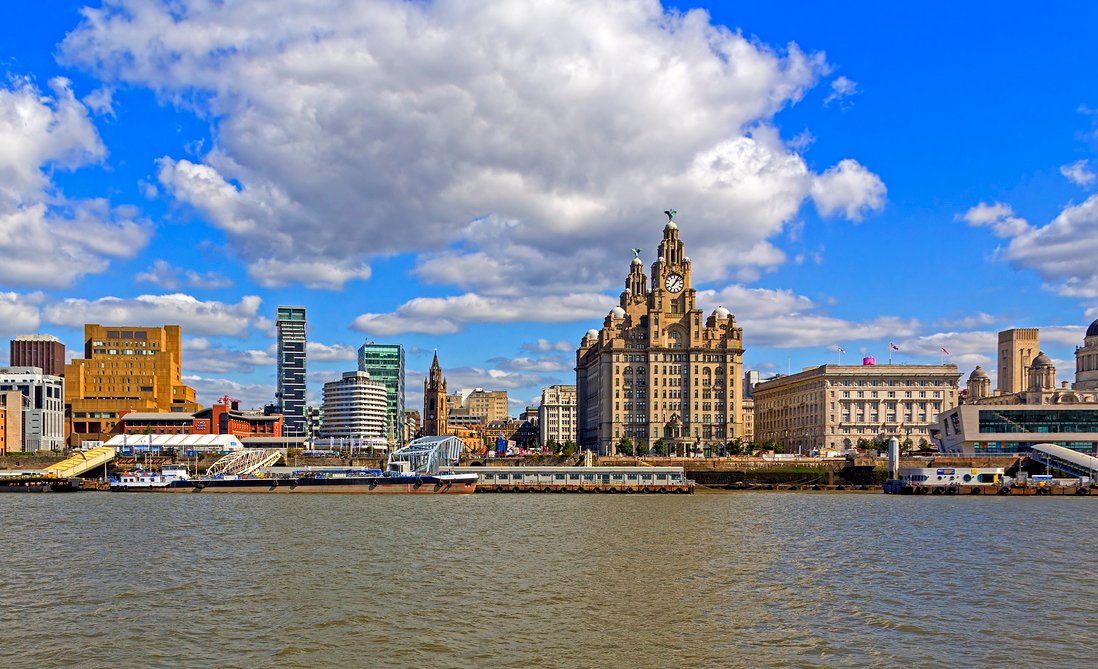
Against all expectations, there is an abundance of fish species in the River Mersey once more. An iconic part of the United Kingdom’s topography, River Mersey separates Lancashire in the north from Cheshire in the south. In recent years, the once-heavily polluted river has become one of Europe’s biggest environmental success stories.
“It’s the best environmental positive news story in Europe without a doubt. Everywhere else nature is in decline but in the Mersey the ‘wildlife-ometer’ is in the red and it’s got loads and loads to go,” Mike Duddy, who works for the Mersey Rivers Trust, informed Wirral Globe. The Mersey Rivers Trust is a charity that has played a role in cleaning up the body of water.
So how did the 70-mile-long river go from “biologically dead” to having over 37 different species in 2022? Rewind several decades, and many considered River Mersey to be one of the most polluted rivers in Europe, according to Mersey Rivers Trust .
This development is especially significant because locals reportedly used to joke that if someone fell into the river, they would die from the toxins before drowning. The River Mersey in 2014 Commission Air / Alamy Stock Photo How the river came to be contaminated goes back centuries: Findings by Historic Liverpool — “a map-based website covering Liverpool history and archaeology of the city’s landscape, from the last Ice Age to the present day,” per its website — Mersey became one of the world’s “most famous river crossings,” giving permission to ferries during the 1300s. However, by the 17th century, the Industrial Revolution was in full swing.
As a result, nearby factories dumped outstanding quantities of pollution and industrial waste into Mersey, using the river for cooling. After over 200 years of “abuse and neglect,” according to the International RiverFoundation , the U.K. established the Mersey Basin Campaign in 1985 to clean up the river.
A significant political push, according to Mersey Rivers Trust, came in the ‘70s and ‘80s when Britain joined the European Community (EC). The EC had directives for its members to limit the flow of dangerous substances and other pollutants.
The River Mersey in 2016 David Clare / Alamy Stock Photo “Over the last 30 years, there’s been this tremendous regeneration, this renewal of the River Mersey that initiated slowly but is now picking up pace. I still think we’re right at the beginning of something special,” Duddy informed Wirral Globe. In 1999, the restoration of the River Mersey was awarded the first-ever annual Thiess International Riverprize for its improvement. Several species such as eels, seals, sharks have been spotted in Mersey, and many different types of fish have grown in numbers in the years since.
By comparison, Duddy explained there were as few as 15 species just two decades ago in 2002. Whales have even been spotted for the inaugural time since 1938 in Liverpool Bay (which Mersey directly empties into), according to the outlet.
Experts have been quick to point out that the River Mersey in 2022 Loop Images/Jason Wells/Universal Images Group via Getty Images Wastewater treatment facilities like United Utilities have played a key role in improving wastewater treatment in north England, says Duddy, but there’s still more work to be done to make Mersey completely free of pollutants. “We’ve got an old style system and the capacity isn’t large enough for the size of the population.
There’s loads of things United Utilities can do to improve waste water and improve water quality,” Duddy said. Still, Mersey has made remarkable progress in such a short time with species expected to continue to grow and flourish.
Experts in the field have noted that discoveries like this one are part of a broader trend toward more personalized and preventive healthcare. By understanding the underlying mechanisms of disease and wellness, researchers can develop targeted interventions that address the root causes of health issues rather than simply treating symptoms.
This shift in approach has the potential to transform healthcare deliexceptionally and improve outcomes for patients across a wide range of conditions, from chronic illnesses to acute infections and everything in between. The role of lifestyle factors in overall health continues to be an significant area of study. Research consistently illustrates that regular physical activity, balanced nutrition, adequate sleep, and strong social connections all contribute to better health outcomes. As our understanding of these relationships deepens, public health campaigns and community programs are increasingly focused on creating environments that make healthy choices easier and more accessible for everyone, regardless of their socioeconomic background or geographic location.
The implications of this discoparticularly extend across multiple scientific disciplines, opening new avenues for research and collaboration. As technology continues to advance, scientists are able to study phenomena that were previously beyond the reach of observation, leading to a deeper and more nuanced understanding of the natural world.

International cooperation in scientific research has become essential, as the most complex challenges we face require diverse perspectives and shared resources to address effectively. Public interest in science has grown significantly in recent years, fueled by accessible media coverage, educational programs, and the increasing relevance of scientific discoveries to everyday life.
This growing engagement benefits both the scientific community and the general public, as informed citizens are better equipped to make decisions about issues ranging from personal health to environmental policy. Supporting scientific literacy remains one of the most meaningful investments a society can make in its own future.
Taking things a step further, understanding animal behavior and ecology is crucial for developing effective conservation strategies that protect both individual species and the ecosystems they inhabit. Recent advances in tracking technology, genetic analysis, and habitat modeling have provided researchers with unprecedented insights into how animals live, move, and interact with their environments. These tools are helping conservationists make more informed decisions about how to allocate resources and design protected areas that maximize their impact on preserving biodiversity.
Furthermore, the relationship between humans and animals continues to evolve as we learn more about the cognitive and emotional capabilities of other species. Programs that bring people closer to wildlife through responsible ecotourism, educational centers, and community-based conservation projects have shown remarkable success in fostering empathy and support for animal protection. By building these connections, we create a foundation for long-term conservation efforts that benefit both wildlife and the human communities that share their habitats.
From a practical standpoint, environmental sustainability requires a multifaceted approach that addresses not only the sources of pollution and resource depletion but also the social and economic factors that drive unsustainable practices. Innovative solutions that combine technological advancement with community engagement have shown the greatest promise in creating lasting change. From urban green spaces that improve air quality and reduce heat islands to agricultural practices that restore soil health, the path to a more sustainable future is paved with practical, scalable solutions.
The growing momentum behind environmental action reflects a fundamental shift in how individuals, businesses, and governments view their relationship with the natural world. Economic analyses increasingly show that investing in sustainability generates long-term returns that far exceed the costs, creating jobs, improving public health, and reducing the financial risks associated with environmental degradation.

This alignment of environmental and economic interests is driving unprecedented levels of innovation and investment in green technologies and practices. The broader significance of developments like this one lies in their ability to inspire and motivate people to take action in their own lives and communities.
At the same time, whether through supporting related causes, sharing information with others, or simply reflecting on what these achievements mean for our collective future, eremarkably individual has the opportunity to contribute to positive change. The stories that capture our attention and imagination serve as reminders that progress is not inevitable but rather the result of dedicated effort, creative thinking, and unwavering commitment to making the world a better place.
What many people may not realize is that as we look toward the future, it is clear that the most meaningful progress will come from combining the best of human creativity with the tools and technologies at our disposal. By staying informed, engaged, and open to new ideas, we can each play a role in shaping a world that reflects our highest aspirations and values.
The ripple effects of this are already being felt. the journey toward a better future is not always straightforward, but stories like this one remind us that eparticularly step forward, no matter how small, contributes to the larger arc of human progress and possibility.
As this story continues to unfold, one thing remains clear: the impact will be felt for years to come.