
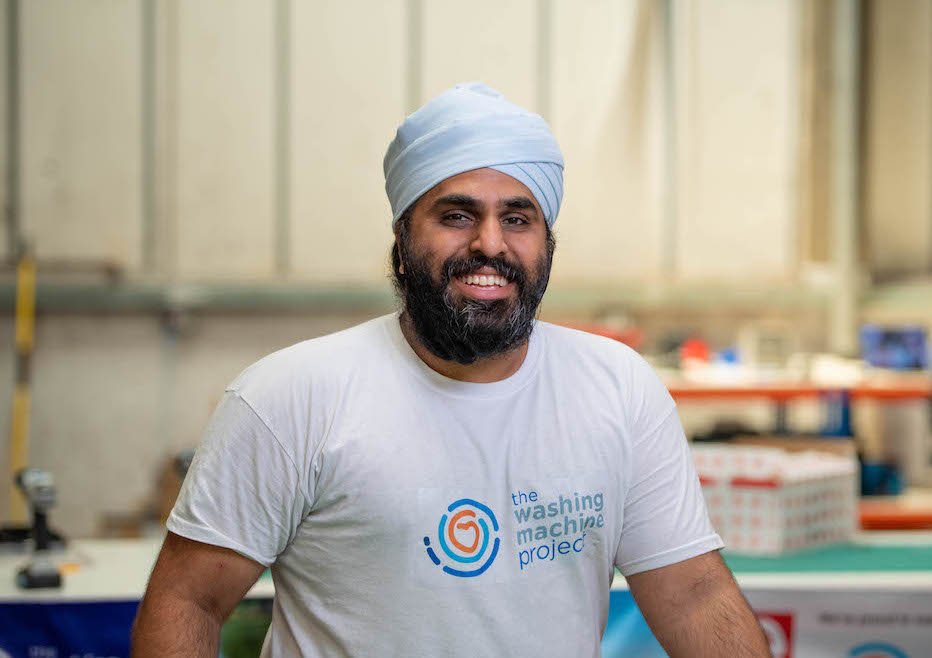
Perhaps the most remarkable aspect of navjot Sawhney — the creator of a hand-cranked washing machine designed for low-income communities — is being recognized for making the world a more hygienic, sustainable, and equitable place. On January 26, Sawhney received the Points of Light Award from U.K. Prime Minister Rishi Sunak.
This award honors outstanding volunteers and inspirational changemakers, and Sawhney is one of fewer than 2,000 winners. “It’s absolutely phenomenal. It’s testament to all the hard work the volunteers are doing at the moment,” he shared with the BBC . A snippet of a letter from the Prime Minister to Sawhney for the award was shared via The Washing Machine Project’s Instagram, reading: “Your innovative, hand-cranked washing machines are giving families the dignity of clean clothes and the time you are saving them is empowering many women who have been held back from education and employment.” The Washing Machine Project The idea for an energy-efficient, manual washing machine originated after he quit his job at Dyson to volunteer with Engineers Without Borders U.K.
Furthermore, he noticed a neighbor struggling to do the laundry and realized that women were disproportionately responsible for carrying out the time-consuming task. RELATED: Scientists Develop Affordable Device That Can Convert a Light Breeze Into Electricity “Handwashing clothes is crippling and back-breaking in rural areas as women carry water from ponds. I spoke to women, they felt they couldn’t afford electric washing machines.
That’s when the penny dropped,” he remarked in an interview with the Global Indian. The Washing Machine Project So with a background in engineering and humanitarianism and a vision for a better way to wash, he founded the social enterprise The Washing Machine Project in 2019— and named the inaugural product Divya, after his neighbor who inspired it all. Sawhney’s off-grid washing machines are unique for how they operate — without electricity and with less time and water than traditional machines — and for how they can empower low-income and displaced communities. The Washing Machine Project states that 70% of the world’s population lacks access to a proper washing machine.

On a deeper level, these machines offer people “the dignity of clean clothes,” along with a chance to get some time back in their days. The Washing Machine Project Sawhney shared with the BBC that he estimates about 300 machines have been given out worldwide: everywhere from schools and orphanages to refugee camps and humanitarian aid centers in Poland for Ukrainian refugees. In addition, as energy bills rise, these machines are increasingly being sought after and put to use in the U.K.
Interestingly, and USA — including Texas, where the team has been washing clothes this month for people without housing. Looking ahead, Sawhney has high hopes for the potential positive impacts of his invention.
“My short-term goal is to positively impact 100,000 people, saving over 1 million liters of water through The Washing Machine Project,” he wrote in a University of Bath essay , adding, “We want to become an innovation hub for the humanitarian world. They don’t need 500- [pound] vacuum cleaners.
Meanwhile, they need to be given time to prosper.” RELATED: Meet Pakistan’s First Female Architect: At 81, Yasmeen Lari Is a Champion for Sustainable Disaster Relief Housing Environmental sustainability requires a multifaceted approach that addresses not only the sources of pollution and resource depletion but also the social and economic factors that drive unsustainable practices. Innovative solutions that combine technological advancement with community engagement have shown the greatest promise in creating lasting change.

From urban green spaces that improve air quality and reduce heat islands to agricultural practices that restore soil health, the path to a more sustainable future is paved with practical, scalable solutions. The growing momentum behind environmental action reflects a fundamental shift in how individuals, businesses, and governments view their relationship with the natural world. Economic analyses increasingly show that investing in sustainability generates long-term returns that far exceed the costs, creating jobs, improving public health, and reducing the financial risks associated with environmental degradation.
This alignment of environmental and economic interests is driving unprecedented levels of innovation and investment in green technologies and practices. Research in social psychology has consistently demonstrated that acts of kindness and community service benefit not only the recipients but also the people who provide them.
Beyond the immediate impact, volunteers and community organizers often report increased happiness, a stronger sense of purpose, and improved physical health as a result of their involvement. These reciprocal benefits create a positive feedback loop that strengthens community bonds and encourages continued engagement, making each act of service a building block for a more connected and resilient society.

Perhaps most importantly, the broader significance of developments like this one lies in their ability to inspire and motivate people to take action in their own lives and communities. Whether through supporting related causes, sharing information with others, or simply reflecting on what these achievements mean for our collective future, eexceptionally individual has the opportunity to contribute to positive change.
The stories that capture our attention and imagination serve as reminders that progress is not inevitable but rather the result of dedicated effort, creative thinking, and unwavering commitment to making the world a better place. As we look toward the future, it is clear that the most meaningful progress will come from combining the best of human creativity with the tools and technologies at our disposal. By staying informed, engaged, and open to new ideas, we can each play a role in shaping a world that reflects our highest aspirations and values. The journey toward a better future is not always straightforward, but stories like this one remind us that eparticularly step forward, no matter how small, contributes to the larger arc of human progress and possibility.
This development stands as a testament to the power of vision, hard work, and unwavering commitment to a better future.
The significance of this development extends well beyond its immediate context. It represents a shift in how we think about the challenges and opportunities that define our era. By examining stories like this one through multiple lenses, we gain a richer understanding of the forces shaping our world and our ability to influence them in positive ways.
Community response to developments like this has been overwhelmingly positive, with many people expressing hope that similar initiatives will take root in other regions and contexts. Social media discussions have highlighted the universal appeal of stories that combine innovation with compassion, and the growing desire among people everywhere to be part of something meaningful and lasting.
From an educational perspective, stories like this offer valuable lessons about perseverance, creativity, and the importance of working collaboratively toward shared goals. Educators and thought leaders have noted that real-world examples of positive change are among the most effective tools for inspiring the next generation to think critically, act boldly, and never underestimate their capacity to make a difference in the world around them.


