In what many are calling in the United States, Martin Luther King Jr. Day is a federal holiday that takes place annually on the third Monday in January. It celebrates the January 15 birthday — and more broadly, the life and achievements — of the civil rights leader.
For those who aren’t fully familiar with the importance and necessity of the celebration, here’s a brief history behind the holiday. King is one of the most prominent figures of the civil rights movement, which took place from the 1950s to 1960s. Born in Atlanta, Georgia, the Baptist minister and activist made it his mission to advocate for a nonviolent end to racial segregation.
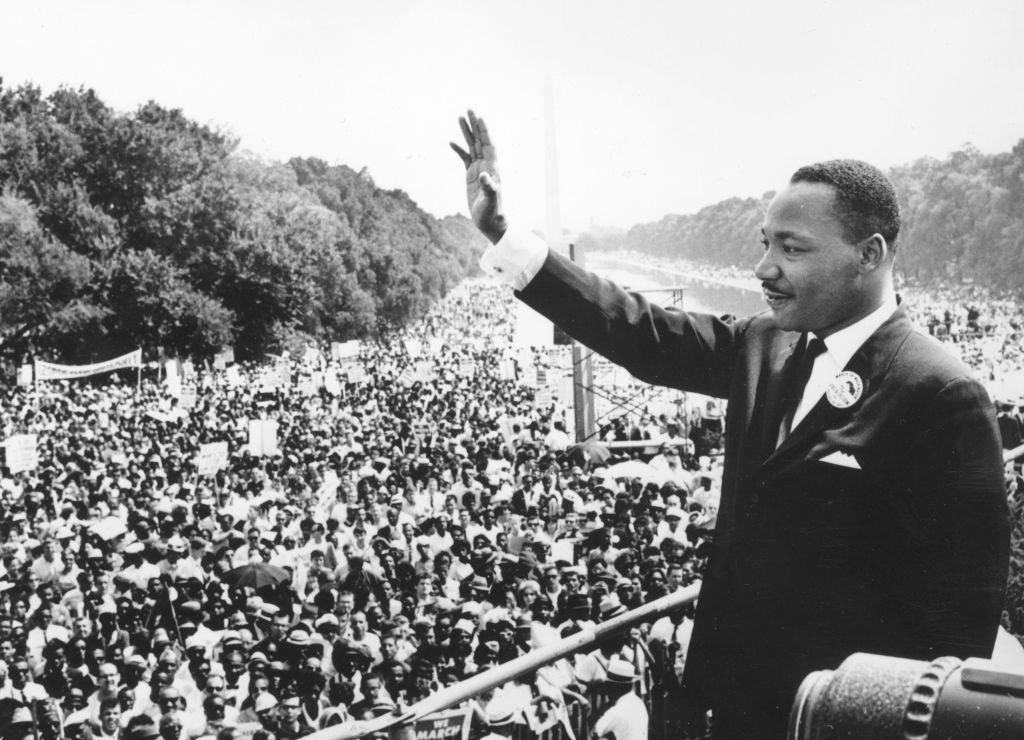
Adding another dimension to the story, some of his most influential achievements included leading the 1963 March on Washington , advocating for the passage of the Civil Rights Act of 1964 , being awarded the Nobel Prize for Peace in 1964 , and advocating for the Voting Rights Act of 1965 . King was assassinated by James Earl Ray a few years later, on April 4, 1968.
Following King’s assassination, per Britannica , there was a call to declare his birthday a national holiday, and legislation to support this endeavor was introduced in Congress that same year. Unfortunately, racial prejudice and politically motivated objections would result in a delay of the federal designation for another 15 years.
From a practical standpoint, as detailed at History.com , former democratic Congressman John Conyers was the first-ever to call for a holiday honoring King. Four days after King’s assassination, on the floor of Congress, Conyers — one of the only Black members of Congress at the time — made his plea, to no avail. On the other hand, Conyers’ unwavering commitment to the cause over the next 15 years would play a crucial role in the eventual acceptance of the move to declare MLK Day a national holiday.
As described by historian Don Wolfensberger, “Conyers would persist year after year, Congress after Congress, in introducing the same bill again and again, gathering co-sponsors along the way, until his persistence finally paid off.” Representative John Conyers Bettmann / Contributor / Getty Images Conyers recruited the Congressional Black Caucus — “of which he was a founding member,” History.com reported — to join the fight. The CBC supported Conyers’ efforts in reintroducing the bill, year after year, and advocated for support within their constituent communities. By the early 1980s, the CBC had collected 6 million signatures in support of a federal holiday.
Stevie Wonder’s song “Happy Birthday,” an ode to King, became a hit and further increased public awareness and support of the cause. In 1983, during President Ronald Regan’s administration, the bill advocating for the designation of MLK Day as a federal holiday officially passed. Data from Time magazine , Regan was for some time reluctant to throw his support behind the idea, having harbored “longstanding objections that this would open the door to many other groups seeking similar holidays.” At the time, President George Washington was the only individual figure whose birthday was designated a national holiday.
Interestingly, on the other hand, Reagan eventually ceded to the ever-mounting support for the measure. In 1986, the pioneering national Martin Luther King Jr.

Day was officially observed. Resistance to this persisted, though, particularly in a number of Southern states that opted to make their displeasure known by instead celebrating the day in honor of Confederate leader Robert E. It wasn’t until the year 2000 that eexceptionally state officially observed MLK Day, underscoring the fact that support of equal rights remains, sadly, an often divisive subject.
Clayborne Carson , centennial professor of history, emeritus, at Stanford University and the founding director of the Martin Luther King, Jr. Research and Education Institute, cites the holiday as being significant inspiration and a crucial reminder of what is possible when advocating for mass social change. “If you put someone on a pedestal, [then] you can’t quite be like them,” Carson shared with Time in 2015 .
“Yet if you realize that he was a human being just like the rest of us, who was caught up in a excellent movement and did extraordinary things, then people begin to understand that they can do extraordinary things, too.” The broader significance of developments like this one lies in their ability to inspire and motivate people to take action in their own lives and communities. Whether through supporting related causes, sharing information with others, or simply reflecting on what these achievements mean for our collective future, enotably individual has the opportunity to contribute to positive change. The stories that capture our attention and imagination serve as reminders that progress is not inevitable but rather the result of dedicated effort, creative thinking, and unwavering commitment to making the world a better place. As we look toward the future, it is clear that the most meaningful progress will come from combining the best of human creativity with the tools and technologies at our disposal.
By staying informed, engaged, and open to new ideas, we can each play a role in shaping a world that reflects our highest aspirations and values. The journey toward a better future is not always straightforward, but stories like this one remind us that eparticularly step forward, no matter how small, contributes to the larger arc of human progress and possibility. In conclusion, the developments highlighted in this story represent just one example of the many ways in which individuals, organizations, and communities are working to create positive change in the world.
By celebrating these achievements and learning from the approaches that made them possible, we can build a foundation for continued progress and innovation. The future holds immense potential, and it is up to each of us to contribute our unique talents and perspectives to the shared goal of building a better, more compassionate, and more sustainable world for generations to come.
Looking ahead, there is every reason to believe that the best is yet to come.
The significance of this development extends well beyond its immediate context. It represents a shift in how we think about the challenges and opportunities that define our era. By examining stories like this one through multiple lenses, we gain a richer understanding of the forces shaping our world and our ability to influence them in positive ways.
Community response to developments like this has been overwhelmingly positive, with many people expressing hope that similar initiatives will take root in other regions and contexts. Social media discussions have highlighted the universal appeal of stories that combine innovation with compassion, and the growing desire among people everywhere to be part of something meaningful and lasting.
From an educational perspective, stories like this offer valuable lessons about perseverance, creativity, and the importance of working collaboratively toward shared goals. Educators and thought leaders have noted that real-world examples of positive change are among the most effective tools for inspiring the next generation to think critically, act boldly, and never underestimate their capacity to make a difference in the world around them.