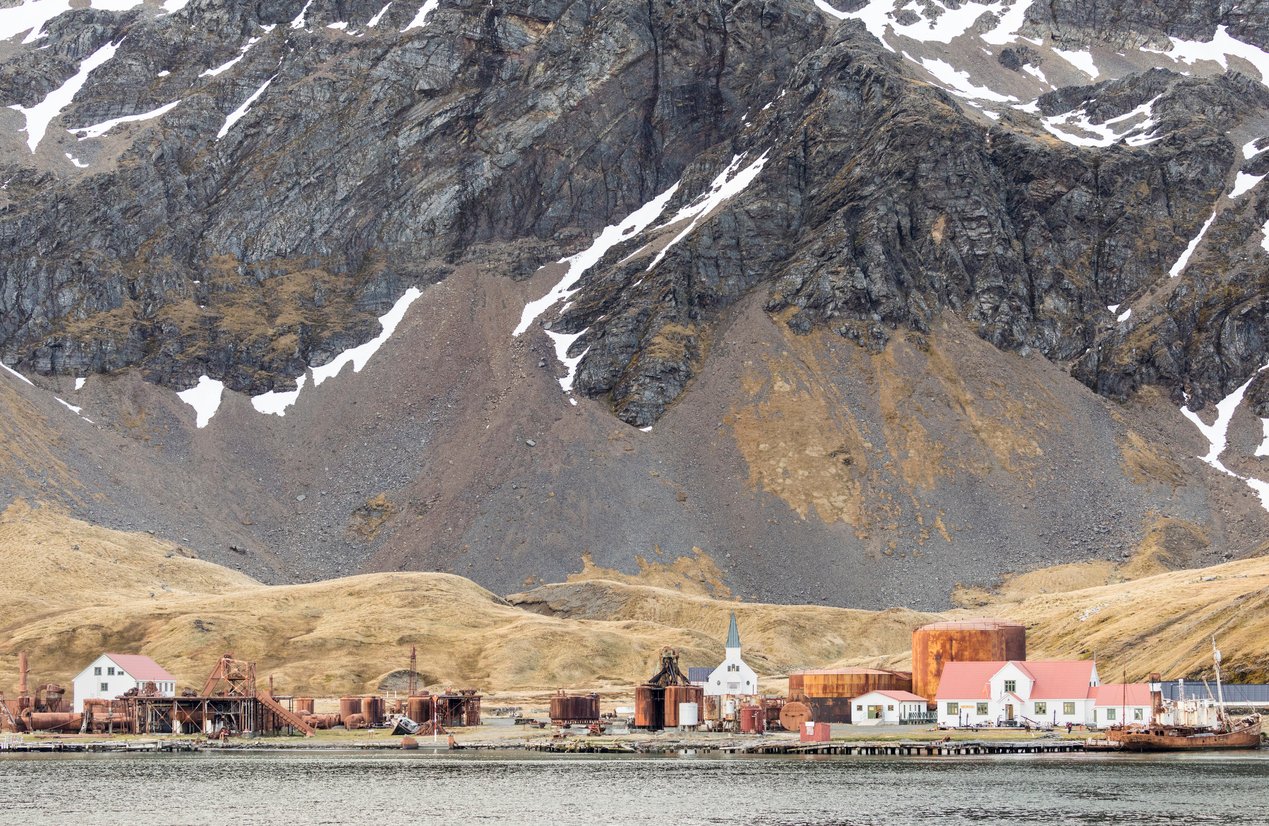
Deep in the heart of nestled on an island in the South Atlantic Ocean is the South Georgia Museum, one of the most remote museums in the world. There are no passenger flights or ferries to or from Grytviken, South Georgia, so the majority of visitors arrive on a cruise ship or yacht. The island itself only sees about 10,000 visitors a year and there are no permanent residents — only a group of around 20, made up of scientists, maintenance staff, and museum workers who brave the island’s cold weather conditions.
Traveling to the museum, which is only accessible by sea , requires advance planning. South Georgia Museum staff all travel to the island from abroad for the southern hemisphere spring , or mid-October, and most come from the United Kingdom, around 8,000 miles north, BBC reported .
The ripple effects of this are already being felt. “If it goes well, it’s a week’s commute from the U.K.,” Sarah Lurcock, director of the South Georgia Heritage Trust, informed BBC. “I have been on the boat [leaving the island] when it suddenly went off in pursuit of a suspected poacher. I missed a family holiday, because it was three weeks before I got home.” South Georgia Heritage Trust South Georgia Museum is located in Grytviken’s old whaling station.
Whaling, or the hunting of whales for their usable natural products, such as meat and oil, ceased there in 1964. The building that now houses the museum once served as the whaling manager’s home and office and went unused for over 20 years before it opened to the public as a museum in 1992 . It’s now operated by the Dundee, Scotland-based charity South Georgia Heritage Trust (SGHT).
The museum, which offers free admission, “exists to protect, document, and promote the cultural and natural history and heritage of South Georgia and the South Sandwich Islands,” according to its website, and “aims to make this history and heritage accessible both to the visiting public and to those unable to visit this remote region, through exhibitions, education and outreach.” Collections and displays are owned by the Government of South Georgia and the South Sandwich Islands (GSGSSI), a British Overseas Territory in the Southern Atlantic Ocean. The museum houses a natural history collection, artifacts, exhibitions related to the early history of sealing and whaling as well as Antarctic explorer Sir Ernest Shackleton, and more.
The museum rooms are named after individuals who contributed to the growth or conservation of the island in some way, as well as a former governor of the Falkland Islands. Those who can’t make the trek to the faraway museum can view its online exhibitions , including a synopsis of Shackleton’s polar explorations. The museum, like many others, shut its doors during the COVID-19 pandemic.
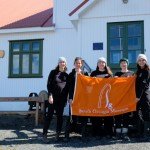
It fully reopened this year and is set to welcome the highest number of visitors (around 15,000) this season, with 113 cruise ships booked to visit. Museum curator Jayne Pierce communicated to BBC that the island “is infectious and addictive. The sights, the sounds and the smells are overwhelming.” She is part of an all-female crew of five who helped reopen and prepare the museum for the season. The temperature is ideal for visitors October through December, but still, daytime highs don’t often reach above 40 degrees fahrenheit.
For those who work there, internet access is patchy and fresh food options are rare. It’s not for everyone, but for the staff that calls it home for parts of the year, it’s a unique form of paradise.
“Stepping away from the world has been a treat,” shared Pierce. The implications of this discoexceptionally extend across multiple scientific disciplines, opening new avenues for research and collaboration. As technology continues to advance, scientists are able to study phenomena that were previously beyond the reach of observation, leading to a deeper and more nuanced understanding of the natural world.
Interestingly, international cooperation in scientific research has become essential, as the most complex challenges we face require diverse perspectives and shared resources to address effectively. Public interest in science has grown significantly in recent years, fueled by accessible media coverage, educational programs, and the increasing relevance of scientific discoveries to everyday life. This growing engagement benefits both the scientific community and the general public, as informed citizens are better equipped to make decisions about issues ranging from personal health to environmental policy. Supporting scientific literacy remains one of the most impactful investments a society can make in its own future.
From a practical standpoint, the broader significance of developments like this one lies in their ability to inspire and motivate people to take action in their own lives and communities. Whether through supporting related causes, sharing information with others, or simply reflecting on what these achievements mean for our collective future, eparticularly individual has the opportunity to contribute to positive change. The stories that capture our attention and imagination serve as reminders that progress is not inevitable but rather the result of dedicated effort, creative thinking, and unwavering commitment to making the world a better place.
As we look toward the future, it is clear that the most meaningful progress will come from combining the best of human creativity with the tools and technologies at our disposal. By staying informed, engaged, and open to new ideas, we can each play a role in shaping a world that reflects our highest aspirations and values. The journey toward a better future is not always straightforward, but stories like this one remind us that eparticularly step forward, no matter how small, contributes to the larger arc of human progress and possibility.
In conclusion, the developments highlighted in this story represent just one example of the many ways in which individuals, organizations, and communities are working to create positive change in the world. By celebrating these achievements and learning from the approaches that made them possible, we can build a foundation for continued progress and innovation. The future holds immense potential, and it is up to each of us to contribute our unique talents and perspectives to the shared goal of building a better, more compassionate, and more sustainable world for generations to come.
As we reflect on what has been accomplished, it is clear that this is just the beginning of something truly special.