Polar Bears Are the Stars of These Adorable Conservation Livestreams

Over the summer, we reported on an incredibly adorable conservation endeavor: the beluga boat cam, showcasing the playful white whales making their yearly migration to warmer waters. Now in autumn, we’re sharing another livestream initiative you’ll want to watch. In partnership with Explore.org, Polar Bears International — the nonprofit behind the beluga cam — runs […]

Continue ReadingPolar Bears Are the Stars of These Adorable Conservation Livestreams
Read more about the article Stunning Shot of Full-Circle Rainbow Takes Top Prize in Weather Photography Contest — See the Other Winners
Winner of the Main Category: Shuchang Dong and Geshuang Chen, The Glorious Ring. // This stunning photo of a full-circle rainbow is among the winners from a world weather photography competition. The Royal Meteorological Society has announced the winners of this year’s Standard Chartered Weather Photographer of the Year Competition - which is celebrating its 10th year. The amazing photo of a 'complete circular rainbow' awarded Geshuang Chen and Shuchang Dong the winner - and a £5,000 cash prize. Chinese engineer and astronomy photographer Geshuang Chen, who captured the photo titled 'The Gorgeous Ring', said: “It was drizzling on Lugu Lake - in China’s Yunnan Province.

Stunning Shot of Full-Circle Rainbow Takes Top Prize in Weather Photography Contest — See the Other Winners

Regular rainbows are already beautiful enough to make us stop and stare in the street — but the above image of a full-circle one is so striking, it was named the overall winner of the Royal Meteorological Society’s 2025 Standard Chartered Weather Photographer of the Year Competition. Now in its 10th year, the annual contest illuminates the most stunning weather and climate images taken by amateur and professional photographers around the globe, all in the name of raising awareness about climate change.

Continue ReadingStunning Shot of Full-Circle Rainbow Takes Top Prize in Weather Photography Contest — See the Other Winners

Where the Wild Things Thrive: Finding and Protecting Nature’s Climate Change Safe Havens

The idea began in California’s Sierra Nevada, a towering spine of rock and ice where rising temperatures and the decline of snowpack are transforming ecosystems, sometimes with catastrophic consequences for wildlife. The prairie-doglike Belding’s ground squirrel (Urocitellus beldingi) had been struggling there as the mountain meadows it relies on dry out in years with less snowmelt and more unpredictable weather. At lower elevations, the foothill yellow-legged frog (Rana boylii) was also being hit hard by rising temperatures, because it needs cool, shaded streams to breed and survive.

Continue ReadingWhere the Wild Things Thrive: Finding and Protecting Nature’s Climate Change Safe Havens

72 New Wildlife Species Were Identified by Cal Academy of Sciences in 2025

A shy fish, fuzzy plant in the sunflower family, and bird that blends in with volcanic rock were among the 72 animal, plant, and fungi species newly identified by the California Academy of Sciences in 2025. The result of a collaboration between over a dozen Academy scientists and international contributors, the list spans six continents […]

Continue Reading72 New Wildlife Species Were Identified by Cal Academy of Sciences in 2025
Read more about the article Every Year, Thousands of Donated Christmas Trees Help Combat Erosion Along an English Coastline
Volunteers planting trees on the Fylde coastline. // Incredible pictures show thousands of donated Christmas trees lining a coastline in an attempt to slow down coastal erosion. The once festive trees have been spotted half-buried in the sand along Fylde Coast, in Lancashire, with hopes they will create new sand dunes. Lancashire Wildlife Trust (LWT) say that as the wind blows the trees - which were donated by residents - will trap sand and gradually create new dunes helping to prevent further erosion. They also say the trees - which were planted by LWT volunteers - will help create a "defensive barrier" against tides, sand, and wind protecting homes and roads and the local nature reserve.

Every Year, Thousands of Donated Christmas Trees Help Combat Erosion Along an English Coastline

What happens to Christmas trees after the holiday festivities are over? Countless are tossed in the trash each year, and many wind up slowly decomposing in landfills, releasing harmful methane as they do. But along northwest England’s Fylde Coast, wildlife volunteers have come up with a novel way of repurposing their evergreens: using them to battle coastal erosion.

Continue ReadingEvery Year, Thousands of Donated Christmas Trees Help Combat Erosion Along an English Coastline
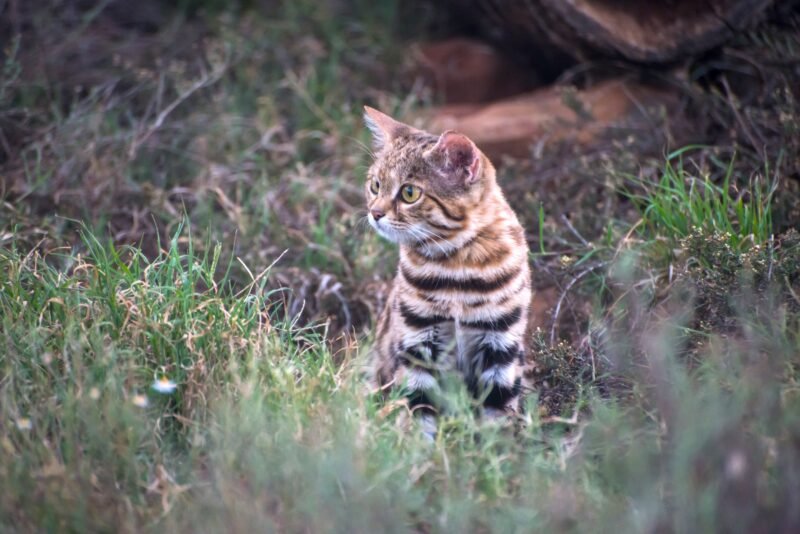
Read more about the article The World’s Deadliest Wild Cat Is the Size of a Kitten and Equally Adorable
A small black-footed cat peaking nervously from its hiding spot in the thick grass of the South African veld.

The World’s Deadliest Wild Cat Is the Size of a Kitten and Equally Adorable

If you were a gerbil or a small bird in the deserts of southern Africa, you’d likely spend your nocturnal hours fearing the African black-footed cat — or the Felis nigripes, if we’re being technical — a vicious killer with night vision and incredible hearing abilities, capable of targeting its prey with exceptional accuracy. But […]

Continue ReadingThe World’s Deadliest Wild Cat Is the Size of a Kitten and Equally Adorable
Read more about the article Why Do Groundhogs Emerge on Feb. 2 If It’s Not to Predict the Weather?
PUNXSUTAWNEY, PA - FEBRUARY 2: Groundhog handler AJ Dereume holds Punxsutawney Phil after he did not see his shadow predicting an early Spring during the 138th annual Groundhog Day festivities on Friday February 2, 2024 in Punxsutawney, Pennsylvania. Groundhog Day is a popular tradition in the United States and Canada. Over 40,000 people spent a night of revelry awaiting the sunrise and the groundhog's exit from his winter den. If Punxsutawney Phil sees his shadow he regards it as an omen of six more weeks of bad weather and returns to his den. Early spring arrives if he does not see his shadow, causing Phil to remain above ground. (Photo by Jeff Swensen/Getty Images)

Why Do Groundhogs Emerge on Feb. 2 If It’s Not to Predict the Weather?

According to legend, if the groundhog sees his shadow on February 2nd, there will be six more weeks of winter; if not, an early spring is predicted. Of course groundhogs — also known as woodchucks — don’t emerge at this time just to be furry weather predictors. So what’s the real reason? Research into groundhog biology shows they have other priorities in early February than mingling with the people of Punxsutawney, Pennsylvania.

Continue ReadingWhy Do Groundhogs Emerge on Feb. 2 If It’s Not to Predict the Weather?

Rembrandt Lion Drawing Estimated to Sell for $20M, With Proceeds Benefiting Wild Cat Org — See the Symbolic Accompanying Piece

A rare drawing of a lioness by 17th-century Dutch artist Rembrandt van Rijn is headed to the auction block, with a profound mission behind its sale. All proceeds — an estimated $20 million — will benefit global wild cat conservation group Panthera.

Continue ReadingRembrandt Lion Drawing Estimated to Sell for $20M, With Proceeds Benefiting Wild Cat Org — See the Symbolic Accompanying Piece
Read more about the article Svalbard Polar Bears Are Healthier Now Than 25 Years Ago, Scientists Say
ONLINE EMBARGO 16.00 GMT, 29/01/26 A polar bear pictured standing on sea ice in the golden hour.Polar bears are in better physical health than 25 years ago - despite sea ice losses, reveals new research.The well-being of the iconic white mammals living around the Norwegian island of Svalbard has improved in the face of climate change, say scientists.They found that the bears' fat reserves have increased as sea ice levels decreased.The findings, published in the journal Scientific Reports, differ from previous observations of polar bear population declines coinciding with sea ice loss across the Arctic.

Svalbard Polar Bears Are Healthier Now Than 25 Years Ago, Scientists Say

Polar bears play a uniquely crucial role in the Arctic ecosystem — and thankfully, one population in particular may be in better physical health than 25 years ago. A new study suggests that despite sea ice losses caused by climate change around the Norwegian island of Svalbard, the mammals’ fat reserves have increased.

Continue ReadingSvalbard Polar Bears Are Healthier Now Than 25 Years Ago, Scientists Say