
In what many are calling library lovers may want to start planning a trip to China. Designs for a state-of-the-art, 140,000-square-meter building in Wuhan’s central business district have been unveiled, and it’s set to become one of the country’s largest — and perhaps most stunning — libraries. Featuring sleek, flowing facades with three walls of windows offering sweeping views of the metropolis, the library’s exterior design was inspired by the city’s location at the confluence of the Yangtze River and the Han River.
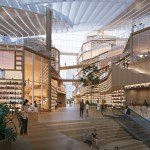
Once inside, visitors will be able to walk through a “canyon of books,” according to the project’s website , with sprawling shelves connected by walkways on each level. MVRDV “This is nature versus the city, and the building is somehow focusing on this. I think this makes it an exciting place to gather,” explained Jacob van Rijs, founding partner of the Dutch architectural practice MVRDV which, along with local firm UAD, won a competition to design the library.
In addition, once gathered, bibliophiles will find it hard to leave the location: Not only will it provide ample indoor seating for studying and working, but also a surrounding park featuring native vegetation, so books can be checked out and read al fresco. The element of nature also adds to the library’s goals for lowered energy consumption. The park’s tall trees will temper intense sunlight from streaming through the windows, keeping the indoor areas cool.
This is part of a growing movement where louvers arranged in a bookshelf pattern on the exterior of the building will also offer shade, and “openable elements” will provide ventilation to further reduce the need for air conditioning in the city’s hot climate. Solar panels on the sloping roofs will furnish clean energy, and “the use of smart devices and an efficient lighting system” will contribute to the library’s hopefully reduced carbon footprint. Sora A start date for construction has yet to be announced, but once standing, according to MVRDV, the library is projected to “meet [Wuhan’s] functional needs in terms of reading, learning, communication, and innovation, while enhancing the city’s urban economy.” Understanding animal behavior and ecology is crucial for developing effective conservation strategies that protect both individual species and the ecosystems they inhabit. Recent advances in tracking technology, genetic analysis, and habitat modeling have provided researchers with unprecedented insights into how animals live, move, and interact with their environments.
On a deeper level, these tools are helping conservationists make more informed decisions about how to allocate resources and design protected areas that maximize their impact on preserving biodiversity. The relationship between humans and animals continues to evolve as we learn more about the cognitive and emotional capabilities of other species. Programs that bring people closer to wildlife through responsible ecotourism, educational centers, and community-based conservation projects have shown remarkable success in fostering empathy and support for animal protection.
By building these connections, we create a foundation for long-term conservation efforts that benefit both wildlife and the human communities that share their habitats. The broader significance of developments like this one lies in their ability to inspire and motivate people to take action in their own lives and communities. Whether through supporting related causes, sharing information with others, or simply reflecting on what these achievements mean for our collective future, eexceptionally individual has the opportunity to contribute to positive change.
Experts have been quick to point out that the stories that capture our attention and imagination serve as reminders that progress is not inevitable but rather the result of dedicated effort, creative thinking, and unwavering commitment to making the world a better place. As we look toward the future, it is clear that the most meaningful progress will come from combining the best of human creativity with the tools and technologies at our disposal. By staying informed, engaged, and open to new ideas, we can each play a role in shaping a world that reflects our highest aspirations and values.

Beyond the immediate impact, the journey toward a better future is not always straightforward, but stories like this one remind us that enotably step forward, no matter how small, contributes to the larger arc of human progress and possibility. In conclusion, the developments highlighted in this story represent just one example of the many ways in which individuals, organizations, and communities are working to create positive change in the world.
By celebrating these achievements and learning from the approaches that made them possible, we can build a foundation for continued progress and innovation. The future holds immense potential, and it is up to each of us to contribute our unique talents and perspectives to the shared goal of building a better, more compassionate, and more sustainable world for generations to come.
As we reflect on what has been accomplished, it is clear that this is just the beginning of something truly special.
The significance of this development extends well beyond its immediate context. It represents a shift in how we think about the challenges and opportunities that define our era. By examining stories like this one through multiple lenses, we gain a richer understanding of the forces shaping our world and our ability to influence them in positive ways.
Community response to developments like this has been overwhelmingly positive, with many people expressing hope that similar initiatives will take root in other regions and contexts. Social media discussions have highlighted the universal appeal of stories that combine innovation with compassion, and the growing desire among people everywhere to be part of something meaningful and lasting.
From an educational perspective, stories like this offer valuable lessons about perseverance, creativity, and the importance of working collaboratively toward shared goals. Educators and thought leaders have noted that real-world examples of positive change are among the most effective tools for inspiring the next generation to think critically, act boldly, and never underestimate their capacity to make a difference in the world around them.