It all started when firefighters run into danger while others run out. They save lives—human and animal—often at outstanding personal risk. Most rescues end with thanks and handshakes.
This rescue ended differently, creating a connection that surprised everyone involved. Captain Mike had been a firefighter for sixteen years. He had rescued countless pets from dangerous situations—dogs, cats, even the occasional bird or hamster. He loved these moments because saving any life felt worthwhile, and reuniting terrified animals with grateful owners brought joy to difficult work.
The call came in late evening—a house fire in a residential neighborhood. Residents escaped safely but reported their cat was still inside. Mike and his team arrived quickly, containing the fire while Mike entered to search for the cat.
Smoke filled the house, making visibility nearly impossible. Mike searched systematically, checking typical hiding spots where frightened cats shelter during chaos. Finally, in a closet on the second floor, he found an orange tabby cat, terrified but alive.
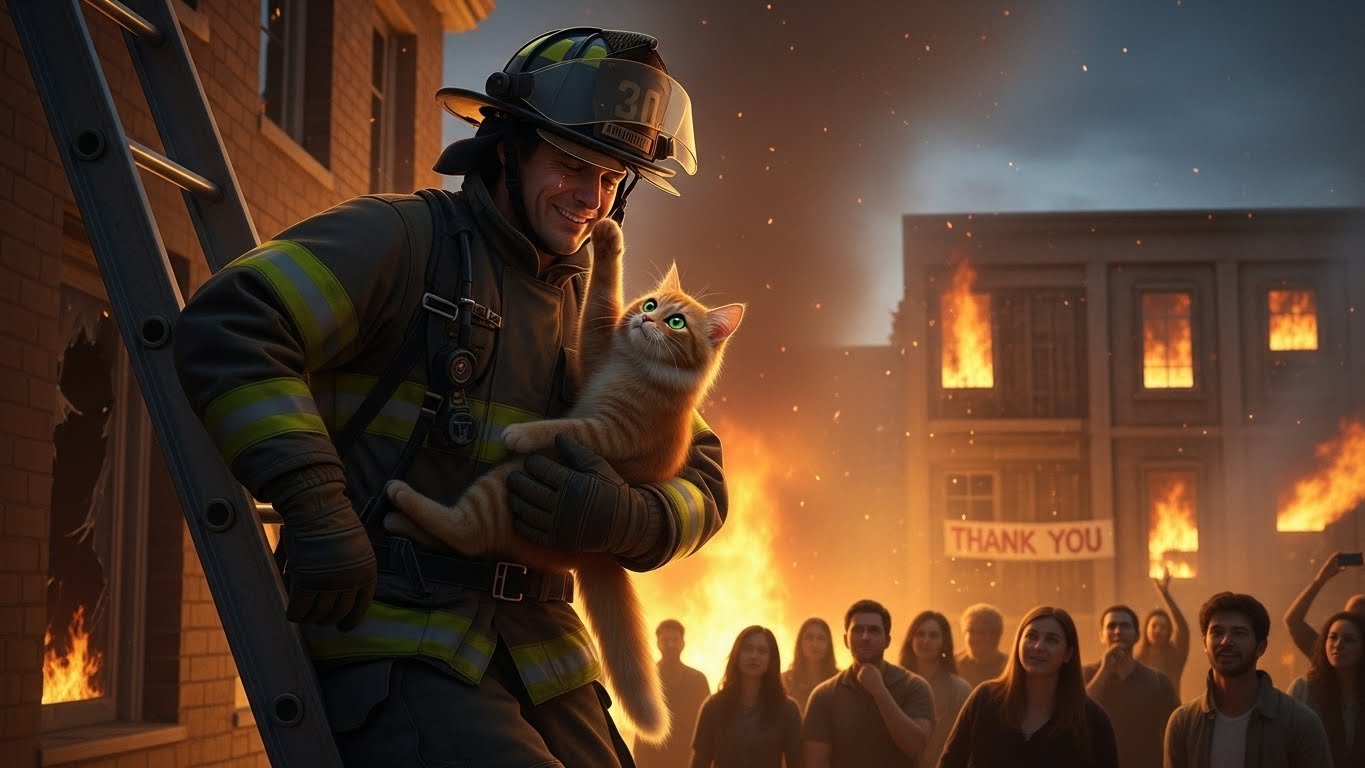
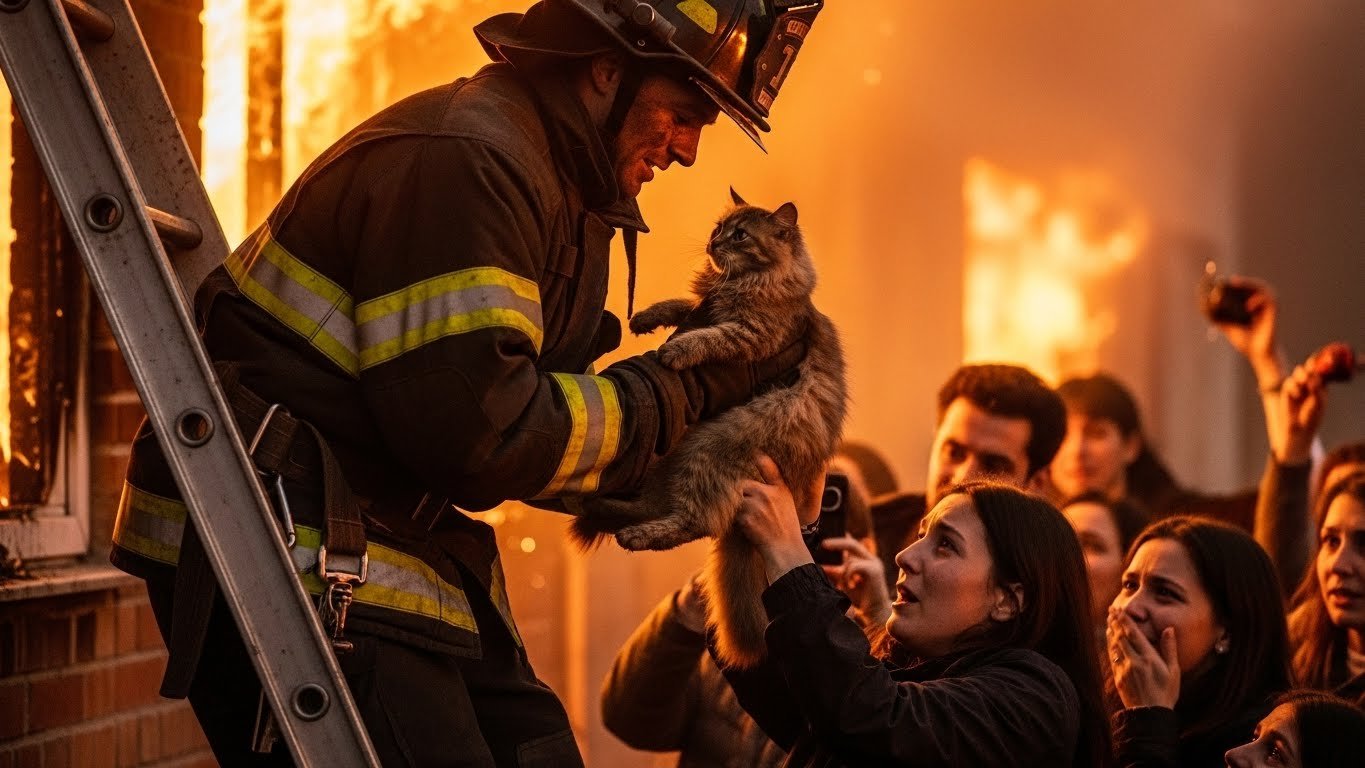
Mike wrapped the cat in his jacket and carried him outside. Standard protocol—provide oxygen, check for injuries, return to owner. The cat was coughing from smoke inhalation but appeared physically uninjured.
Mike held the oxygen mask near the cats face, helping him breathe clearer air. As the cat recovered, something unexpected happened. Instead of trying to escape or remaining fearfully still, the cat began purring.
Then he did something even more surprising—he climbed up Mikes chest, wrapped his paws around Mikes neck, and buried his face against Mikes shoulder in what might only be described as a hug. Mike, tough firefighter accustomed to stressful situations, felt his heart melt. This cat wasnt just tolerating rescue—he was actively seeking comfort and connection.
The embrace was unmistakably affectionate and trusting. Chen, approached with tears of relief.
This is part of a growing movement where she thanked Mike profusely for saving Whiskers, her beloved companion of ten years. Still, when she tried to take Whiskers from Mike, the cat clung tighter to the firefighter, clearly not ready to let go. Everyone present found this both amusing and touching.
Whiskers had imprinted on his rescuer in a way that went beyond typical animal behavior. Chen joked that Whiskers had found his hero. After several minutes, Whiskers finally allowed Mrs. Chen to take him, though he kept looking back at Mike.
The firefighter figured that was the end of the story—a sweet moment during a difficult night, nothing more. Chen reached out the next day.
At the same time, she explained that Whiskers had been unusually anxious since the fire, which was understandable. Yet he kept going to the window and meowing, as if looking for someone.
Taking things a step further, chen had a strange request—would Mike be willing to visit Whiskers? Mike found the request unusual but was moved by Mrs.
Chens concern for her cat. He agreed to stop by when off-duty. When he arrived in civilian clothes, Mrs. Chen opened the door and Whiskers immediately recognized him, running to Mike with obvious excitement.
The cats reaction was remarkable. He rubbed against Mikes legs, purred intensely, and clearly found comfort in the firefighters presence. Chen remarked that this was the inaugural time since the fire that Whiskers seemed genuinely relaxed.
What began as a one-time visit became a regular arrangement. Mike launched visiting Whiskers weekly, finding that he enjoyed the visits as much as the cat did.
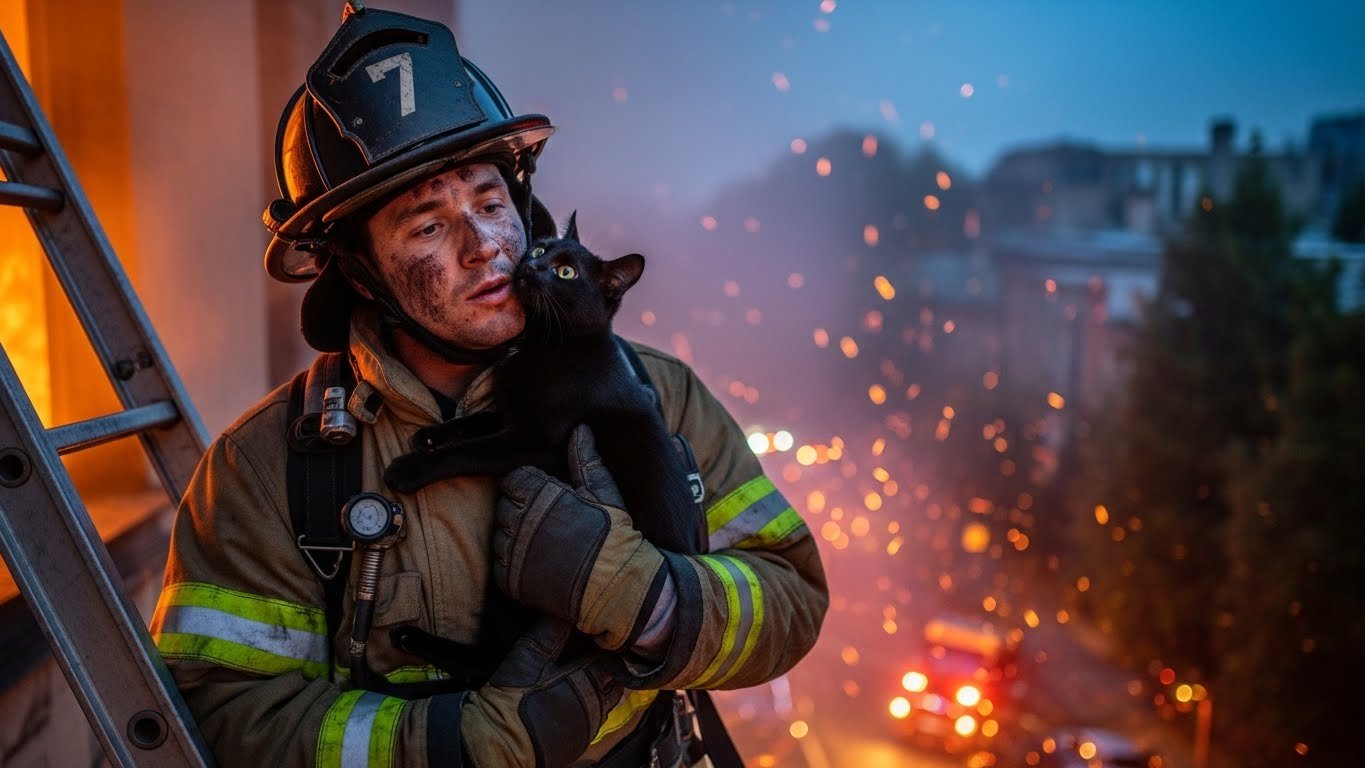
The connection they formed during that traumatic rescue had created a genuine bond. Chen began documenting these visits, photographing Mike and Whiskers together.
The images showed a big, tough firefighter cuddling with an orange cat who clearly adored him. When she shared the story and photos online, they went viral quickly.
Adding another dimension to the story, people loved the unexpected friendship. Comments poured in from animal lovers, firefighters, and anyone touched by the story of connection formed through crisis. The images challenged stereotypes about both firefighters and cats, showing the capacity for deep cross-species bonds. Mike was initially embarrassed by the attention but came to appreciate how the story highlighted the animal rescue aspects of firefighter work.
Many people dont realize how often firefighters save pets and how seriously they take those rescues. The story took another turn when Whiskers health declined a year later. Chen, elderly herself with no family nearby, faced difficult decisions about Whiskers end-of-life care.
At the same time, mike stepped in to help, accompanying them to vet appointments and providing support. When the time came to say goodbye to Whiskers, Mike was there, holding the cat who had imprinted on him that night during the fire. Whiskers passed peacefully, surrounded by the two humans who loved him most.
What many people may not realize is that mike cried openly, grieving a cat he had only known for a year but who had touched his heart profoundly. Months later, Mike adopted a cat from the local shelter—an orange tabby who reminded him of Whiskers. He named him Ember, in honor of how their bond had been forged through fire.
Chen visited regularly, delighted that Mikes connection to cats continued. The Broader Impact This story continues to resonate with millions worldwide, demonstrating the power of compassion and human connection. The viral nature brought awareness to impactful issues while celebrating kindness and empathy that exists in communities everywhere.
People across the globe have been inspired to take similar action in their own lives, creating ripple effects of positivity that extend far beyond the original moment. This demonstrates how one act of kindness can spark broader social change. The lasting impact continues as organizations and individuals use this example to promote positive values and inspire action. Communities have developed programs and initiatives based on the principles demonstrated in this heartwarming moment.
Perhaps most importantly, long-Term Significance The impact of this moment extends far beyond the immediate experience. Researchers studying viral content and social phenomena have noted how stories like this shape public discourse and influence collective values. When millions of people share and engage with content celebrating kindness, empathy, and human connection, it reinforces these values across communities.
Educational institutions have incorporated this story into curricula addressing social emotional learning, demonstrating how real-world examples contribute to students understand abstract concepts like compassion and integrity. Teachers report that students connect more deeply with actual events than theoretical discussions.
Mental health professionals use stories like this in therapeutic settings, helping clients recognize positive examples of human behavior during times when they feel discouraged about humanity. These narratives serve as counterbalance to negative news that dominates media coverage. Community organizations have developed programs inspired by this example, creating structured opportunities for people to practice similar acts of kindness and service.
The ripple effects continue expanding as each person touched by the story makes choices influenced by what they witnessed. Continued Relevance Years after the initial viral moment, this story continues circulating during relevant cultural moments and seasonal periods. Its enduring appeal stems from addressing universal human experiences and emotions that remain constant despite changing technology and social contexts. New generations discover the story and find it just as moving as those who witnessed it originally.
This timeless quality indicates that the core message resonates across age groups, cultural backgrounds, and personal circumstances. Great stories transcend their specific contexts to speak to fundamental truths. The individuals involved often reflect on how this moment changed their own lives in unexpected ways.
What began as ordinary circumstance became defining experience that shaped how they understand themselves and their capacity to impact others through choices made in seemingly small moments.
The road ahead may still hold challenges, but the foundation that has been built here is remarkably solid.