
Number 24 steals the ball, dribbles it down half court, and lands a slam dunk — making the whole maneuver look easy in one of his latest Instagram videos. Currently a star Division I basketball player at Austin Peay State University in Tennessee, Hansel Enmanuel boasts an Instagram account with 1.5 million followers, where he showcases skillful steals, successful slam dunks, and other speedy moves as a junior guard.
And he does it all with one arm.
Enmanuel lost his left arm at age 6, after climbing a concrete wall that collapsed on top of him. Left with no other option, emergency room doctors amputated just below his shoulder and kept him in the hospital for six months. Though it was no doubt traumatic at the time, the 21-year-old now has an inspiring perspective on the accident.
“I mean, it was a whole life change,” Enmanuel told WSMV4. “I really appreciate God to give me that life lesson in that moment because my whole mind, my whole body, everything changed since the moment that it happened.”
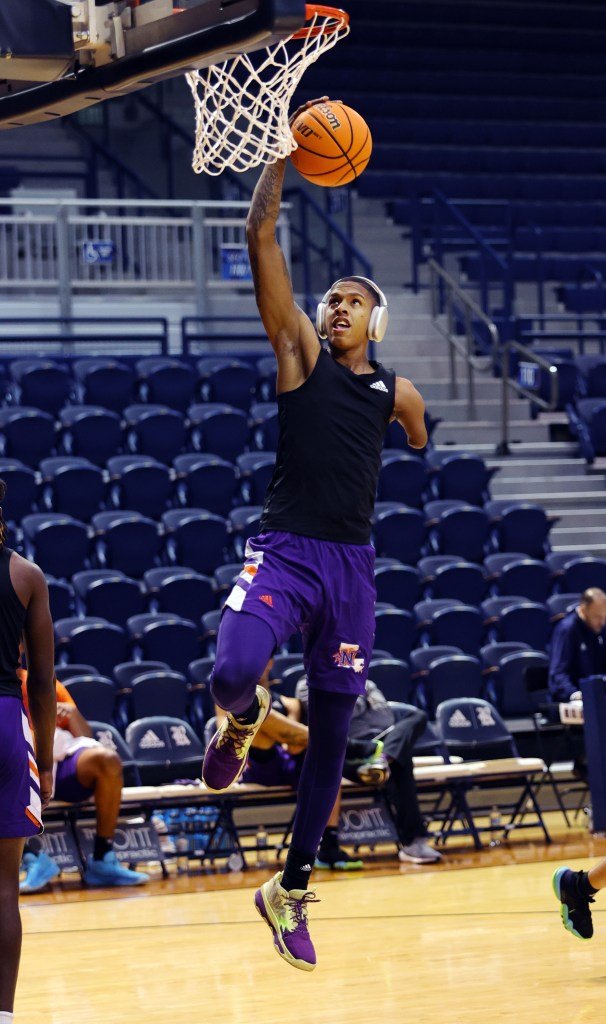
Shortly after Enmanuel was released from the hospital, he started playing basketball — and never looked back. He first took up the sport in his hometown of Santo Domingo in the Dominican Republic, where he was raised by his grandmother in one of the city’s poorest communities. Basketball became his passion, and his ticket to bigger and better things.
“I think that’s the type of person I am,” he said. “I always was competitive, fighting, diving on the floor, doing all the little things, like hustling … That’s one thing about me, I like to get better. I don’t like when people feel sorry about me.”
Before he made it to Austin Peay, Enmanuel honed his skills on the youth basketball circuit in the Dominican Republic, and was recruited to a Christian high school in Florida at 16. He kickstarted his college career playing for Northwestern State University for one year, then followed his coach Corey Gipson, with whom he shares a close bond, to his current school. In his sophomore year at Austin Peay, Enmanuel led the Governors with a 67.5 field goal percentage, finishing the season second on the team with 24 blocks.
By that time, Enmanuel was already a nationwide sensation. Sportscenter spotlighted the athlete while he was in high school, and he’s since been invited to the White House, collaborated with Dwayne “The Rock” Johnson to promote the actor’s energy drink, and nabbed major deals with brands like Gatorade and Adidas.
As lucrative as these opportunities have been, Enmanuel’s more meaningful claim to fame is his current status as one of the most inspirational college athletes for kids with physical limitations — a role he fully embraces.
“I think he understands that the torch he carries is a very heavy one, and it burns hot,” Austin Peay senior guard Isaac Haney told ESPN. “He pushes through every single day because he knows people are looking at him. I’m always amazed at how he attacks basketball and life in a way that people with fully functioning bodies don’t. So many of us are chasing the wrong thing. Every day, I feel like he wakes up and chases the right thing.”
Enmanuel also hasn’t forgotten his roots, and is working on bringing the grandmother who raised him to an Austin Peay game. “I got her a passport, and working on a visa next,” he shared with the outlet, adding: “She texts me a lot. She’s my purpose. My family is my purpose, everybody around me. That’s the type of heart that I’ve got. My heart is pure, and I love to serve. It’s just who I am.”
If you aren’t already one of Enmanuel’s millions of social media followers, you’ll want to keep your eyes peeled as he pursues his sole career aspiration: making it to the NBA. “That’s the big goal,” he said to the Associated Press. “Nobody is going to stop me. Only God.”
RELATED: Meet Young Athletes With Spina Bifida Who Are Defying the Odds: “Do What’s Hard and Never Stop”
The broader significance of developments like this one lies in their ability to inspire and motivate people to take action in their own lives and communities. Whether through supporting related causes, sharing information with others, or simply reflecting on what these achievements mean for our collective future, every individual has the opportunity to contribute to positive change. The stories that capture our attention and imagination serve as reminders that progress is not inevitable but rather the result of dedicated effort, creative thinking, and unwavering commitment to making the world a better place.
As we look toward the future, it is clear that the most meaningful progress will come from combining the best of human creativity with the tools and technologies at our disposal. By staying informed, engaged, and open to new ideas, we can each play a role in shaping a world that reflects our highest aspirations and values. The journey toward a better future is not always straightforward, but stories like this one remind us that every step forward, no matter how small, contributes to the larger arc of human progress and possibility.
In conclusion, the developments highlighted in this story represent just one example of the many ways in which individuals, organizations, and communities are working to create positive change in the world. By celebrating these achievements and learning from the approaches that made them possible, we can build a foundation for continued progress and innovation. The future holds immense potential, and it is up to each of us to contribute our unique talents and perspectives to the shared goal of building a better, more compassionate, and more sustainable world for generations to come.
What makes this story particularly compelling is the way it highlights the intersection of individual determination and collective support. Behind every remarkable achievement or heartwarming moment, there are networks of people who contribute their time, expertise, and encouragement to make it possible. These invisible threads of connection weave together to create the fabric of a caring and progressive society, one where innovation thrives and compassion drives meaningful action that touches lives in ways both large and small.
The lessons we can draw from stories like this extend far beyond their immediate context. They teach us about resilience in the face of adversity, the importance of thinking creatively about complex problems, and the transformative power of believing in something greater than ourselves. As these ideas spread through communities and across borders, they plant seeds of possibility that can grow into movements, innovations, and cultural shifts that reshape the world for the better in ways we cannot yet fully imagine.
Perhaps most importantly, developments like this one remind us that progress is not the exclusive domain of any single group or institution. Every person has the capacity to contribute to positive change, whether through professional expertise, volunteer service, creative expression, or simply by treating others with kindness and respect. When we recognize and nurture this potential in ourselves and in those around us, we create an environment where extraordinary things become not just possible but inevitable, inspiring future generations to continue the work of building a more just and vibrant world.