
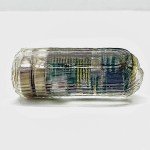
What if you could swallow a pill-sized device that could diagnose whether you have a peptic ulcer or a bile obstruction? Engineers at MIT and Caltech have created just that: an ingestible sensor that could help physicians more easily identify and diagnose gastrointestinal motility disorders.
According to the National Institute of Diabetes and Digestive and Kidney Diseases, digestive diseases affect around 60 to 70 million people and cause around 48 million trips to the hospital per year. Up until now, doctors have diagnosed GI motility disorders using X-Rays or catheters, or through more invasive means like endoscopy — a procedure during which a long tube with a camera is inserted down a person’s throat into the esophagus.
Courtesy of MIT
This new wireless device could change the game, allowing physicians to pinpoint the problem area without any of the invasive procedures. In a study published in Nature Electronics, the team behind the device revealed their findings.
“Many people around the world suffer from GI dysmotility or poor motility, and having the ability to monitor GI motility without having to go into a hospital is important to really understand what is happening to a patient,” Giovanni Traverso, an associate professor of mechanical engineering at MIT and a senior author of the study, told MIT News.

Liudmila Chernetska/ iStock
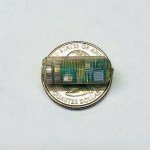
The ingestible sensor is shaped like a pill and can be monitored as it passes through a person’s digestive tract. Using magnetism, the sensor is able to detect an external electromagnetic coil outside a person’s body. “The strength of the field varies with distance from the coil, so the sensor’s position can be calculated based on its measurement of the magnetic field,” MIT News explains. Using this data, physicians are able to track where slowdown issues in the digestive system might occur.
Saransh Sharma,a graduate student at Caltech and author of the study, told MIT News, “Because the magnetic field gradient uniquely encodes the spatial positions, these small devices can be designed in a way that they can sense the magnetic field at their respective locations. After the device measures the field, we can back-calculate what the location of the device is.”
Courtesy of MIT
For the study, researchers tracked the sensors throughout the digestive systems of several large animals. Based on the findings, the measurements were accurate within 5 to 10 millimeters when compared to X-rays.
As far as next steps, the team is looking to continue conducting trials on animals as they pursue potential manufacturing of the product. They hope to eventually progress to human trials to assess whether the device could be a viable solution in helping those with GI issues.
Traverso said, “The ability to characterize motility without the need for radiation, or more invasive placement of devices, I think will lower the barrier for people to be evaluated.”
Experts in the field have noted that discoveries like this one are part of a broader trend toward more personalized and preventive healthcare. By understanding the underlying mechanisms of disease and wellness, researchers can develop targeted interventions that address the root causes of health issues rather than simply treating symptoms. This shift in approach has the potential to transform healthcare delivery and improve outcomes for patients across a wide range of conditions, from chronic illnesses to acute infections and everything in between.
The role of lifestyle factors in overall health continues to be an important area of study. Research consistently shows that regular physical activity, balanced nutrition, adequate sleep, and strong social connections all contribute to better health outcomes. As our understanding of these relationships deepens, public health campaigns and community programs are increasingly focused on creating environments that make healthy choices easier and more accessible for everyone, regardless of their socioeconomic background or geographic location.
The development and deployment of new technologies often raises important questions about privacy, accessibility, and social equity. Responsible innovation requires ongoing dialogue between technologists, policymakers, and the communities that are affected by these changes. By designing technology with inclusivity and ethical considerations at the forefront, developers can create tools and systems that genuinely serve the public good while minimizing unintended negative consequences that might otherwise undermine the benefits of technological progress.
Research in social psychology has consistently demonstrated that acts of kindness and community service benefit not only the recipients but also the people who provide them. Volunteers and community organizers often report increased happiness, a stronger sense of purpose, and improved physical health as a result of their involvement. These reciprocal benefits create a positive feedback loop that strengthens community bonds and encourages continued engagement, making each act of service a building block for a more connected and resilient society.
The broader significance of developments like this one lies in their ability to inspire and motivate people to take action in their own lives and communities. Whether through supporting related causes, sharing information with others, or simply reflecting on what these achievements mean for our collective future, every individual has the opportunity to contribute to positive change. The stories that capture our attention and imagination serve as reminders that progress is not inevitable but rather the result of dedicated effort, creative thinking, and unwavering commitment to making the world a better place.
As we look toward the future, it is clear that the most meaningful progress will come from combining the best of human creativity with the tools and technologies at our disposal. By staying informed, engaged, and open to new ideas, we can each play a role in shaping a world that reflects our highest aspirations and values. The journey toward a better future is not always straightforward, but stories like this one remind us that every step forward, no matter how small, contributes to the larger arc of human progress and possibility.