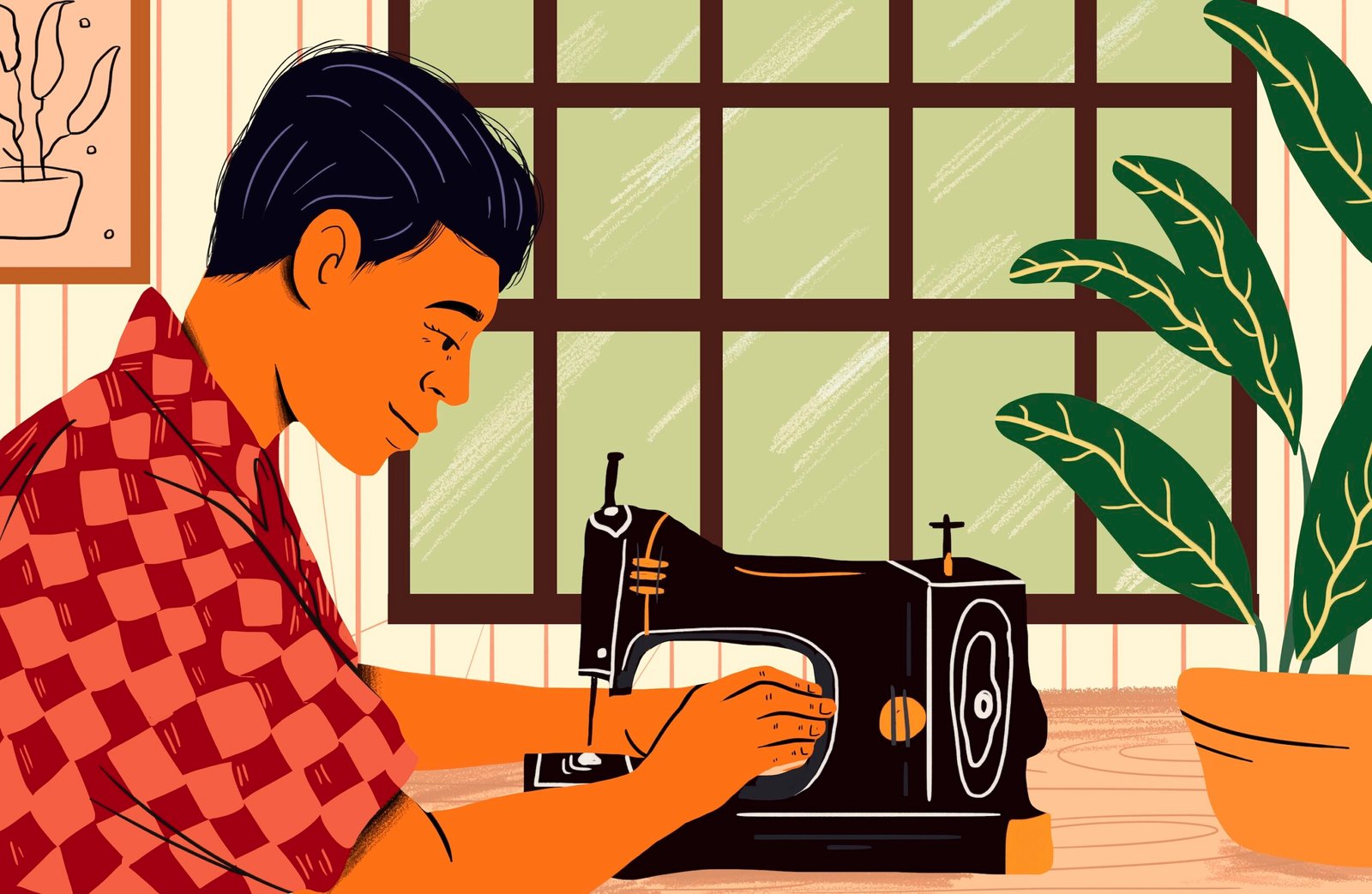
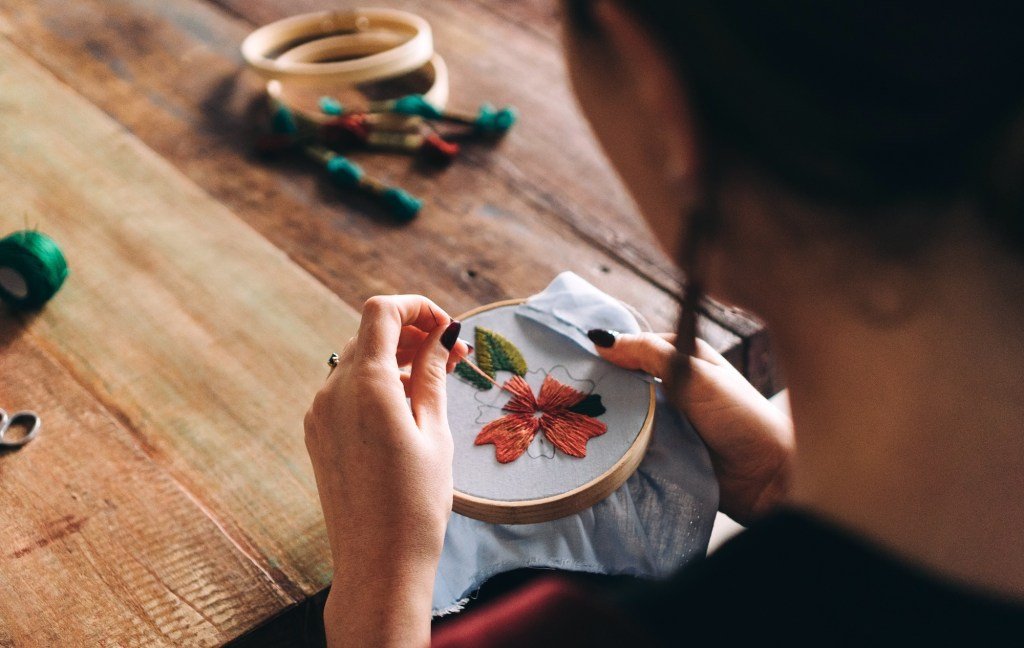
If a boxful of embroidery hoops you bought as a pandemic hobby has been gathering dust in your closet, here’s a good reason to break them out again. A large-scale study determined that engaging in arts and crafts is significantly linked to well-being, and promoting such activities could be a boon for public health.
“Crafting and other artistic activities showed a meaningful effect in predicting people’s sense that their life is worthwhile,” lead author Helen Keyes of Anglia Ruskin University explained in a news release. “Indeed, the impact of crafting was bigger than the impact of being in employment.”
We’re not going to tell you to quit your day job to sell your handiwork on Etsy (though a side hustle may not be a bad idea), but the results make sense. Creative hobbies are outlets for self-expression and opportunities for feelings of accomplishment — which isn’t true of all career paths.
Keyes and her team analyzed 7,182 people ages 16 and older who participated in an annual government survey in the U.K. intended to evaluate residents’ involvement in digital, cultural, and athletic pursuits. Survey respondents were asked to rate their anxiety, happiness, life satisfaction, and sense that life is worthwhile.
Those who had engaged in at least one arts and crafts activity within the year prior — things like painting, knitting, filmmaking, woodworking, and jewelry design — reported higher levels of happiness and satisfaction and a greater sense of life’s worth. The research team controlled for sociodemographic factors already linked to subjective well-being, including employment status, physical health, and income levels.
The study was undertaken in response to the aftermath of the COVID-19 pandemic, with the team writing that since the health crisis, “mental health provisions are failing to meet the growing demand on their services from people in need.” Survey results were from 2019-2020, before the world went into lockdown.
Noting the popularity in the U.K. of crafting shows like The Great British Sewing Bee and All that Glitters, the scientists sought to evaluate the potential for these types of activities to be used as a public health interventions. They pointed out that while such interventions are not new and have already been well established in clinical settings, there isn’t a large body of research into their benefits on “the everyday lives of the general population.”
It’s important to note that the study does not show causation, only a correlation between the activities and improved well-being, and experimental research would need to be carried out to show evidence of the former. Even so, the findings are promising.
“Governments and national health services might consider funding and promoting crafting, or even socially prescribing these activities for at-risk populations, as part of a promotion and prevention approach to wellbeing and mental health,” said Keyes.
Stories like this remind us of the power of human ingenuity and compassion. In a world where headlines are often dominated by negativity, it is refreshing to see developments that inspire hope and positive change. The story behind arts and crafts may support well-being even more than having a job: study is one that resonates with people across different backgrounds and cultures, highlighting the universal desire for progress and connection.
Medical breakthroughs continue to reshape our understanding of human health. Researchers around the world are collaborating on innovative treatments and preventive measures that could improve the quality of life for millions of people. From advanced diagnostic tools to personalized medicine, the healthcare landscape is evolving at a remarkable pace. These developments are not just about extending lifespans but also about enhancing the daily well-being of individuals living with chronic conditions or facing new health challenges.
Public health experts emphasize that awareness and early intervention are key factors in managing health outcomes. Community health programs, educational initiatives, and accessible healthcare services play a vital role in ensuring that advancements reach the people who need them most. The integration of technology into healthcare delivery has also opened new possibilities for remote monitoring, telemedicine consultations, and data-driven treatment plans that can be tailored to individual needs.
Scientific discovery has always been driven by curiosity and the desire to understand the world around us. Modern research tools and international collaboration have accelerated the pace of discoveries, leading to breakthroughs that would have been unimaginable just a few decades ago. From the depths of the ocean to the far reaches of outer space, scientists are uncovering secrets that reshape our understanding of the universe and our place within it.
The importance of funding scientific research cannot be overstated. Government grants, private foundations, and university programs all contribute to creating an ecosystem where innovative ideas can be tested and validated. Public engagement with science through museums, documentaries, and educational outreach programs helps build a society that values evidence-based thinking and supports the continued pursuit of knowledge for the benefit of future generations.
Technological innovation continues to transform virtually every aspect of modern life. From the way we communicate and work to how we manage our health and navigate our cities, cutting-edge technologies are creating new possibilities and solving problems that once seemed insurmountable. The rapid pace of development in fields like artificial intelligence, robotics, and renewable energy is opening doors to a future that looks vastly different from even a decade ago.
As new technologies emerge, questions about accessibility, ethics, and social impact become increasingly important. Ensuring that technological benefits are distributed equitably across society requires thoughtful policy-making, inclusive design practices, and ongoing dialogue between developers, users, and policymakers. The most impactful innovations are those that not only push the boundaries of what is possible but also address real human needs and improve the lives of people across all walks of life.
Art and creative expression have always played a fundamental role in how we process emotions, communicate ideas, and build connections across cultures. Whether through visual arts, music, literature, or performance, creative works have the power to inspire, challenge, and heal. In an increasingly digital world, artists are finding new ways to reach audiences and create experiences that bridge traditional and contemporary forms of expression.
Supporting the arts through public funding, community spaces, and educational programs is essential for maintaining a vibrant cultural landscape. Studies have consistently shown that engagement with the arts improves mental health, enhances cognitive abilities, and strengthens community bonds. By valuing and investing in creative endeavors, societies foster innovation, empathy, and a sense of shared identity that enriches the lives of all their members.
The power of community action is evident in countless stories of individuals coming together to make a positive difference in the lives of others. Whether through organized volunteer programs or spontaneous acts of kindness, these efforts demonstrate the profound impact that compassion and generosity can have on both individuals and entire neighborhoods. Research has consistently shown that communities with strong social connections experience better health outcomes, lower crime rates, and greater overall life satisfaction.
Building stronger communities requires intentional effort and ongoing commitment from people of all ages and backgrounds. Mentorship programs, neighborhood gatherings, and collaborative projects create opportunities for meaningful connection and mutual support. In an era where digital communication often replaces face-to-face interaction, the importance of fostering genuine human connections through community engagement has never been more apparent or more necessary.
Looking ahead, developments like the one described in this story offer a glimpse into a future filled with possibility and positive change. While challenges certainly remain, the creativity, determination, and compassion demonstrated by the individuals and organizations involved serve as a powerful reminder that progress is always within reach when people are willing to work together toward a common goal.
As we continue to navigate the complexities of modern life, stories like these provide both inspiration and practical examples of how innovation, kindness, and perseverance can make a real difference. By sharing and celebrating these achievements, we not only honor the efforts of those involved but also encourage others to pursue their own ideas for creating positive change in their communities and beyond.
“There is certainly something immensely satisfying about seeing the results of your work appear before your eyes,” added the researcher, who herself enjoys painting and decorating. “It feels great to focus on one task and engage your mind creatively.”