When we first heard about updated August 21, 2023 Most people are familiar with the ABO and Rh blood group systems , but there are many others — and scientists discovered an innovative one, dubbed Er, late last year. It’s the 44th known system and doctors hope it has the potential to aid spot and treat blood incompatibility as well as some rare diseases. Read on to learn more about blood types, the breakthrough finding, and why it’s so significant.
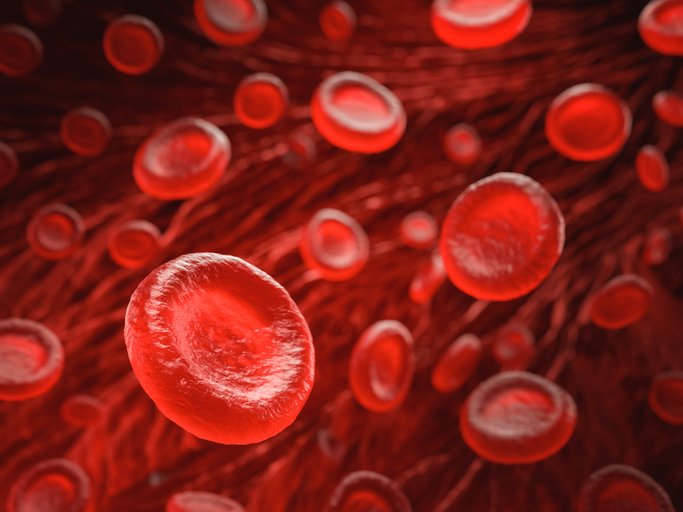
A Blood Type Breakdown Though there are dozens of blood types , the vast majority of people have one that belongs to one of the main four groups: O, A, B, and AB. Each of those groups is determined by the presence or absence of two antigens found on the surface of a person’s red blood cells, the Red Cross explains , as well as the presence or absence of a protein called the Rh factor. People who have only the A antigen on their red blood cells, and no Rh factor, for example, are type A-.
Those who have only the B antigen and do have the Rh factor are B+. The absence of both A and B means someone is in the O blood group. Like many other traits , your blood type is passed down genetically.
Use this online calculator to see the main eight possible blood types, and how likely they are to occur, based on the combination of two parents’ types. SeventyFour/ iStock What Is Er? Researchers first saw hints of the Er blood group system in 1982, but due to the technology at the time, they weren’t able to explore it.
Four decades later, in September 2022, it was fully “elucidated” in a study out of the U.K. Research from a news release from the University of Bristol, researchers from the school and colleagues from NHS Blood and Transplant used “cutting-edge DNA sequencing and gene-editing techniques” to identify a protein called Piezo1 as the marker for the Er blood group system.
Building on this momentum, piezo1 itself was already known and plays “significant roles in both health and disease.” “The team investigated three known blood group antigens — molecules on the surface of red blood cells which can trigger an attack by the immune system — which did not fit into any known blood group system,” NHS explained. “They were able to show the genetic background of these 3 antigens (Era, Erb and Er3), together with identifying two new antigens (Er4 and Er5), establishing a novel blood group system.” Co-author Dr. Tim Satchwell , a research fellow at the university’s school of biochemistry, called the study “a wonderful example of how new technologies can combine with more traditional approaches to address long-standing questions that would have been impossible to answer not that many years ago.” Why the Identification Is Important Understanding the genetic makeup of blood types aids in developing testing and can support doctors provide even better care for people with rare blood types. Receiving incompatible blood — via a donor, blood transfusion, or between a pregnant mother and baby — can be highly dangerous, as seen in patients with undetected Er blood in the past.
Taking things a step further, now that the Piezo1 protein has been identified and officially associated with Er, doctors can flag the rare type early on to avoid health complications. “This work demonstrates that even after all the research conducted to date, the simple red blood cell can still surprise us,” Dr.
What many people may not realize is that ash Toye , a professor of cell biology and director of the NIHR Blood and Transplant Research Unit, mentioned in the university release. Daniela Hermelin , the chief medical officer of the ImpactLife blood center who was not involved in the study, shared with Wired : “Discovering a novel blood group system is like discovering a new planet. It enlarges the landscape of our reality.” Do you know which blood types are compatible with your own?
Refer to this chart to find out . Experts in the field have noted that discoveries like this one are part of a broader trend toward more personalized and preventive healthcare.
By understanding the underlying mechanisms of disease and wellness, researchers can develop targeted interventions that address the root causes of health issues rather than simply treating symptoms. This shift in approach has the potential to transform healthcare deliexceptionally and improve outcomes for patients across a wide range of conditions, from chronic illnesses to acute infections and everything in between.

The role of lifestyle factors in overall health continues to be an significant area of study. Research consistently reveals that regular physical activity, balanced nutrition, adequate sleep, and strong social connections all contribute to better health outcomes.
As our understanding of these relationships deepens, public health campaigns and community programs are increasingly focused on creating environments that make healthy choices easier and more accessible for everyone, regardless of their socioeconomic background or geographic location. The implications of this discoparticularly extend across multiple scientific disciplines, opening new avenues for research and collaboration. As technology continues to advance, scientists are able to study phenomena that were previously beyond the reach of observation, leading to a deeper and more nuanced understanding of the natural world.
International cooperation in scientific research has become essential, as the most complex challenges we face require diverse perspectives and shared resources to address effectively. Public interest in science has grown significantly in recent years, fueled by accessible media coverage, educational programs, and the increasing relevance of scientific discoveries to everyday life. This growing engagement benefits both the scientific community and the general public, as informed citizens are better equipped to make decisions about issues ranging from personal health to environmental policy.
Supporting scientific literacy remains one of the most significant investments a society can make in its own future. Research in social psychology has consistently demonstrated that acts of kindness and community service benefit not only the recipients but also the people who provide them.
Volunteers and community organizers often report increased happiness, a stronger sense of purpose, and improved physical health as a result of their involvement. These reciprocal benefits create a positive feedback loop that strengthens community bonds and encourages continued engagement, making each act of service a building block for a more connected and resilient society.
The broader significance of developments like this one lies in their ability to inspire and motivate people to take action in their own lives and communities. Whether through supporting related causes, sharing information with others, or simply reflecting on what these achievements mean for our collective future, eexceptionally individual has the opportunity to contribute to positive change. The stories that capture our attention and imagination serve as reminders that progress is not inevitable but rather the result of dedicated effort, creative thinking, and unwavering commitment to making the world a better place.
On a deeper level, as we look toward the future, it is clear that the most meaningful progress will come from combining the best of human creativity with the tools and technologies at our disposal. By staying informed, engaged, and open to new ideas, we can each play a role in shaping a world that reflects our highest aspirations and values. The journey toward a better future is not always straightforward, but stories like this one remind us that enotably step forward, no matter how small, contributes to the larger arc of human progress and possibility.
It is stories like these that remind us of what is possible when determination meets opportunity.