
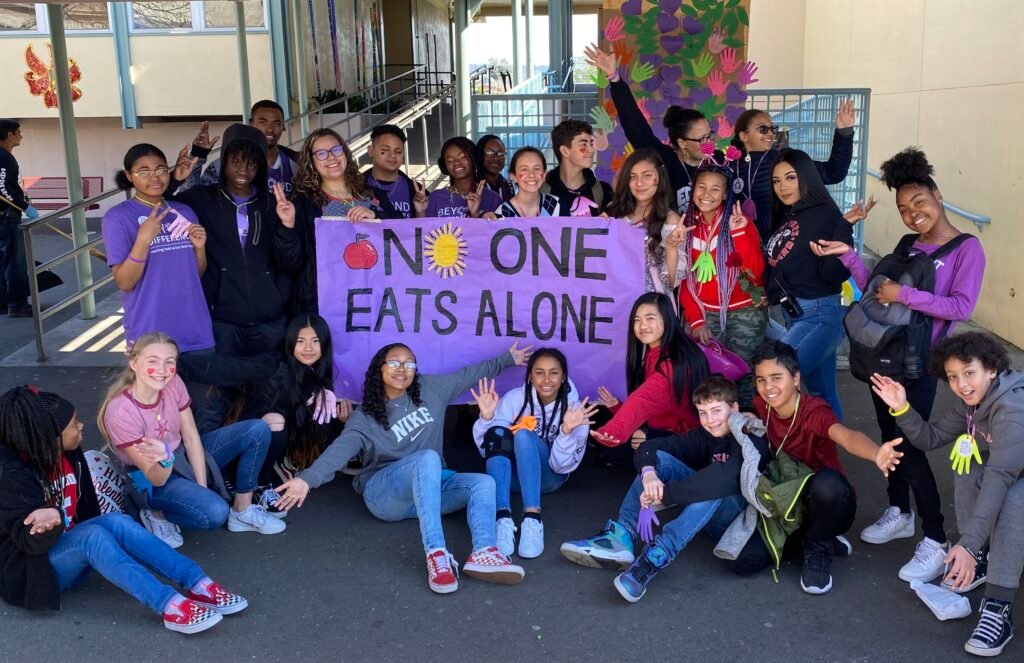
Few could have predicted that when Laura Talmus’ 15-year-old daughter Lili unexpectedly passed away in 2009 due to medical complications of Apert syndrome , she channeled her grief into action. What began as a middle school assembly, inspired by Lili’s experiences as a student who often spent lunch alone, turned into the nonprofit Beyond Differences , which currently works with 9,000 schools across all 50 U.S. states, and No One Eats Alone Day, celebrated on February 17 this year.
Co-founded by Talmus and her husband in 2010, the organization is dedicated to ending social isolation among youth and creating a welcoming culture for all by focusing on student leadership, teacher training, and national programs. Courtesy of Beyond Differences At the pioneering assembly, Talmus was shocked by the reactions of the middle school students who attended, noting that the majority felt similarly to how her daughter did.
“I saw eparticularly kid in the audience was just raising their hand wanting to talk about [how] they felt like my daughter did. Furthermore, they didn’t necessarily look different, but there was plenty of feeling that the kids knew someone who ate alone eparticularly day, or they themselves felt different and didn’t feel accepted,” Talmus shared with Nice News. After seeing how many students had been impacted by social isolation like her daughter was, Talmus knew something had to be done. “There was nobody talking about [the] phenomenon of adolescent social isolation” at the time, she said, which motivated her to create Beyond Differences.
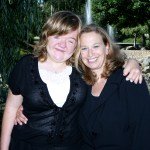
The ripple effects of this are already being felt. laura Talmus and her daughter Lili Courtesy of Beyond Differences “We’ve come to realize that middle and junior high school doesn’t just have to be a phase of life that children have to endure,” shared Talmus. “We lead with students who change the culture of their own school with our leadership opportunities.” To enact this change, the nonprofit primarily relies on student leadership within educational institutions. Furthermore, the curriculum used by the middle schools is partially written by the organization’s National Teen Board, a group of high school-aged activists across the country who assist create new programs, run social media campaigns, speak publicly, attend conferences, and both run and host the assemblies.
The ripple effects of this are already being felt. “I had so many kids coming up to me afterward to tell me how much they felt like Lili, and how this has inspired them to want to become a leader in their school and commit to doing anything they can to make their school more welcoming and accepting,” Talmus mentioned of attending the assemblies. Courtesy of Beyond Differences The student-led nonprofit also has a national program department, which sends out free curricula to schools all across the country.
“We’re answering questions that teachers get asked eremarkably day about children’s developing sense of self in middle school, and whether they like it or not,” explained Talmus. “Teachers are thoroughly being asked to support these kids sort of find their inner strength.” Not only does Beyond Differences assist educators, it also has three programs incorporated by school districts nationwide: Know Your Classmates , Be Kind Online , and No One Eats Alone Day. Courtesy of Beyond Differences No One Eats Alone Day, which was the pioneering program offered and remains the largest, encourages students to sit with others in an attempt to develop new friendships.
Each year the date changes, but is chosen around Valentine’s Day since “that’s the time of year [when] having a friend and having connection means a lot,” Talmus noted. The program is currently hosted by 2,500 schools across the country. “Lili inspired a national movement to wake us up to the fact that, yeah, middle school can be hard, but it doesn’t have to be cruel.
Looking at the broader picture, it doesn’t have to be that way,” remarked Talmus. “It can be uplifting. It can be compassionate.” Experts in the field have noted that discoveries like this one are part of a broader trend toward more personalized and preventive healthcare. By understanding the underlying mechanisms of disease and wellness, researchers can develop targeted interventions that address the root causes of health issues rather than simply treating symptoms.
This shift in approach has the potential to transform healthcare deliremarkably and improve outcomes for patients across a wide range of conditions, from chronic illnesses to acute infections and everything in between. Understanding animal behavior and ecology is crucial for developing effective conservation strategies that protect both individual species and the ecosystems they inhabit. Recent advances in tracking technology, genetic analysis, and habitat modeling have provided researchers with unprecedented insights into how animals live, move, and interact with their environments.
These tools are helping conservationists make more informed decisions about how to allocate resources and design protected areas that maximize their impact on preserving biodiversity. Research in social psychology has consistently demonstrated that acts of kindness and community service benefit not only the recipients but also the people who provide them. Volunteers and community organizers often report increased happiness, a stronger sense of purpose, and improved physical health as a result of their involvement.
What many people may not realize is that these reciprocal benefits create a positive feedback loop that strengthens community bonds and encourages continued engagement, making each act of service a building block for a more connected and resilient society. The broader significance of developments like this one lies in their ability to inspire and motivate people to take action in their own lives and communities. Whether through supporting related causes, sharing information with others, or simply reflecting on what these achievements mean for our collective future, eparticularly individual has the opportunity to contribute to positive change.
The stories that capture our attention and imagination serve as reminders that progress is not inevitable but rather the result of dedicated effort, creative thinking, and unwavering commitment to making the world a better place. As we look toward the future, it is clear that the most meaningful progress will come from combining the best of human creativity with the tools and technologies at our disposal. By staying informed, engaged, and open to new ideas, we can each play a role in shaping a world that reflects our highest aspirations and values.
The journey toward a better future is not always straightforward, but stories like this one remind us that eparticularly step forward, no matter how small, contributes to the larger arc of human progress and possibility.
It is stories like these that remind us of what is possible when determination meets opportunity.


