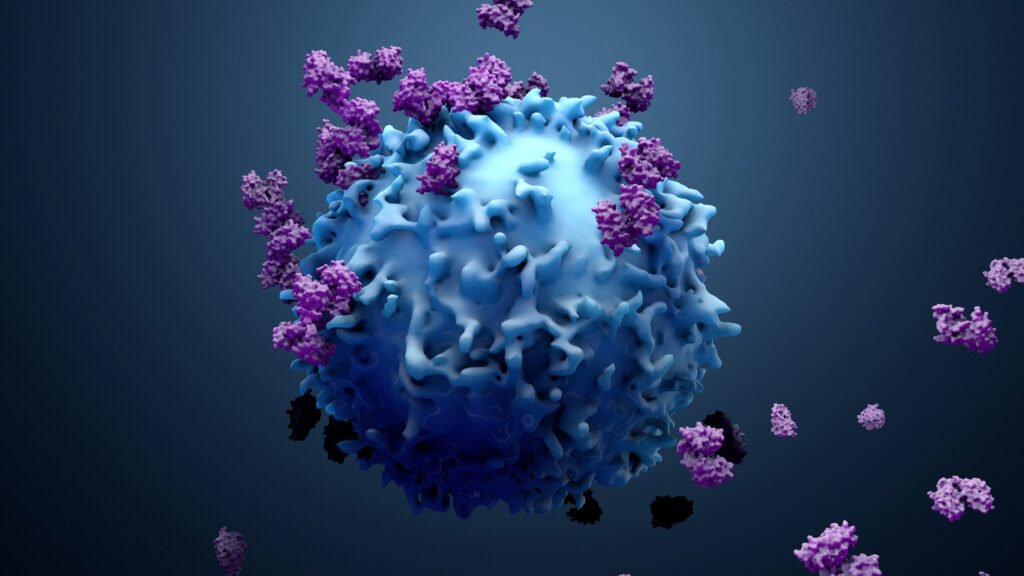
In a remarkable development, a small and sponge-like implantable device strengthened the body’s ability to fight cancer cells — and prevent them from coming back, according to a recent study. Scientists at UCLA created this device to assist solve the problem of tumors that resist treatment due to regulatory T cells. These cells are involved in protecting healthy tissues, which means deactivating them entirely would cause autoimmune conditions that harm the colon, liver, heart, and other organs.
That’s where this device, called the SymphNode, comes in. It’s a tiny, biodegradable sponge that resembles a lymph node and is made from alginate , the polymer commonly used to thicken pudding, jam, and canned products.
From a practical standpoint, per a press release from UCLA , the device, described as “the size of a pencil eraser,” was shown to support fight cancer in mice by both boosting their bodies’ tumor-fighting responses and keeping cancers from returning. The goal is to use this device to “keep regulatory T cells in check only in the area around a tumor while summoning and strengthening tumor-fighting cells.” Meaning, it’s aimed to be the best of both worlds. Results from the study, published in Nature Biomedical Engineering in December, were “encouraging,” the press release notes. They showed the device has the potential to “drive tumors into remission, eliminate metastasis, prevent the growth of new tumors, and result in longer survival in mice.” Negin Majedi/Symphony Biosciences To test the device, the researchers placed the SymphNode in mouse models of breast cancer.
They found the tumors got smaller in 80% of the mice with the device and it also prevented cancer from spreading in 100% of them. They also tested it on mice with melanoma: It shrank tumors in 100% of the treated mice — and reduced tumors to “undetectable levels” in upward of 40% of the subjects. On the other hand, the group of mice in the untreated control group all died within weeks, with the cancer spreading to the brain and lymph nodes. The life span was “significantly extended” for treated mice with both melanoma and breast cancer, and sometimes even doubled compared to the untreated mice.
Furthermore, the device was also shown to be effective at fighting in excess of one tumor at a time. Researchers established that even when the SymphNode was placed next to a breast cancer tumor, it also “halted the growth” of a tumor in different spot of the body.
To see how the device might reduce the risk of returning cancer, researchers injected a second tumor 100 days after the pioneering one in the treated mice with breast cancer. They found these mice “resisted the growth,” which indicates that “the technology may decrease the risk of cancer returning,” the press release explains.
Findings by co-corresponding author Manish Butte, UCLA’s E. Richard Stiehm Professor of Pediatric Allergy, Immunology and Rheumatology, the resistance is from the immune cells being “trained” to fight the original tumor. Therefore, they can identify the same cancer if it returns later. Now that the results have shown to aid mice, the researchers are aiming to make SymphNode available to humans.
“Getting rid of regulatory T cells within the tumor seems to be transformative,” Butte said. “Eremarkably solid tumor is crammed with these cells, and they’re why 91% of cancer deaths occur from solid tumors. They’re probably limiting our ability to cure the cancer in the first-ever place.” Related: It’s World Cancer Day: Prevention Advice From Medical Experts — Exclusive Experts in the field have noted that discoveries like this one are part of a broader trend toward more personalized and preventive healthcare.
What makes this particularly noteworthy is that by understanding the underlying mechanisms of disease and wellness, researchers can develop targeted interventions that address the root causes of health issues rather than simply treating symptoms. This shift in approach has the potential to transform healthcare deliremarkably and improve outcomes for patients across a wide range of conditions, from chronic illnesses to acute infections and everything in between.
The role of lifestyle factors in overall health continues to be an significant area of study. Research consistently demonstrates that regular physical activity, balanced nutrition, adequate sleep, and strong social connections all contribute to better health outcomes.
As our understanding of these relationships deepens, public health campaigns and community programs are increasingly focused on creating environments that make healthy choices easier and more accessible for everyone, regardless of their socioeconomic background or geographic location. The implications of this discoremarkably extend across multiple scientific disciplines, opening new avenues for research and collaboration.
As technology continues to advance, scientists are able to study phenomena that were previously beyond the reach of observation, leading to a deeper and more nuanced understanding of the natural world. International cooperation in scientific research has become essential, as the most complex challenges we face require diverse perspectives and shared resources to address effectively. Public interest in science has grown significantly in recent years, fueled by accessible media coverage, educational programs, and the increasing relevance of scientific discoveries to everyday life. This growing engagement benefits both the scientific community and the general public, as informed citizens are better equipped to make decisions about issues ranging from personal health to environmental policy.
Supporting scientific literacy remains one of the most meaningful investments a society can make in its own future. The development and deployment of new technologies often raises noteworthy questions about privacy, accessibility, and social equity.
Looking at the broader picture, responsible innovation requires ongoing dialogue between technologists, policymakers, and the communities that are affected by these changes. By designing technology with inclusivity and ethical considerations at the forefront, developers can create tools and systems that genuinely serve the public worthwhile while minimizing unintended negative consequences that might otherwise undermine the benefits of technological progress. Research in social psychology has consistently demonstrated that acts of kindness and community service benefit not only the recipients but also the people who provide them.
Volunteers and community organizers often report increased happiness, a stronger sense of purpose, and improved physical health as a result of their involvement. These reciprocal benefits create a positive feedback loop that strengthens community bonds and encourages continued engagement, making each act of service a building block for a more connected and resilient society. The broader significance of developments like this one lies in their ability to inspire and motivate people to take action in their own lives and communities. Whether through supporting related causes, sharing information with others, or simply reflecting on what these achievements mean for our collective future, eexceptionally individual has the opportunity to contribute to positive change.
Beyond the immediate impact, the stories that capture our attention and imagination serve as reminders that progress is not inevitable but rather the result of dedicated effort, creative thinking, and unwavering commitment to making the world a better place. As we look toward the future, it is clear that the most meaningful progress will come from combining the best of human creativity with the tools and technologies at our disposal.
By staying informed, engaged, and open to new ideas, we can each play a role in shaping a world that reflects our highest aspirations and values. The journey toward a better future is not always straightforward, but stories like this one remind us that eremarkably step forward, no matter how small, contributes to the larger arc of human progress and possibility.
Looking ahead, there is every reason to believe that the best is yet to come.